
Planting
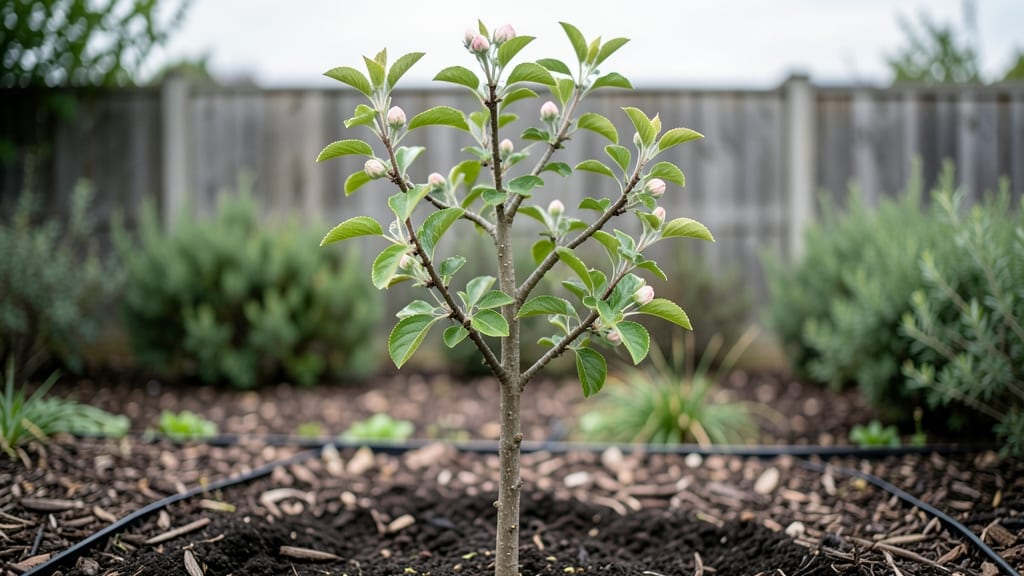
Planting a young apple tree in the Pacific Northwest means choosing varieties that thrive in our cool, wet climate—like Gala, Fuji, or Granny Smith—while avoiding the pitfalls of soggy soil and fungal diseases.
I learned the hard way that skipping soil prep leads to stunted growth, so we’ll fix that first. The key is drainage: mix compost and coarse sand into your native soil before planting, and you’ll give those roots room to breathe.
Start with a 3- to 5-gallon container tree (bigger roots mean faster establishment) and dig a hole twice as wide as the root ball but no deeper. Position it so the graft union sits 2–3 inches above ground—this prevents rot in our damp winters.
Water deeply after planting, then mulch with wood chips to lock in moisture and keep weeds at bay. Most beginners overwater here, but apple trees hate soggy feet.
Your tree will need full sun (6+ hours daily) and consistent moisture—not drenched soil, just steady hydration. Prune in late winter to remove dead or crossing branches, shaping it like an open vase.
Within a year, you’ll see stronger branches and fewer disease spots if you’ve avoided the common mistakes: planting too deep, using fresh mulch (which burns roots), or ignoring fungal sprays in rainy seasons.
By late summer, you’ll spot new growth and maybe even a few tiny apples—proof you’ve set it up right. The real payoff comes in years three to five, when your tree bears fruit.
But the foundation starts now: soil, spacing, and smart watering make all the difference in our climate. Let’s get those roots settled!
📚 In This Guide
- What you need
- Instructions
- Tips and common mistakes
- Wrapping up and next steps
What you need
- ● Young apple tree: Choose a Pacific Northwest-hardy variety (e.g., Granny Smith, Honeycrisp, or Fuji) from a local nursery. Opt for a 1-2 year old bare-root or potted sapling (1.5–3 ft tall).
- ● Planting hole: Dig a hole twice as wide and slightly shallower than the root ball (or container).
- ● Well-draining soil: Mix 50% native soil with 50% compost (or use a balanced organic potting mix if amending soil isn’t an option).
- ● Organic fertilizer: A balanced 10-10-10 or 5-5-5 (low nitrogen) to kickstart growth. Avoid high-nitrogen blends—they encourage leafy growth over fruit.
- ● Mulch: 3–4 inches of wood chips or straw (keep mulch 6 inches away from the trunk to prevent rot).
- ● Watering can or hose: With a gentle spray nozzle (young roots are delicate!).
- ○ Staking (optional but recommended): 2–3 wooden stakes (2–3 ft tall) + soft tree ties (if your tree is top-heavy or in a windy spot).
- ● Pruning shears: Bypass pruners (sharp, clean, and sterilized with rubbing alcohol).
- ● Root stimulator: A mycorrhizal fungi powder or seaweed-based rooting hormone (helps establish roots faster in PNW’s acidic soils).
- ● Soil pH tester: PNW soils often lean acidic (pH 5.0–6.5)—aim for 6.0–7.0 for apple trees. Adjust with lime if needed.
- ● Drip irrigation kit: Automates watering and saves time (critical if you travel often).
- ● Tree guard: A metal or plastic spiral wrap to protect the trunk from voles, rabbits, or curious deer.
- ● Fungicide: Copper-based spray (prevents apple scab, common in PNW’s damp climate).
- ● Pollination partner: Plant a second apple tree of a compatible variety (e.g., Honeycrisp + Fuji) within 50–100 ft for better fruit set.
Instructions for establishing a young apple tree in the Pacific Northwest
Here's how to give your young apple tree the strong start it needs to thrive in our region's cool, wet climate.
Choose the Right Location and Prepare the Soil
Select a site with full sun exposure—at least 6-8 hours daily—and well-draining soil. The Pacific Northwest's frequent rains mean poor drainage is the biggest threat to young roots. Test drainage by digging a 12-inch-deep hole and filling it with water; if it drains within 4-6 hours, the site is suitable. If not, amend the soil with 2-3 inches of compost mixed into the top 12 inches.
Apple trees prefer slightly acidic to neutral soil (pH 6.0-7.0). If your soil tests higher, work in elemental sulfur or peat moss to lower the pH gradually. Avoid compacted or rocky soil—apple roots need loose, airy conditions to establish quickly. I always check for underground utilities before digging to prevent accidental damage.
Plant at the Correct Depth and Stake for Stability
Dig a hole twice as wide as the root ball but no deeper. The top of the root ball should sit 1-2 inches above ground level—this prevents soil from settling and smothering the trunk. Gently loosen any circling roots with your fingers to encourage outward growth. Place the tree in the hole and backfill with native soil mixed with 1-2 inches of compost for nutrients.
Stake the tree only if needed—young apple trees in the PNW often need support against wind and rain. Use two stakes driven 6 inches apart and tie the trunk loosely with soft tree ties (never wire or anything that can girdle the trunk). Water deeply after planting to settle the soil around roots. Mulch with 3 inches of wood chips (keeping mulch 6 inches away from the trunk) to retain moisture and regulate temperature.
Water Deeply and Establish a Consistent Care Routine
Water deeply once a week during the first growing season, ensuring moisture reaches 12-18 inches down. The Pacific Northwest's mild summers can fool you into thinking water isn't critical, but young trees need consistent moisture to develop strong roots. Check soil moisture by sticking your finger 2 inches deep—if it feels dry, water again. Overwatering is just as harmful, so avoid soggy soil.
Fertilize lightly in early spring with a balanced 10-10-10 fertilizer (follow package rates for young trees). Avoid high-nitrogen fertilizers, which encourage leafy growth at the expense of root development. Prune only to remove dead, broken, or crossing branches—never prune more than 25% of the tree's canopy in the first year. This keeps the tree's energy focused on root establishment.
Protect Against Common Pacific Northwest Threats
Shield the tree from winter winds by installing a windbreak (burlap or lattice) if your site is exposed. The PNW's wet winters can cause cankers and fungal diseases—apply dormant oil spray in late winter to smother overwintering pests. In early spring, watch for apple scab and codling moths; use organic copper fungicide and pheromone traps as needed to prevent infestations.
Monitor for voles and rodents, which gnaw on young bark in winter. Wrap the trunk with hardware cloth (not plastic) to deter them. Avoid heavy pruning in late summer—new growth won’t harden off before winter, making the tree vulnerable to frost damage. Instead, focus on light pruning in late winter to shape the tree and remove weak branches.
Tips & tricks for establishing a young apple tree in the Pacific Northwest
Between us, the Pacific Northwest's climate can be tricky for young apple trees—but these insights will help you navigate the challenges like a pro.
Drainage is Everything: In Step 1, when testing drainage with that 12-inch hole, pay close attention to how quickly water disappears. If it drains slower than 4-6 hours, you're dealing with heavy clay soil common in our region. To fix it, mix in 4-5 inches of compost (double what's suggested) into the top 12 inches—this creates better aeration while holding moisture without becoming waterlogged. The roots will thank you during our frequent winter rains.
The Right Depth Matters: During Step 2, when positioning the root ball 1-2 inches above ground level, resist the urge to bury it deeper. Settling soil can smother the trunk, leading to rot—a common issue in our damp climate. After planting, create a shallow basin around the base to direct water away from the trunk while keeping roots hydrated. This simple adjustment prevents the two biggest killers: suffocation and rot.
Staking Strategy: When deciding whether to stake in Step 2, consider your site's exposure. If your tree is in an open area where winds frequently exceed 20 mph (common in coastal PNW), use those two stakes with 6 inches of separation and secure with soft tree ties. The key is to let the tree sway slightly—this strengthens its trunk naturally. Avoid tight ties that can girdle as the tree grows. I've seen too many trees with permanent damage from improper staking.
Winter Protection: For Step 4's winter prep, don't stop at just wrapping the trunk with hardware cloth. If you're in a particularly windy area, add a temporary windbreak made of burlap or lattice on the windward side. This creates a microclimate that protects young bark from winter burn. Also, apply a 3-inch layer of mulch (as mentioned) but keep it 6 inches away from the trunk—this prevents moisture buildup that can lead to fungal issues during our wet winters.
Pro Tips for Apple Tree Young Plant
- Between us, the Pacific Northwest's climate can be tricky for young apple trees—but these insights will help you navigate the challenges like a pro.
- Drainage is Everything: In Step 1, when testing drainage with that 12-inch hole, pay close attention to how quickly water disappears.
- The Right Depth Matters: During Step 2, when positioning the root ball 1-2 inches above ground level, resist the urge to bury it deeper.
Frequently asked questions
Got questions about nurturing a young apple tree in the Pacific Northwest? You’re not alone!
Here are some of the most common concerns—and straightforward answers—to help you grow a thriving orchard.
How soon can I expect my young apple tree to bear fruit?
A young apple tree typically takes 3–5 years to bear fruit, depending on the variety and growing conditions. Dwarf varieties may fruit sooner (2–3 years), while standard trees can take longer. Patience is key—focus on establishing strong roots and branches first!
What’s the best way to protect my young apple tree from PNW winter weather?
Wrap the trunk with tree guard or burlap to shield it from cold winds and rodents. Mulch heavily (3–4 inches) around the base to insulate roots. Avoid heavy snow buildup on branches—gently shake it off or use a broom. Varieties like ‘Gala’ or ‘Honeycrisp’ handle PNW winters well!
Are there common pests or diseases I should watch for in young apple trees?
Keep an eye out for aphids, codling moths, and apple scab. Use neem oil or insecticidal soap for pests, and apply copper fungicide preventatively in spring. Prune for airflow to reduce disease risk. Early intervention is critical—check leaves and bark regularly!
Can I grow an apple tree from seed, or should I buy a grafted young plant?
While you can grow from seed, the tree may not produce fruit true to the parent (or at all!). For reliable results, buy a grafted young plant from a nursery. Grafting ensures the tree bears the expected variety, flavor, and size—saving you years of trial and error!
How much space does a young apple tree need in the PNW?
Dwarf varieties need 6–8 feet of space, while standard trees require 15–20 feet. Space trees 20–30 feet apart for optimal airflow and sunlight. In the PNW’s dense forests, consider pollination partners (like a second tree) if growing a single variety.
Pro Tip:
Label your young tree immediately! Varieties like ‘Fuji’ or ‘Pink Lady’ can look alike—avoid mix-ups by marking stakes with the name and planting date. Happy growing!
Wrapping up and next steps
Growing a young apple tree in the Pacific Northwest’s unique climate is absolutely doable—with the right variety, preparation, and care. You’ve got everything you need to set your tree up for success, from choosing disease-resistant rootstock to mastering pruning and soil prep. 🌱
Now’s your chance to take action! Start small: pick your tree, prep your site, and plant before winter sets in. With patience and a little TLC, you’ll be enjoying homegrown apples in just a few years—plus, you’ll be contributing to a greener, fruitier PNW! 🍏✨
Next step: Mark your calendar for planting season and gather your tools—your orchard adventure begins now!