How To
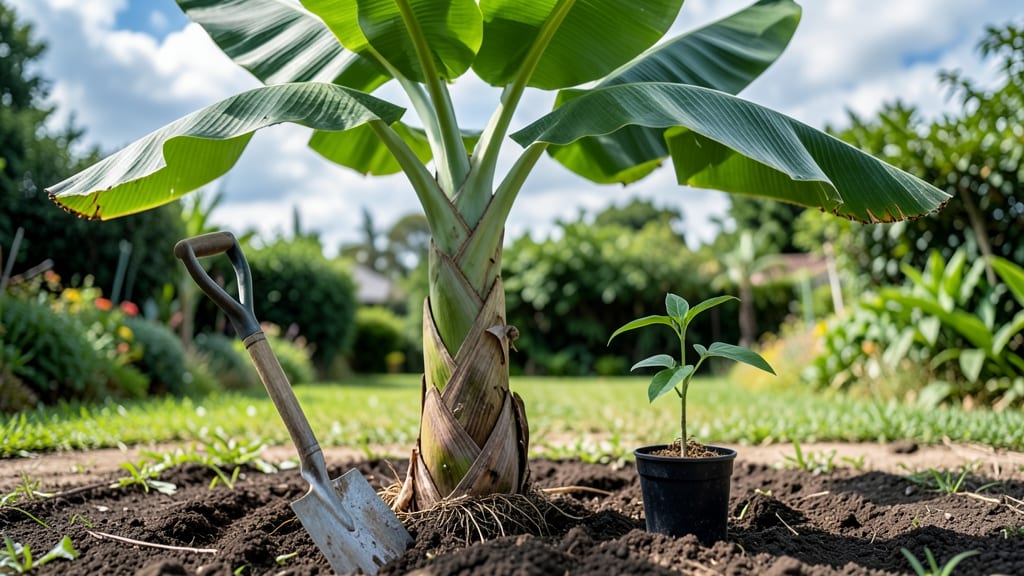
Transplanting a banana tree at the right time means the difference between thriving growth and a slow recovery. 🌱 I’ve moved mine twice—once in spring after three years of growth, and once in autumn when the roots outgrew the pot—and the second time went smoother because I knew what to expect.
The key is timing: young trees under three years old handle moves best in early spring when new shoots appear, while mature trees (three years+) need to go in late winter or early spring before active growth kicks in.
You’ll need a shovel, wheelbarrow, compost-rich soil mix, and a spot with full sun—at least 6 hours daily—to prevent stress. For container plants, choose a pot 12-18 inches wider than the current one, with drainage holes.
📚 In This Guide
- What you need
- Instructions
- Tips and common mistakes
- Wrapping up and next steps
What you need
- ● Banana tree (Musa spp.) – Choose a healthy, mature plant (1-3 years old) with a well-developed root system.
- ● Shovel or transplanting spade – A sharp, sturdy spade (18-24 inches long) for digging.
- ● Garden gloves – Heavy-duty gloves to protect your hands from thorns and soil.
- ● Pruning shears or sharp knife – For trimming excess roots or damaged foliage.
- ● 5-gallon bucket or wheelbarrow – To transport soil and the uprooted plant.
- ● Organic mulch (e.g., straw, wood chips, or pine bark) – 2-3 inches thick to retain moisture and suppress weeds.
- ● Balanced fertilizer (e.g., 10-10-10 or compost) – 1-2 cups mixed into the new planting hole.
- ● Watering can or hose with a gentle spray nozzle – For thorough hydration before and after transplanting.
- ○ Staking material (optional but recommended) – 2-3 bamboo stakes (2-3 feet tall) + soft ties to support the tree.
- ● Root stimulator or mycorrhizal fungi – Boosts root growth and reduces transplant shock.
- ● Epsom salt (magnesium sulfate) – 1 tablespoon dissolved in water for a post-transplant nutrient boost.
- ● Plant support collar or tree guard – Protects the trunk from sunburn or pests.
- ● Soil moisture meter – Ensures the new location stays optimally hydrated.
- ● Shade cloth (30-50%) – Temporarily covers the tree for 1-2 weeks to reduce stress from direct sun.
Step-by-step guide for moving banana trees safely
Here's how I transplant banana trees without shocking the roots—even in hot climates.
🪴 Step 1: Choose the Right Time and Prepare the New Location
Transplant banana trees during the early rainy season or when soil is consistently moist. This minimizes stress on the plant. The new spot needs partial shade for the first month, then full sun once established. I dig the hole twice as wide as the root ball but only as deep as the container's drainage holes—banana roots spread horizontally, not deep.
Amend the soil with 3-4 inches of compost mixed into the top 12 inches of native soil. Banana trees love rich, well-draining soil with a pH between 6.0 and 7.5. Test your soil first—if it's too sandy, add peat moss to improve moisture retention. Avoid heavy clay, which suffocates roots.
🌱 Step 2: Carefully Remove the Tree from Its Current Pot
Water the banana tree deeply 24 hours before transplanting—this keeps roots pliable and reduces breakage. Gently tap the pot's sides to loosen the root ball, then invert it and slide the tree out. If roots are circling tightly, use a sterilized knife to make 2-3 vertical cuts along the root ball to encourage outward growth.
Shake off excess soil but preserve the root ball's integrity—banana trees hate having roots disturbed. If the root ball is too large to handle, wrap it in burlap and carry it to the new hole. Real talk: Banana trees are heavy. Have a helper or use a wheelbarrow for mature plants.
☀️ Step 3: Plant and Stake for Stability
Lower the banana tree into the hole and position it so the top of the root ball sits 1-2 inches below the soil line. This prevents the stem from rotting while allowing roots to spread. Backfill with native soil mixed with compost, tamping down gently in 2-inch layers to eliminate air pockets.
Stake the tree immediately using 3-4 bamboo stakes tied to the pseudostem with soft plant ties. Banana trees grow tall and top-heavy—without support, they'll flop over in wind or rain. Water deeply right after planting to settle the soil around roots. You'll see new leaves emerge in 4-6 weeks if the transplant went well.
💧 Step 4: Water and Protect During Recovery
Keep the soil consistently moist (not soggy) for the first 6-8 weeks. Banana trees have shallow roots, so water 2-3 times per week in dry climates. Mulch with 3-4 inches of straw or wood chips to retain moisture and regulate soil temperature. Avoid placing mulch against the stem—it can cause rot.
Watch for yellowing leaves, which signal transplant shock. This is normal for the first 2-3 weeks as the tree adjusts. If more than half the leaves yellow, the tree may need extra shade or fertilizer (use a balanced 10-10-10 formula after 4 weeks). Fertilizing too soon stresses the roots further.
Tips & tricks for thriving banana tree transplants
Between us, I've transplanted banana trees in both tropical and temperate climates—and these are the tricks that make the difference between a struggling plant and one that thrives.
Soil Prep Secret: Don't just amend the hole—mix the 3-4 inches of compost into the top 12 inches of surrounding soil too. Banana roots spread horizontally, so they'll thank you for the nutrient-rich zone. If your soil is sandy, add peat moss to help retain moisture, but avoid heavy clay entirely—it's a root suffocator. I always test pH first; aim for that 6.0-7.5 range where banana trees really shine.
Root Ball Rescue: That 24-hour deep watering before transplanting is non-negotiable—it keeps roots flexible and prevents breakage. When you see roots circling tightly, make those 2-3 vertical cuts with a sterilized knife. It sounds drastic, but it encourages outward growth instead of that tangled mess. And if your tree is heavy? Wrap that root ball in burlap and call a friend—banana trees aren't lightweights!
Staking Strategy: The 3-4 bamboo stakes aren't just for show—they're essential for those top-heavy banana trees. Tie them to the pseudostem with soft plant ties (never wire!) at a slight angle, not straight up. This mimics natural wind support and prevents the stem from snapping. I've seen too many newly planted banana trees topple in the first rainstorm—don't let that be you.
Recovery Checklist: Those 6-8 weeks of consistent moisture are critical, but don't drown the roots. Water 2-3 times per week in dry climates, checking the top 2 inches of soil first—if it's dry, it's time. The 3-4 inches of mulch helps regulate temperature, but keep it away from the stem. And here's the thing: if more than half the leaves yellow after 2-3 weeks, it's not just transplant shock—it's a sign to adjust either shade or fertilizer timing. Wait those 4 weeks before fertilizing!
Pro Tips for Transplant A Banana Tree
- Between us, I've transplanted banana trees in both tropical and temperate climates—and these are the tricks that make...
- Soil Prep Secret: Don't just amend the hole—mix the 3-4 inches of compost into the top 12 inches of surrounding soil ...
- Root Ball Rescue: That 24-hour deep watering before transplanting is non-negotiable—it keeps roots flexible and preve...
Frequently asked questions
Got questions about transplanting your banana tree? You’re not alone! Here are some of the most common concerns—and their answers—to help you feel confident before digging in.
When is the best time to transplant a banana tree?
Transplant your banana tree during its dormant season (late fall to early spring) when temperatures are mild. Avoid extreme heat or frost—bananas are tropical and hate stress! If you’re in a warm climate, aim for early morning or late afternoon to reduce shock. Younger trees (under 2 years) adapt faster than mature ones.
How do I know if my banana tree is ready for transplanting?
Look for these signs: crowded roots poking out of drainage holes, yellowing leaves (often from root-bound stress), or slow growth despite good care. If your tree is over 3 feet tall with a sturdy trunk, it’s likely ready. Avoid transplanting if the soil is waterlogged or during flowering—this stresses the plant.
Can I transplant a banana tree in a pot instead of the ground?
Potted banana trees thrive in large containers (15+ gallons) with drainage holes. Use a well-draining mix (like 60% potting soil + 30% coconut coir + 10% perlite). Repot every 2–3 years or when roots circle the pot. Just ensure the pot gets full sun (6+ hours/day) and consistent moisture.
Why is my banana tree dying after transplanting?
Transplant shock is common—here’s how to fix it:
Wilting leaves? Water deeply but avoid soggy soil (bananas hate “wet feet”).
Brown tips? Increase humidity (mist leaves or use a tray with pebbles + water).
No new growth? Fertilize lightly with a balanced 10-10-10 after 4–6 weeks.
If the trunk softens or smells rotten, act fast—fungus may be setting in. Trim damaged areas and replant in fresh, sterile soil.What’s the best climate for transplanting banana trees?
Bananas love USDA Zones 10–12 (tropical/subtropical climates). If you’re in a cooler zone (like Zone 9 or below), grow them in containers and move them indoors or to a greenhouse in winter. Hard freezes (below 28°F) will kill the tree—protect it with burlap wraps or mulch heavily if transplanting in marginal climates.
Wrapping up and next steps
Transplanting your banana tree might seem daunting, but with the right tools, timing, and care, you’ll give your plant the best shot at thriving in its new home! 🌱 Remember, patience and attention to detail—like proper soil prep and gentle handling—are key to helping it recover and grow stronger.
Once you’ve mastered this step, why not explore pruning techniques or fertilizing tips to keep your banana tree flourishing year-round? Your green thumb is about to shine even brighter!