Pruning
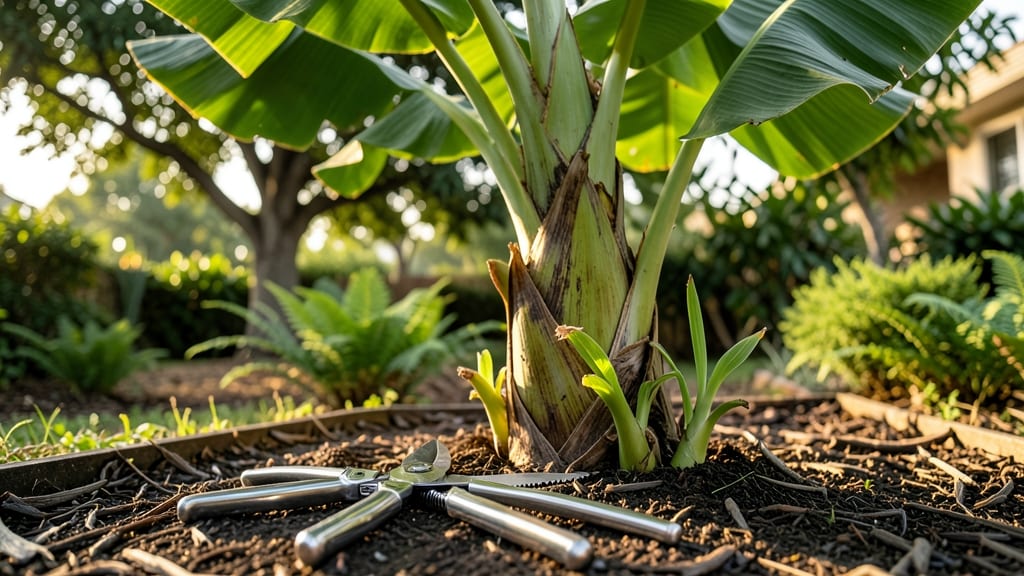
Your banana tree trimming can transform a wild, unruly giant into a productive, year-round fruit machine—if you do it right. 🌿 I’ve seen firsthand how precise cuts keep plants healthy, boost harvests, and prevent that sad, overgrown look.
The key isn’t hacking away blindly but understanding which leaves to keep, which to remove, and when to stop.
You’ll need just three tools: sharp pruning shears, a clean saw for thicker stems, and a disinfectant spray to prevent disease. Timing matters too—trim after harvests or during dry seasons, but never when fruit is ripening.
Over-trimming in one go stresses the plant; instead, spread cuts over 2-3 sessions for gradual recovery.
The payoff is worth it: better air flow means fewer fungal issues, sunlight reaches lower leaves for even growth, and your tree focuses energy on bigger, sweeter fruit. Plus, a well-trimmed banana tree looks like a tropical showpiece, not a jungle takeover. Ready to sharpen those shears?
This works for both dwarf and giant varieties, though larger trees need more patience. Whether you’re dealing with a backyard specimen or a container-grown plant, the same principles apply. Let’s get those cuts clean and strategic!
📚 In This Guide
- What you need
- Instructions
- Tips and common mistakes
- Wrapping up and next steps
What you need
- ● Pruning shears (bypass or anvil type) – Choose sharp, high-quality shears (8–10-inch blades) for clean cuts. Disinfect blades with rubbing alcohol before and after use to prevent disease spread.
- ● Loppers (18–24-inch) – For thicker branches (1–2 inches in diameter). Opt for bypass loppers for cleaner cuts.
- ● Pruning saw (7–10-inch) – Essential for branches over 2 inches thick. A bow saw or curved-blade pruner works best.
- ● Rubbing alcohol (70% isopropyl) or bleach solution – For sterilizing tools between cuts. Mix 1 part bleach to 9 parts water for a DIY sanitizer.
- ● Heavy-duty gloves (cut-resistant) – Protect your hands from serrated leaves, thorns, or sharp tools. Look for nitrile-coated gloves for grip and durability.
- ● Safety goggles – Shield your eyes from debris, sap, or accidental snaps during trimming.
- ● Ladder or step stool (6–10 feet tall) – Banana trees can grow 15–25 feet tall! Ensure the ladder is stable and rated for your weight.
- ● Tarp or drop cloth (10x12 feet) – Lay down to catch debris and protect surrounding plants or soil.
- ● Permanent marker or tape measure – For marking cutting points or measuring branch diameters.
- ● First-aid kit – Just in case! Include bandages, antiseptic wipes, and tweezers for splinters or minor cuts.
- ● Pole pruner (extender loppers, 6–10 feet) – Reaches high branches without a ladder (great for mature trees!).
- ● Hedge shears (for shaping) – Useful if you’re trimming dense foliage into a specific shape.
- ○ Pruning sealant (optional) – Apply to large cuts (over 1 inch) to prevent disease entry (e.g., Tanglefoot Tree Wound Pruning Seal).
- ● Garden kneeler or stool – For comfortable access to lower branches or soil-level tasks.
- ● Disposable pruning bags – Collect and dispose of debris easily, reducing mess.
- ● Spray bottle with water – Keeps tools cool and sap-free during hot days.
Step-by-step guide to trimming banana trees for optimal growth
Here's how to maintain a thriving, productive banana tree with clean, strategic cuts.
🌿 Step 1: Identify and Remove Dead or Diseased Pseudostems
Start by examining the plant's pseudostem—the thick, leafy trunk. Look for brown, mushy spots, black streaks, or hollow areas. These are clear signs of disease or rot. Use clean, sharp pruning shears to make a clean cut about 6 inches below the affected area. This prevents pathogens from spreading to healthy tissue.
Real talk: If the pseudostem feels soft or gives slightly when pressed, it's likely rotting inside. Remove the entire pseudostem at the base if necessary—your tree will produce a new one from the corm. Never leave dead material; it attracts pests and fungal infections.
✂️ Step 2: Prune Yellow or Damaged Leaves Strategically
Banana trees have large, dramatic leaves that can become yellow, brown, or torn over time. Remove these by cutting them at the base with your pruners. Focus on leaves that are 50% or more damaged—healthy leaves should stay to photosynthesize. Never remove more than one-third of the foliage at once, or you'll shock the plant.
Here's the thing—you're not just cleaning up. Each leaf you remove should leave a clean, slanted cut just above a leaf node. This encourages the tree to redirect energy to new growth. Watch for new fronds emerging from the center; these are your signal that the tree is responding well.
☀️ Step 3: Thin the Canopy for Better Airflow and Light Penetration
Banana trees thrive when their center receives at least 4-6 hours of indirect light daily. If the canopy is too dense, cut back some of the older, outer leaves to create openings. Aim to remove leaves that are blocking light from reaching the center of the plant. This also improves airflow, reducing humidity-related diseases like sigatoka.
I like to step back and visually assess the tree's shape. If it looks like a dense umbrella with no light reaching the center, it's time to thin. Focus on removing leaves that are dry, yellow, or overlapping—these are the ones creating shade and trapping moisture. You'll see new, vibrant fronds emerge within 2-4 weeks as the tree adjusts.
🪴 Step 4: Encourage Fruit Production with Selective Trimming
If your banana tree is mature and you want to promote flowering, look for the flower stalk (also called the "bunch") emerging from the center. Once the fruit begins to form, you can prune back some of the older leaves to redirect energy to the developing bananas. Remove leaves that are directly shading the fruit bunch but leave enough to protect it from harsh sun.
Don't overdo it here. Banana trees are heavy feeders, and removing too many leaves can stress the plant. Focus on selective pruning—only remove what's necessary to improve airflow and light. You'll notice the fruit bunch firming up and the bananas growing larger within 4-6 weeks of balanced trimming.
⏰ Step 5: Time Your Trims for Seasonal Growth Cycles
Banana trees grow in cycles, and timing matters. In spring and early summer, focus on removing dead leaves and thinning the canopy to prepare for new growth. In late summer and fall, reduce aggressive pruning to allow the tree to store energy for winter. Avoid heavy trimming during flowering or fruiting stages—this can reduce yield.
Here's the moment that matters: If you live in a tropical or subtropical climate, you can trim year-round, but always follow the 1/3 rule—never remove more than one-third of the foliage at once. In cooler climates, wait until spring when new growth begins. You'll see the difference in a tree that's well-timed and balanced.
Tips & tricks for perfect banana tree trimming
Precision trimming transforms a struggling banana tree into a productive powerhouse. Here's how to elevate your technique beyond basic maintenance.
Tool Selection: Invest in a pair of bypass pruning shears with a sharp, clean blade—dull tools crush stems and create jagged cuts that invite disease. For larger branches, use loppers with a 6-8 inch blade length. Sterilize your tools between cuts by wiping with rubbing alcohol or a 10% bleach solution to prevent cross-contamination between healthy and diseased areas. This simple step can mean the difference between a thriving tree and one battling fungal infections.
Seasonal Timing Nuance: While the instructions highlight seasonal windows, I've found the 4-6 hour light requirement in Step 3 is your real guide. In tropical climates, trim when you notice new fronds emerging from the center—this indicates the tree has already absorbed enough light for that growth cycle. In cooler climates, wait until you see 3-4 new leaves unfurling before pruning, as this signals the tree has stored sufficient energy for recovery. The 1/3 rule from Step 5 becomes your safety net in all climates.
Visual Pruning Cues: Look for these three telltale signs it's time to thin: 1) Overlapping leaves that create dense clusters, 2) Leaves with brown edges that still have green centers (a sign of nutrient stress), and 3) A canopy so dense you can't see sunlight reaching the center. For Step 4, when encouraging fruit production, focus on removing leaves that cast direct shade on the flower stalk—you'll notice the developing bananas respond within 2-3 weeks with firmer texture and more vibrant color. The key is balance: remove just enough to improve airflow without exposing the fruit to harsh afternoon sun.
Post-Pruning Care: After any significant trimming (especially in Steps 1 and 3), apply a balanced fertilizer (10-10-10 ratio) around the base of the tree. This replenishes nutrients lost during pruning and supports new growth. Water deeply immediately after trimming to help the tree recover, but avoid waterlogging the soil—banana trees hate soggy roots. In tropical climates, I've seen trees produce new fronds within 10-14 days when given this post-pruning care, while cooler climates may take 3-4 weeks for visible recovery.
Pro Tips for Banana Tree Trimming
- Precision trimming transforms a struggling banana tree into a productive powerhouse. Here's how to elevate your techn...
- Tool Selection: Invest in a pair of bypass pruning shears with a sharp, clean blade—dull tools crush stems and create...
- Seasonal Timing Nuance: While the instructions highlight seasonal windows, I've found the 4-6 hour light requirement ...
Frequently asked questions
Got questions about keeping your banana tree in tip-top shape? Here are some of the most common concerns—plus straightforward answers to help you trim with confidence!
When is the best time to trim a banana tree?
The ideal time to trim is after harvest or during the dry season (when the tree isn’t actively fruiting). For tropical climates, aim for late winter or early spring. Avoid trimming during heavy fruit production—this can stress the plant and reduce yields. Pro tip: If you’re pruning for aesthetics, do it gradually to avoid shocking the tree!
How do I know which leaves to cut?
Focus on yellow, dead, or damaged leaves first—they drain energy from the tree. For mature trees, remove old, unproductive pseudostems (the "trunk") to encourage new growth. Never cut more than 30% of the foliage at once—this keeps the tree healthy and productive. Use sharp pruners or a machete for clean cuts!
Will trimming my banana tree reduce fruit production?
Not if done correctly! Proper trimming boosts fruit quality by redirecting energy to healthier growth. However, over-pruning (cutting too aggressively) can delay or reduce harvests. Balance is key—remove only what’s necessary to maintain airflow and sunlight. For dwarf varieties, be extra gentle to preserve flowering potential.
Can I trim a banana tree during the rainy season?
It’s not recommended—wet conditions increase the risk of fungal diseases (like Sigatoka) and slow healing. If you must trim in rainy weather, do it early in the day so cuts dry quickly. Always sterilize tools with rubbing alcohol or bleach to prevent infections. Wait for dry, sunny days for the best results!
What if my banana tree keeps growing new shoots but no fruit?
This often signals over-trimming or poor nutrient balance. Try these fixes:
- Fertilize with a potassium-rich blend (like 10-10-20) to encourage fruiting.
- Reduce pruning—focus only on dead/diseased leaves.
- Check for pests (e.g., aphids or borers) that may stress the tree.
Wrapping up and next steps
Trimming your banana tree isn’t just about keeping it tidy—it’s a game-changer for fruit production, disease prevention, and overall plant vitality! 🌿 With the right tools, timing, and technique, you’ll unlock a healthier, more productive tree year after year.
Whether you’re a seasoned gardener or just starting out, every cut counts toward a thriving harvest.
Ready to take action? Grab your pruners, mark your calendar for the best trimming window, and get to work! Your banana tree—and your future fruit—will thank you. 🍌✨