
Pruning
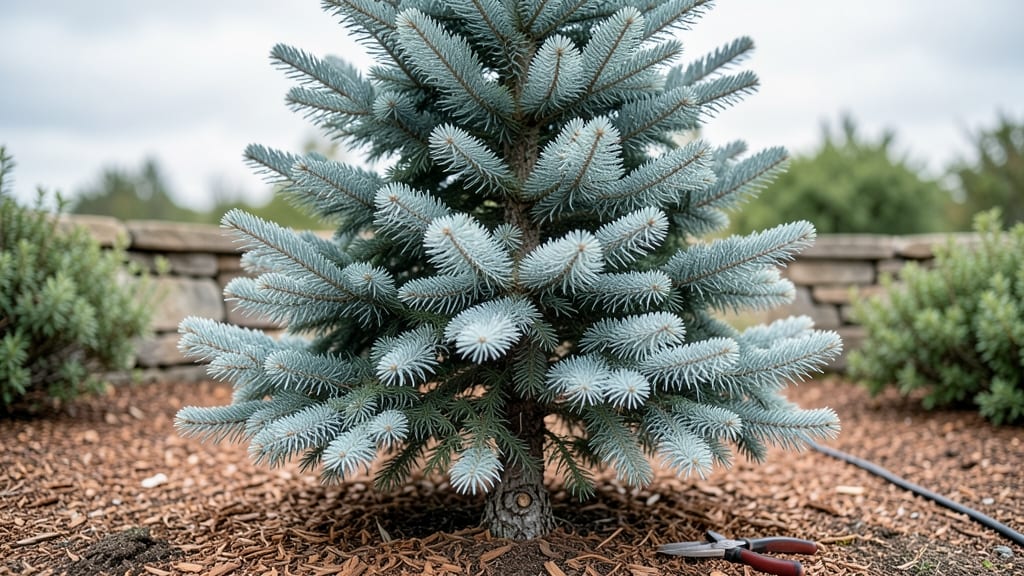
This Christmas tree Colorado spruce will glow with its signature silvery-blue foliage under mountain sunlight—just like the ones I’ve grown for years in my high-altitude garden. as stunning holiday trees.
The key to their success isn’t just planting; it’s understanding how they thrive in cold, thin mountain soils where other evergreens struggle.
These trees demand well-draining soil with a slightly acidic pH, but don’t stress over perfect conditions—they’re tougher than they look. A full sun location with afternoon shade in hotter valleys keeps their needles vibrant year-round.
Watering’s simple: deep soaks once a week during dry spells, but never soggy roots. Pruning? Just remove dead branches in late winter—no fancy shaping needed unless you’re growing one for the holidays.
By year three, you’ll have a tree that towers over your yard with that classic Colorado Blue Spruce silhouette. The scent alone—fresh, resinous, and crisp—makes it worth the wait. Whether you’re growing one for Christmas or as a long-term landscape star, these trees reward patience with decades of beauty.
They handle winter winds better than most evergreens, but young trees need winter protection in exposed areas. Mulch heavily in fall to shield roots from freeze-thaw cycles. The payoff? A tree that stays lush even when other evergreens brown at the edges.
📚 In This Guide
- What you need
- Instructions
- Tips and common mistakes
- Wrapping up and next steps
What you need
- ● Colorado Spruce Sapling (Picea pungens): Choose a 1- to 3-year-old tree from a reputable nursery (ensure it’s disease-resistant).
- ● Well-draining soil: Mix garden soil with compost (3:1 ratio) or use peat moss for acidic-loving spruces.
- ● Organic mulch: Pine straw or wood chips (2–3 inches thick) to retain moisture and suppress weeds.
- ● Slow-release fertilizer: 10-10-10 NPK (apply in early spring and fall).
- ● Pruning tools: Bypass pruners (for small branches)
- ● Loppers (for thicker branches, ½–1 inch diameter)
- ● Sharp pruning saw (for larger limbs, if needed)
- ● Disinfectant: 70% isopropyl alcohol or bleach solution (1 part bleach to 9 parts water) to sterilize tools.
- ● Tree staking kit (for young saplings in windy areas).
- ● Soil pH tester (ideal range: 5.0–6.0).
- ● Anti-transpirant spray (to reduce water loss during hot/dry spells).
- ● Garden gloves (to protect hands from sap and thorns).
- ● String lights or bird deterrents (if planting near residential areas).
- ● Sunlight: Full sun (6+ hours daily) or partial shade (especially in hot climates).
- ● Spacious site: Minimum 6–8 feet of clearance (spruces grow 30–60 feet tall!).
- ● Water source: Drip irrigation or hose for consistent moisture (especially in the first year).
- ● Patience! Colorado spruces grow slowly (6–12 inches per year) but thrive with minimal intervention.
How to cultivate a thriving Colorado blue spruce Christmas tree
Here's how I've grown healthy, frost-resistant Colorado blue spruces in mountain climates—no shortcuts, just proven methods.
Select the Right Location and Prepare the Soil
Choose a spot with full sun exposure (at least 6 hours daily) and well-draining soil. Colorado blue spruces thrive in USDA Hardiness Zones 2-7, making them perfect for Colorado's elevation. Avoid low spots where cold air pools—this causes winter damage.
Test your soil's drainage by digging a 12-inch deep hole. If water pools after 30 minutes, amend with 3 inches of coarse sand or gravel mixed into the top 12 inches of soil. The key is preventing soggy roots, which leads to root rot in these evergreens.
Plant at the Correct Depth and Spacing
Dig a planting hole twice as wide as the root ball but no deeper. Set the tree so the top of the root ball sits 2-3 inches below ground level—this prevents stem rot from excess moisture. Gently loosen the roots if they're circling the root ball.
Space saplings 10-15 feet apart for mature trees. Overcrowding leads to weak branches and poor airflow, inviting fungal diseases. Water deeply before planting to help settle the soil around roots. I always mulch with 3 inches of pine straw or wood chips (keep it 6 inches away from the trunk) to retain moisture and regulate soil temperature.
Water Deeply and Establish a Consistent Schedule
Water once a week during the first growing season, providing 1-2 gallons per inch of trunk diameter. For example, a 3-inch diameter sapling needs 3-6 gallons per watering. Let the soil dry slightly between waterings—soggy soil suffocates roots.
After the first year, reduce watering to once every 2-3 weeks unless experiencing drought. Colorado blue spruces are drought-tolerant once established, but young trees need consistent moisture. Check moisture by digging 2 inches down—if dry, water again.
Prune for Strong Growth and Holiday Shape
Prune in late winter or early spring before new growth begins. Remove dead, diseased, or crossing branches first—these weaken the tree. Use clean, sharp pruners to make cuts just outside the branch collar (the swollen area where the branch meets the trunk).
For a full, festive shape, selectively trim inner branches to improve airflow. Avoid heavy pruning—never remove more than 25% of the foliage in one season. This keeps the tree dense and vibrant for holiday displays.
Protect from Winter Burn and Pests
In Colorado’s harsh winters, young trees can suffer from winter burn (brown needle tips). Apply anti-desiccant spray in late fall to create a protective layer. Also, wrap the trunk with tree guard to prevent rodent damage and frost cracks.
Monitor for spruce beetles—a common threat in Colorado. Look for D-shaped holes in bark or sawdust-like frass. If infested, treat with neem oil or contact a local arborist. Healthy trees resist pests better, so proper care now prevents future headaches.
Tips & tricks for perfect Colorado blue spruce care
Real talk: Even the hardiest Colorado blue spruce needs a few extra touches to thrive in mountain conditions. These are the details that separate a scraggly tree from one that stands proudly for decades.
Soil Testing Tip: Before amending your soil, grab a handful of damp earth and squeeze it. If it stays clumped together after 30 minutes, you definitely need that 3 inches of coarse sand or gravel—this isn't just about drainage, it's about preventing those dreaded anaerobic pockets where roots suffocate. I've seen too many trees fail because people skipped this simple check.
Planting Depth Secret: That 2-3 inch depth below ground level for the root ball isn't just arbitrary—it creates a natural transition zone that protects against temperature swings. Use a level or straight stick to check depth before backfilling. Pro tip: Tap the soil gently around the edges after planting to eliminate air pockets that could trap moisture against the trunk.
Watering Wisdom: When calculating your 1-2 gallons per inch of trunk diameter, measure the diameter at chest height—not the base where the trunk might flare. For a 3-inch sapling, that means 3-6 gallons spread evenly around the root zone, not dumped all in one spot. I use a watering wand to create gentle rain rather than a jet stream that washes away soil.
Pruning Precision: The 25% foliage rule is your safety net, but here's what nobody tells you—always prune on a dry day. Wet needles make it harder to see where branches attach, and you risk spreading fungal spores. Also, sterilize your pruners with rubbing alcohol between cuts to prevent cross-contamination of any potential diseases hiding in your tree.
Pro Tips for Christmas Tree Colorado Spruce
- Real talk: Even the hardiest Colorado blue spruce needs a few extra touches to thrive in mountain conditions.
- Soil Testing Tip: Before amending your soil, grab a handful of damp earth and squeeze it.
- Planting Depth Secret: That 2-3 inch depth below ground level for the root ball isn't just arbitrary—it creates a natural transition zone that protects against temperature swings.
Frequently asked questions
Got questions about growing and caring for your Christmas Tree Colorado Spruce? Here are some of the most common ones—plus expert answers to keep your evergreen thriving year-round!
What’s the best time of year to plant a Colorado Blue Spruce?
Plant your Picea pungens in early fall or late spring when temperatures are mild. This gives roots time to establish before extreme heat or cold. Avoid planting in summer—drought stress can stunt growth. If you must plant in winter, choose a mild day and water thoroughly to prevent frost damage.
How cold can a Colorado Spruce handle?
These trees are frost-resistant champions! They thrive in USDA Zones 3–8 and can withstand temperatures down to -40°F (-40°C). Just ensure they’re planted in well-draining soil to avoid root rot in soggy winters. Young saplings may need winter mulch for extra protection.
When and how should I prune my Colorado Spruce?
Prune in late winter or early spring (before new growth starts) to avoid stressing the tree. Use clean, sharp shears to trim dead or overcrowded branches—never cut into old wood. For shaping, remove no more than 25% of the foliage at once. Pro tip: Prune after heavy snowfall to avoid breaking branches.
What pests or diseases should I watch for?
Common issues include spider mites, bagworms, and fungal diseases like needle cast. Inspect for webbed foliage (mites) or sawdust-like frass (bagworms). Treat mites with horticultural oil and remove bagworms by hand. For fungal issues, improve air circulation and avoid overhead watering. Prevention tip: Apply neem oil in early summer as a deterrent.
Can I grow a Colorado Spruce in a container?
Yes, but it’s challenging long-term. Young trees (under 5 years) can thrive in large containers (15+ gallons) with fast-draining mix. Use a dwarf cultivar (like ‘Globe’ or ‘Fat Albert’) for better success. Move containers to sheltered spots in winter and water sparingly—overwatering is the #1 killer. Expect slower growth than in-ground trees.
Wrapping up and next steps
Growing a Christmas Tree Colorado Spruce is a rewarding journey that brings evergreen beauty and resilience to your mountain garden. With the right care—from selecting frost-resistant varieties to mastering pruning techniques—you’ll nurture a stunning centerpiece that stands the test of time. 🌲✨
Ready to transform your outdoor space? Start by planting your sapling this fall and monitor its progress year-round. Whether you’re a seasoned gardener or a beginner, every step brings you closer to a lush, holiday-ready spruce that will be the envy of the neighborhood!