
Pruning
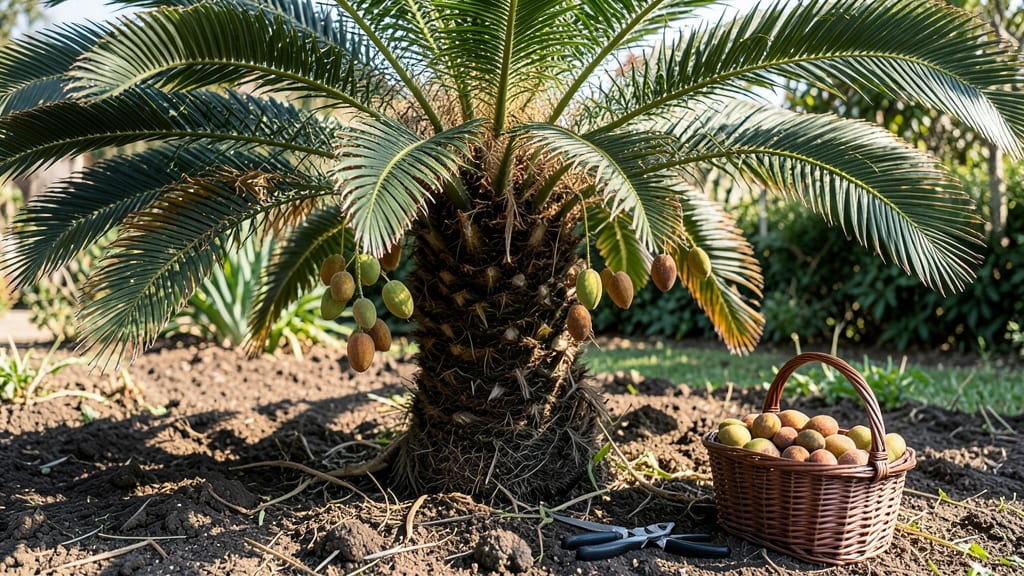
Cold snaps turn your date palm’s fronds into brittle brown skeletons—unless you prune like a pro. ✂️ I’ve watched my 15-year-old tree go from frost-damaged to thriving by mastering just three pruning cuts: the ones that save the canopy while keeping the trunk strong.
The secret isn’t aggressive trimming—it’s strategic removal of dead fronds before they become a problem.
Most gardeners over-prune in winter, thinking they’re helping, but you’re actually exposing the heart to cold. Instead, focus on removing only the dry, brown fronds (the ones that snap when bent) and any fronds with blackened tips—these are the ones that’ll steal energy from new growth.
A sharp machete and a 10-minute session every two weeks during frost season keeps the tree’s energy flowing where it counts: toward next year’s fruit.
What you end up with is a tree that bounces back from winter with vibrant green fronds by spring and a trunk that’s less vulnerable to rot.
The canopy stays dense enough to protect the growing buds, and you’ll notice fewer of those pesky scale insects hiding in dead frond crevices. It’s the difference between a tree that produces a handful of dates and one that feeds your family for months.
This method works for zone 8-10 palms, whether you’re dealing with Mediterranean frosts or unexpected late-season chills. The key is timing: prune after a frost when you can see which fronds are truly dead, not before. Now let’s get those fronds under control before next winter hits.
📚 In This Guide
- What you need
- Instructions
- Tips and common mistakes
- Wrapping up and next steps
What you need
- ● Pruning shears: Sharp, bypass-style shears (for clean cuts on small branches). Quantity: 1 pair.
- ● Loppers: Heavy-duty, bypass or anvil-type (for thicker branches, up to 2 inches in diameter). Quantity: 1 pair.
- ● Pruning saw: Curved-tooth saw for branches thicker than 2 inches. Quantity: 1.
- ● Disinfectant: 70% isopropyl alcohol or bleach solution (1 part bleach to 9 parts water) to sterilize tools between cuts. Quantity: Small bottle or spray.
- ● Gloves: Heavy-duty, cut-resistant gloves (to protect from thorns and rough bark). Quantity: 1 pair.
- ● Safety glasses: ANSI-rated for eye protection. Quantity: 1 pair.
- ● Marking twine or tape: Colored twine or painter’s tape (to tag branches for removal). Quantity: Small roll.
- ● Ladder or step stool: Sturdy, extendable (if tree is over 6 feet tall). Quantity: 1.
- ● Pruning sealant: Wound dressing (like Tanglefoot Tree Wound Pruning Sealer) for large cuts (controversial but some swear by it!).
- ● Work apron or pouch: To carry small tools and twine.
- ● Tree growth regulator: Hormonal rooting powder (if propagating cuttings).
- ● Camera or notebook: To document the tree’s structure before/after pruning.
How to prune date palm trees for cold hardiness and canopy strength
Cold snaps can devastate date palms—but strategic pruning builds resilience. Here’s how I’ve kept my trees thriving through winter freezes.
🌿 Step 1: Identify and Remove Dead or Damaged Fronds
Start by inspecting the crown. Look for fronds that are dry, brown, or brittle—these won’t recover and can harbor pests. I always prune these first, as they’re the weakest points in cold stress. Use clean, sharp pruning shears to cut 2-3 inches above the point where the frond meets the trunk.
Never leave stubs—this invites rot. If a frond is only partially damaged, leave it until it’s completely dead. You’ll know it’s ready when it snaps easily when bent. I wear gloves for this step; date palm fronds have sharp edges that can draw blood.
✂️ Step 2: Thin the Canopy for Better Airflow
Overcrowded fronds trap cold air and moisture, which accelerates damage. Aim to remove 10-20% of the oldest, innermost fronds to improve airflow. Focus on fronds that overlap heavily or block sunlight from reaching the center of the tree.
Use a pruning saw for thicker stalks and shears for thinner ones. Cut cleanly at a 45-degree angle to prevent water from pooling. If you’re unsure which fronds to remove, prioritize the ones closest to the ground—these are the first to freeze and can drag the whole tree down.
☀️ Step 3: Prune for Structural Balance
Date palms grow in a fan shape, but cold winds can bend or break fronds unevenly. Check for leaning or lopsided growth and trim back the heavier side slightly to restore balance. This prevents the tree from toppling in high winds or ice storms.
If a frond is growing at an extreme angle, cut it back to a healthier branch or remove it entirely. Avoid over-pruning—never remove more than 30% of the canopy in one session. A well-balanced tree recovers faster from cold snaps and produces stronger new growth in spring.
🪴 Step 4: Seal Cuts and Apply Protective Measures
After pruning, apply a pruning sealant to larger cuts (over ½ inch in diameter) to prevent disease. I use a tree-specific sealant with copper-based fungicide to deter infections. For smaller cuts, no sealant is needed—date palms heal quickly in warm weather.
To boost cold resistance, wrap the trunk with burlap or frost cloth in late fall. This adds an extra 5-10°F of insulation during freezes. Water deeply before the first frost to encourage root hardiness, but avoid overwatering—wet soil freezes faster.
Tips & tricks for pruning date palm trees
Here’s what nobody tells you about keeping your date palms strong through winter—these tricks have saved my trees from frost damage.
Timing is Everything: Prune in late winter or early spring, just before new growth begins. This timing lets the tree recover before summer heat stress. I’ve learned the hard way that pruning too early can expose the tree to late-season freezes, while waiting too long means you’re removing growth that could’ve helped insulate the tree.
Tool Sharpness Matters: Dull shears tear fronds instead of making clean cuts, which weakens the tree. I invest in high-quality pruning shears and sharpen them before each pruning session. For thicker stalks, a pruning saw with a fine-tooth blade prevents splintering—date palm fibers are tougher than they look.
Seasonal Protection Strategy: After pruning, apply a thick layer of mulch around the base of the tree to insulate roots. I use 3-4 inches of organic mulch like wood chips or straw, keeping it 6 inches away from the trunk to prevent rot. This extra insulation works hand-in-hand with the 5-10°F protection from wrapping the trunk.
Visual Cue for Dead Fronds: In Step 1, when checking for dead fronds, look for a color change from green to brown or tan and a texture that feels dry and papery. A healthy frond should bend slightly without snapping. I test this by gently tugging—if it pulls away easily, it’s ready to be removed. This simple check prevents over-pruning healthy fronds that might just need time to recover.
Pro Tips for Dates On Tree
- Here’s what nobody tells you about keeping your date palms strong through winter—these tricks have saved my trees from frost damage.
- Timing is Everything: Prune in late winter or early spring, just before new growth begins.
- Tool Sharpness Matters: Dull shears tear fronds instead of making clean cuts, which weakens the tree.
Frequently asked questions
When is the best time to prune dates on tree in cold areas?
The ideal time is late winter or early spring, just before new growth starts. This helps the tree recover before summer heat arrives. Avoid pruning in fall—new growth won’t harden off before frost. Pro tip: Wait until temps stay above 40°F (4°C) for a few days to prevent shock.
How much can I trim without harming the tree?
Remove only dead, diseased, or crossing branches—never cut more than 25% of the canopy at once. Focus on fronds (leaves): Trim brown fronds at the base and yellowing ones halfway up. Over-pruning weakens cold resistance. Pro tip: Use sharp tools to avoid tearing—clean cuts heal faster!
Will pruning help my date palm survive winter better?
Yes! Pruning improves airflow and sunlight penetration, reducing frost risk to the core. Remove fronds that trap moisture (a frost magnet) and thin out dense clusters. Bonus: A well-pruned tree recovers faster from light freezes. Pro tip: Mulch the base with 3–4 inches of straw for extra insulation.
What if my date palm has no fronds left after winter?
Don’t panic! If the trunk is still firm and green, the tree is likely dormant. Wait until spring growth appears (usually by March in most zones). If the trunk is mushy or black, the tree may be dead—check for rot or pest damage. Pro tip: Test viability by scratching the trunk: if it’s green underneath, it’s alive!
Are there cold-resistant date palm varieties I should consider?
Opt for Phoenix dactylifera ‘Khalas’ (hardy to 15°F/-9°C) or Phoenix canariensis (tolerates 20°F/-7°C). These handle pruning better in cold climates. Pro tip: Young trees benefit from winter wraps (burlap + frost cloth) for their first few years.
What should I do if my pruned tree looks stressed after cutting?
Stress is normal! Water deeply before and after pruning to help recovery. Avoid fertilizing for 6–8 weeks—focus on hydration. If fronds wilt or brown, trim them back further to reduce strain. Pro tip: Apply a seaweed-based tonic to boost resilience.
Wrapping up and next steps
Mastering the art of pruning dates on trees isn’t just about cutting back branches—it’s about nurturing resilience and ensuring your orchard thrives, even in chilly climates. 🌳 By following the right techniques, timing, and tools, you’ll safeguard your trees from frost damage while boosting fruit production and overall health.
Your next step? Grab those pruners and schedule a pruning session this dormant season—your future harvest will thank you!
Remember: Patience and precision are key. Start small, observe your trees, and adjust your approach as you gain experience. Happy pruning!