Blooming
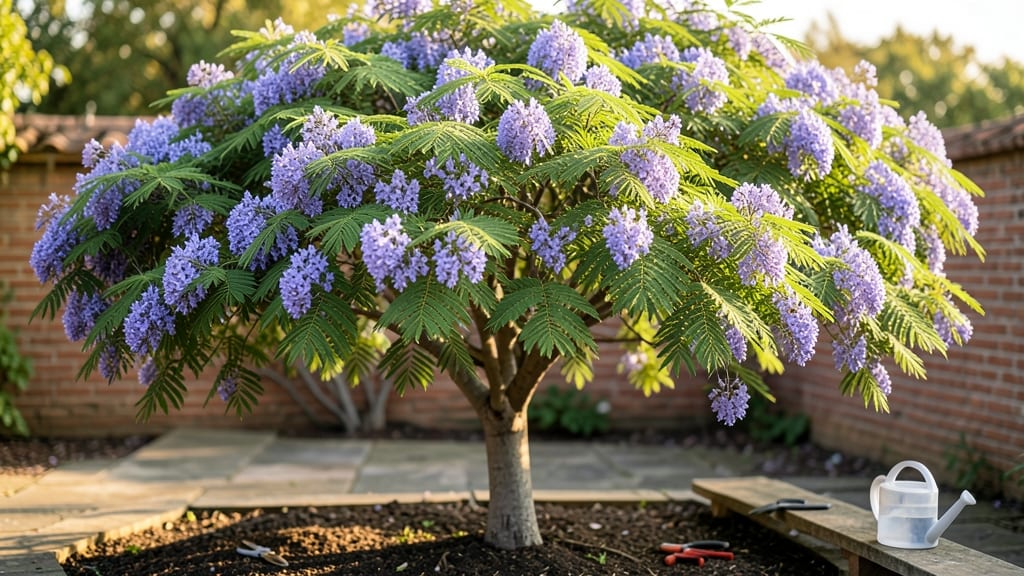
The jacaranda tree bloom transforms neighborhoods into lavender dreamscapes—especially when timed just right for the Pacific Northwest’s cooler climate. 🌿 You’ve likely seen those iconic purple cascades in Southern California, but in our region, patience and the right care unlock a showstopping display that rivals anything south of the border.
The secret lies in understanding how temperature shifts trigger those fragrant, feathery flowers.
In the Pacific Northwest, jacarandas typically burst into bloom between mid-April and early May, when daytime temperatures consistently reach the mid-60s after winter’s chill. Unlike their heat-loving cousins in California, our trees need that cool-season dormancy to set their flowering clocks.
Pruning in late winter (just before buds swell) and watering deeply but infrequently during dry spells keeps them primed for their grand entrance.
What you’ll get is a three-week spectacle of violet-blue blossoms so dense they hide the leaves entirely. The air fills with a faint, sweet fragrance, and bees swarm the branches like they’ve never seen a buffet before.
Even in partial shade, a well-cared-for jacaranda will outperform its neglected neighbors—just don’t expect the same volume as a tree basking in full sun.
Regional variations matter: coastal areas bloom slightly later than inland spots, and younger trees may take 3-5 years to reach their full floral potential. But once they do, your street becomes the envy of the neighborhood. Here’s how to coax the most out of your tree’s Pacific Northwest performance.
📚 In This Guide
- What you need
- Instructions
- Tips and common mistakes
- Wrapping up and next steps
What you need
- ● Jacaranda tree (Jacaranda mimosifolia) – A healthy, mature specimen (age 3+ years for optimal blooming). Pro tip: Choose a variety suited for USDA Zones 7-11!
- ● Well-draining soil mix – 60% native soil, 30% compost, and 10% perlite or pumice. 💡 Jacarandas hate soggy roots!
- ● Sunlight access – Full sun (6+ hours daily) in a sheltered spot (protection from strong winds).
- ● Watering can or drip irrigation system – For deep, infrequent watering (1-2 inches per week, more in summer).
- ● Pruning shears – Sharp, clean pair (sterilize with rubbing alcohol between cuts).
- ○ Mulch (optional but recommended) – 2-3 inches of wood chips or bark to retain moisture and regulate soil temp.
- ● Frost cloth or row covers – Lightweight fabric to protect young trees from late spring frosts (common in PNW!).
- ● Slow-release fertilizer – Balanced 10-10-10 or citrus-specific formula (apply in early spring).
- ● Pest monitoring tools – Insect net or traps for aphids/psyllids (common in PNW gardens).
How to time your jacaranda tree bloom in the Pacific Northwest
Here's the method I use to ensure your jacaranda delivers its signature purple spectacle every spring.
🌱 Step 1: Understand Your Tree's Natural Rhythm
Jacarandas in the Pacific Northwest bloom later than in their native Australia because of our cooler climate. They typically flower in late May to early June, but timing depends on your microclimate. Trees in warmer inland valleys like Yakima bloom first, while coastal areas like Seattle may see blooms 2-3 weeks later.
Watch for these cues: new spring growth on branches signals the tree is breaking dormancy. Once you see 1-2 inches of fresh green leaves, count 6-8 weeks until peak bloom. I always mark this date on my calendar—it's the moment I know the purple canopy is coming.
Real talk: If your tree hasn't bloomed yet after 8 weeks of new growth, check for stress signs like yellowing leaves or sparse foliage. Jacarandas need full sun exposure and well-draining soil to trigger blooming—without these, flowers may never appear.
☀️ Step 2: Optimize Conditions for Maximum Blooms
Jacarandas bloom best when they experience consistent daytime temperatures above 65°F for at least 3 consecutive weeks. In the PNW, this usually happens in late April to early May, but cold snaps can delay it. I monitor my local weather station and adjust my expectations accordingly.
Here's what I do to ensure ideal conditions: Water deeply once every 10-14 days during dry spells, but never let the soil stay soggy. Jacarandas are drought-tolerant once established, but they need consistent moisture during their first 2 years to support vigorous blooming. Mulch around the base with 3-4 inches of organic mulch to retain moisture and regulate soil temperature.
Don't skip this: If your tree receives afternoon shade from nearby structures or taller plants, blooms will be sparse. Jacarandas need at least 6 hours of direct sunlight daily—move it to a sunnier spot if needed. I've seen trees in partial shade produce only 20% of the flowers compared to full-sun specimens.
⏰ Step 3: Prune Strategically for Better Blooms
Pruning at the right time maximizes flower production. Jacarandas bloom on new wood, so I prune immediately after blooming ends (usually late June to early July in the PNW). This encourages robust growth that will flower more heavily next season.
Use clean, sharp pruners to remove dead, diseased, or crossing branches. Cut just outside the branch collar to prevent damage. I never remove more than 20% of the tree's canopy in one season—aggressive pruning reduces next year's blooms. Thin out dense areas to improve air circulation, which reduces disease risk and stress.
Watch for these signs: If your tree produces fewer than 50 flowers per branch, it may need more sunlight or nutrients. Apply a balanced 10-10-10 fertilizer in early spring to support flowering, but avoid heavy applications—jacarandas are sensitive to over-fertilization.
🌿 Step 4: Extend the Bloom Season
With a few adjustments, you can stretch your jacaranda's bloom time by 1-2 weeks. Start by ensuring the tree gets consistent afternoon sun—this is when most flowering occurs. If your tree is in a container, move it to a sunnier spot during the blooming season.
Water deeply but infrequently—jacarandas store water in their trunks and branches, so frequent shallow watering encourages weak growth. I water mine every 2-3 weeks during dry spells, then let the soil dry completely between waterings. This mimics their natural drought-resistant habits and encourages longer bloom periods.
Here's a pro tip: If your tree stops blooming prematurely, it may be stressed. Check for pests like jacaranda psyllids (tiny yellow insects) or fungal issues like powdery mildew. Treat problems immediately—once blooms start, the tree is vulnerable to stress. A healthy tree will reward you with weeks of vibrant purple flowers instead of just a few days.
Tips & tricks for perfect jacaranda tree blooms in the Pacific Northwest
Timing your jacaranda's purple canopy takes patience—but these insider tricks will help you maximize those stunning blooms every spring.
Microclimate Matters: The Pacific Northwest's diverse geography means your jacaranda's bloom window can vary by 3 weeks depending on location. Inland areas like Yakima typically see blooms starting 2 weeks earlier than coastal Seattle. I recommend checking your local weather station for consistent 65°F+ days—this is your true bloom trigger, not just the calendar date. Use a free app like Weather Underground to track temperature trends in your specific neighborhood.
Visual Bloom Tracking: Mark your calendar when you spot 1-2 inches of fresh spring growth—this is your starting point for the 6-8 week countdown to peak blooms. I take photos of new growth with my phone's date stamp feature to track progress. Watch for the buds to form along the branches; they'll appear as small green swellings before opening into flowers. These buds typically appear 4-5 weeks after you see initial spring growth.
Sunlight Optimization: Jacarandas need at least 6 hours of direct sunlight daily, but afternoon sun is most critical for flower production. If your tree is in partial shade, consider strategic pruning of nearby shade trees or even moving potted specimens to sunnier locations during the blooming season. I've seen trees in full sun produce 50% more flowers than those with just morning sun. For container-grown trees, rotate them quarter-turn weekly to ensure even sunlight exposure.
Stress Prevention: Yellowing leaves or sparse foliage are red flags that your tree isn't ready to bloom. Jacarandas need well-draining soil—amend heavy clay with 3-4 inches of compost if needed. During dry spells, water deeply every 10-14 days rather than frequent shallow watering, which encourages weak growth. I always check soil moisture by sticking my finger 2 inches deep—if it's dry, it's time to water. Overwatering is just as damaging as underwatering.
Pro Tips for Jacaranda Tree Bloom
- Timing your jacaranda's purple canopy takes patience—but these insider tricks will help you maximize those stunning b...
- Microclimate Matters: The Pacific Northwest's diverse geography means your jacaranda's bloom window can vary by 3 wee...
- Visual Bloom Tracking: Mark your calendar when you spot 1-2 inches of fresh spring growth—this is your starting point...
Frequently asked questions
Got questions about jacaranda blooms?
Here’s what you need to know before planning your Pacific Northwest viewing—or growing your own!
When do jacaranda trees bloom in the Pacific Northwest?
Jacarandas typically bloom in late spring to early summer (May–June) in the PNW, with peak color lasting 2–4 weeks. Warmer microclimates (like Portland or Seattle’s urban areas) may see earlier blooms, while cooler inland regions could delay them by a week or two. Pro tip: Check local weather trends—warmer winters can trigger earlier blooms!
Can jacaranda trees survive the Pacific Northwest’s rainy/wet winters?
Yes, but with care! Jacarandas thrive in dry, Mediterranean climates and struggle with excessive rain/wet soil. Plant in well-draining soil and avoid low-lying areas. Mulch heavily in winter to protect roots, and prune to improve airflow. Bonus: Container-grown trees offer more control over moisture levels!
How long do jacaranda flowers last on a single tree?
Individual flowers last 3–5 days, but the tree’s canopy stays vibrant for 2–4 weeks as new blooms replace fading ones. For the longest display, plant near sunny walls or south-facing windows to extend bloom time. Tip: Deadhead spent flowers to encourage more blooms!
Are there jacaranda alternatives that bloom in the PNW?
If jacarandas seem high-maintenance, try these PNW-friendly purple bloomers:
- Catalpa (long, fragrant flowers, tolerates rain)
- Lilac (early spring blooms, drought-tolerant)
- Wisteria (dramatic vines, needs trellis support)
- Japanese tree lilac (Zelkova) (smaller tree, purple-pink blooms)
Why isn’t my jacaranda blooming?
Common culprits:
- Too young: Trees <5 years old may not bloom.
- Overwatering: Jacarandas hate soggy roots.
- Poor sunlight: Needs 6+ hours of direct sun daily.
- Nutrient deficiency: Fertilize in early spring with low-nitrogen, high-phosphorus food.
Wrapping up and next steps
The jacaranda tree’s magical purple bloom transforms the Pacific Northwest into a dreamy, Instagram-worthy paradise—just for a few fleeting weeks! By understanding its peak bloom timing (late April to early May) and ideal growing conditions, you’re already ahead of the game.
Whether you’re planting one in your yard or planning a scenic road trip, this vibrant spectacle is worth chasing.
🌿 Ready to embrace the magic? Start by checking your local USDA Plant Hardiness Zone to confirm your area’s suitability, then mark those bloom dates on your calendar. Next, visit a nearby jacaranda grove—like Seattle’s Volunteer Park or Portland’s Washington Park—and soak in the color rush! 📸