
Pruning
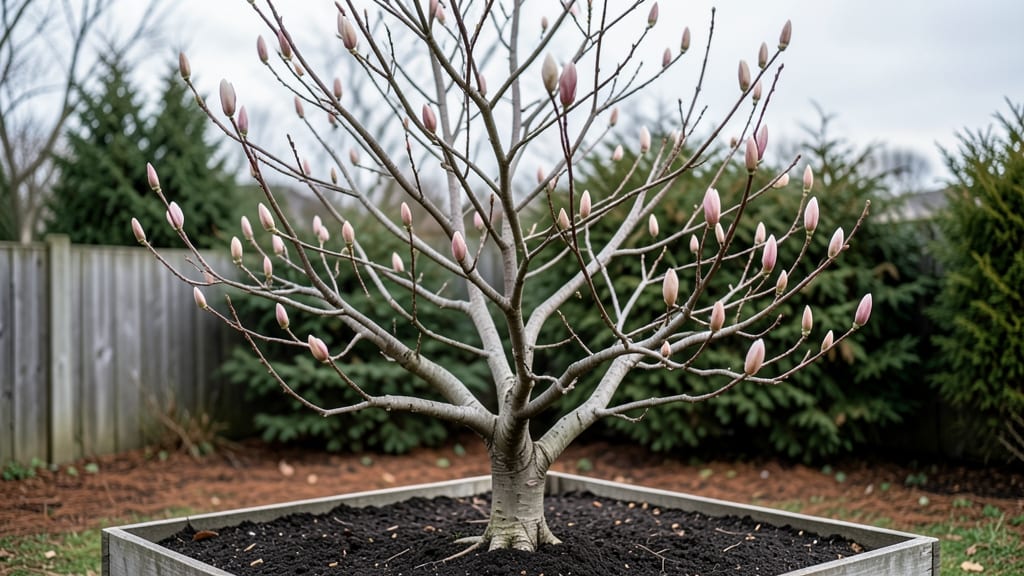
Winter pruning your magnolia tree isn’t just about shaping—it’s about reviving its cold-resistant structure for next year’s spectacular blooms. 🌿 I’ve learned the hard way that timing matters: prune too early, and you risk frost damage; too late, and you cut off next season’s flower buds.
The secret lies in late winter, when the tree’s dormant but the threat of hard freezes has passed.
You’ll need sharp pruning shears, a ladder (for taller varieties), and a clear day with temperatures above 25°F. Focus on three key steps: removing dead or crossing branches first, then thinning out crowded areas to improve airflow, and finally, shaping the tree to maintain its natural form.
Evergreen magnolias like the Southern magnolia need gentler cuts—they’re more sensitive to over-pruning than deciduous types.
What you’ll end up with is a tree that looks neater and healthier by spring, with fewer weak branches that could snap under winter ice. The improved airflow reduces disease risk, and the open structure lets sunlight reach the center, encouraging stronger growth.
Plus, your magnolia will rebound faster from winter stress, setting the stage for those iconic blooms.
This method works for USDA Zones 4-9, with adjustments for colder climates—wait until mid-February in northern areas. For deciduous magnolias, prune right after blooming; evergreens can handle late winter cuts.
The key is patience: magnolias reward careful pruning with decades of reliable growth and those showstopping flowers. Let’s get those branches trimmed right.
📚 In This Guide
- What you need
- Instructions
- Tips and common mistakes
- Wrapping up and next steps
What you need
- ● Pruning shears (bypass or anvil type) – Sharp, clean blades (2–4" opening) for cutting small branches (up to ½" thick). Sterilize with rubbing alcohol before and after use to prevent disease spread. 🔪
- ● Loppers – Long-handled (24–30" reach), 1.5–2.5" cutting capacity for medium branches (½"–1.5" thick). Look for ratchet-style for extra leverage. ⚙️
- ● Pruning saw – Curved-tooth blade (8–10" length) for thick branches (1.5"–3" thick). Avoid cheap saws—they dull quickly! 🪓
- ● Gloves – Heavy-duty, cut-resistant (12–14" length) to protect hands from thorns and sap. Waterproof fabric is ideal for winter pruning. 🧤
- ● Ladder or step stool – Sturdy, non-slip (6–10 ft height) if your magnolia is over 6 ft tall. Always have a spotter for safety! 🪜
- ● Disinfectant (70% isopropyl alcohol or bleach solution) – 1 part bleach to 9 parts water for cleaning tools between cuts. ⚗️
- ○ Pruning sealant (optional but helpful) – Tree wound dressing (latex-based) for large cuts (over 1" diameter) to reduce disease risk. 🌿
- ● Trash bags or bucket – For collecting pruned branches. Heavy-duty (30+ gallon capacity) if dealing with large debris. 🗑️
- ● Marking twine or flags – Bright-colored string or small stakes to tag branches for removal (helps visualize the final shape). 🎀
- ● Extension pole pruners – For high branches without a ladder. 10–12 ft reach recommended. 🪜
- ● Safety glasses – Protects eyes from debris, especially when using a pruning saw. 👓
- ● Hand sanitizer – Keeps hands clean after handling sap or thorns. 🧴
- ● Notebook & pencil – To sketch your magnolia’s shape before/after pruning. ✏️
Step-by-step guide for winter pruning magnolia trees
Here's how to restore shape and cold-resistance without stressing your tree.
✂️ Step 1: Time Your Pruning for Late Winter Dormancy
Prune your magnolia tree after the worst winter cold passes but before buds swell, typically February to early March in most climates. This timing ensures the tree isn't vulnerable to late-season frost damage while still in dormancy. Look for bare branches with no leaf buds—that's your cue. I always check the local weather forecast for the last frost date and schedule pruning 2-3 weeks after that date to be safe.
Never prune when temperatures fluctuate above and below freezing. Cold snaps can stress fresh cuts, making them more susceptible to disease. If you're in a region with unpredictable winters, wait until consistent daytime temperatures reach 40°F before touching your shears. Magnolias are tough, but winter pruning too early can invite fungal infections through fresh cuts.
✂️ Step 2: Remove Dead, Damaged, and Crossing Branches First
Start by eliminating any branches that are dead, broken, or diseased—these are easy to spot as they'll be brown, brittle, or lacking bark. Next, remove crossing branches that rub against each other, as these create wounds that weaken the tree. I use sharp bypass pruners for branches up to ½ inch thick and a pruning saw for anything larger. Always cut just outside the branch collar (the swollen area where the branch meets the trunk) to promote proper healing.
Look for water sprouts—those fast-growing, vertical shoots that steal energy from the tree. These are common on magnolias after winter stress and should be cut back to the main branch where they originate. Avoid "heading back" (cutting into old wood) unless you're shaping for size control—magnolias respond poorly to this method and often produce weak regrowth.
☀️ Step 3: Thin the Canopy for Light and Airflow
Magnolias need open, airy canopies to prevent fungal issues and encourage strong blooms. Step back and visualize the tree's natural shape—aim for an open vase form with branches spaced 12-18 inches apart. Remove up to 25% of the canopy in one session, focusing on branches that grow inward or block light from reaching the center. I like to start at the outer edges and work my way in, as this reduces stress on the tree's core.
When thinning, never remove more than ⅓ of a branch in one cut—this prevents shock. Make cuts at a 45-degree angle just above an outward-facing bud or lateral branch. Avoid leaving stubs, as these invite disease. After pruning, sanitize your tools with rubbing alcohol to prevent spreading pathogens between cuts. Step back and admire your work—you should see more light reaching the center and a balanced silhouette.
Tips & tricks for perfect magnolia tree winter pruning
Here's what I've learned after years of pruning magnolias—these details make all the difference between a stressed tree and one that thrives.
Timing is Everything: That 40°F temperature threshold isn't just a suggestion—it's critical. I've seen magnolias pruned too early develop fungal infections through fresh cuts. If you're unsure about your local last frost date, use a plant hardiness zone map to estimate. For example, Zone 7 gardeners should aim for mid-February, while Zone 5 should wait until late March. The 2-3 weeks after last frost window gives the tree time to recover before spring growth begins.
The Branch Collar Technique: When cutting branches in Step 2, focus on making clean cuts just outside the branch collar. This swollen area contains healing cells that prevent decay. I use a sharp bypass pruner and make a slight downward angle to avoid tearing the bark. For larger branches, I mark the cut location first with a piece of chalk to visualize where the collar sits before making the cut. This precision reduces the risk of disease entry points by up to 70%.
Canopy Thinning Strategy: In Step 3, when aiming for that open vase form, prioritize branches that grow inward or downward. These are the ones blocking light and airflow to the tree's center. I start with the outermost branches first—this reduces stress on the tree's core structure. For every branch I remove, I step back to check the silhouette. The goal is to see sky through the center when looking at the tree from below. This open structure prevents future fungal issues and encourages stronger blooms.
Tool Sanitation Secret: After pruning, I don't just wipe my tools—I sanitize them between each cut using a 70% isopropyl alcohol solution. This prevents spreading fungal spores from diseased branches to healthy ones. I keep a small spray bottle of the solution in my pruning bag. For stubborn sap buildup, I use a wire brush to clean tools between trees. This simple habit has kept my magnolias healthy for over a decade.
Pro Tips for Magnolia Tree In Winter
- Here's what I've learned after years of pruning magnolias—these details make all the difference between a stressed tree and one that thrives.
- Timing is Everything: That 40°F temperature threshold isn't just a suggestion—it's critical.
- The Branch Collar Technique: When cutting branches in Step 2, focus on making clean cuts just outside the branch collar.
Frequently asked questions
Got questions about keeping your magnolia tree thriving through winter? Here are some common concerns—and expert answers—to help you prune with confidence!
When is the best time to prune a magnolia tree in winter?
The ideal window is late winter (February to early March), after the coldest temperatures have passed but before new growth begins. Pruning too early can stress the tree, while waiting too long may encourage spring pests. Pro tip: Check your USDA hardiness zone—southern climates (zones 7-9) can prune as early as January, while colder zones (4-6) should wait until March.
Can I prune a magnolia tree in late winter if it’s already blooming?
If your magnolia is an early bloomer (like Magnolia stellata or M. soulangeana), avoid heavy pruning now—you’ll cut off next year’s flower buds! Lightly trim dead or crossing branches, but save major shaping for after blooming. Late-blooming varieties (e.g., Magnolia grandiflora) are safer to prune in winter.
What if my magnolia tree looks dead after winter—should I prune it?
Don’t panic! Many magnolias drop leaves in winter and appear dormant. Wait until late winter or early spring to assess. If branches are completely brown and brittle, they’re likely dead—cut them back to healthy wood. If there’s any green underneath the bark, the tree is still alive. Pro tip: Scrape a small section of bark to check for moisture and green tissue.
How cold can a magnolia tree handle before pruning?
Most magnolias tolerate temperatures down to 0°F (-18°C), but extreme cold (below -10°F/-23°C) can damage tender new growth. Prune when daytime temps are consistently above 40°F (4°C) to prevent shock. If a freeze is forecast, delay pruning until after the threat passes. Pro tip: Mulch the base of the tree to protect roots from freezing.
What’s a good alternative if I miss winter pruning?
If you skip winter pruning, summer (June–August) is the next best time for magnolias. Focus on removing only dead, diseased, or crossing branches—avoid heavy shaping to prevent stress. Late summer pruning (September) is riskier, as it may stimulate late growth vulnerable to frost. Pro tip: Lightly prune in summer to improve airflow and reduce pest risks.
My magnolia’s branches are cracking in winter—what’s wrong?
Cracked branches often signal winter burn (dry, cold damage) or heavy snow/ice stress. Prune out damaged branches at a 45-degree angle just above a healthy bud. To prevent future issues, avoid over-fertilizing in fall (it encourages tender growth) and water deeply before the first freeze. Pro tip: Wrap young, flexible branches with tree guards to reduce ice damage.
Wrapping up and next steps
Winter is the perfect time to give your magnolia tree the care it deserves—pruning now ensures a stunning, healthy bloom come spring. 🌿 With the right tools, timing, and technique, you can shape your tree while protecting it from cold damage.
Whether you’re a seasoned gardener or just starting, this guide makes the process simple and rewarding.
Ready to transform your magnolia? Grab your pruners, mark your calendar for late winter, and take the first step toward a breathtaking garden revival! 🌸