
Pruning
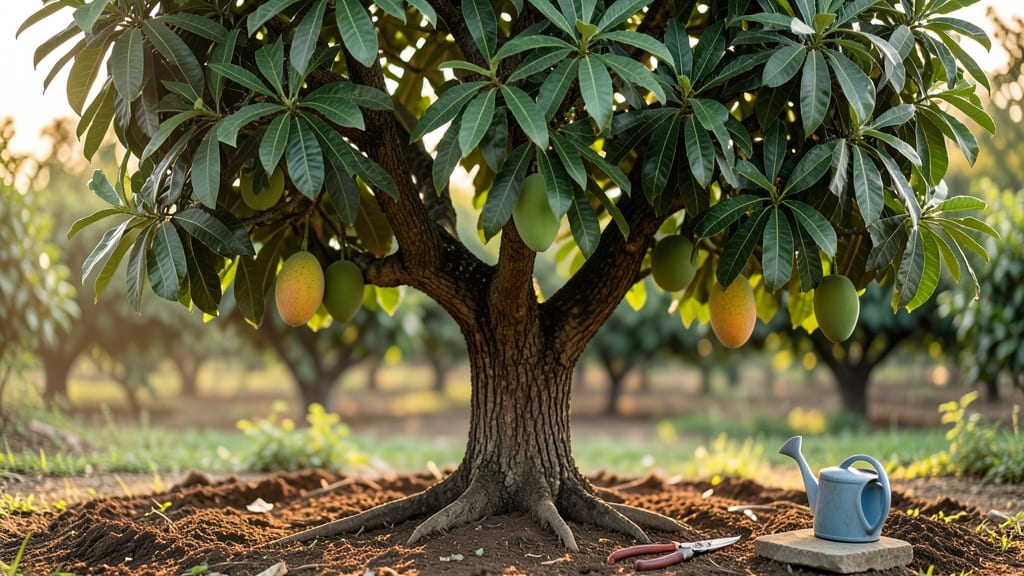
Understanding your mango tree's growth cycle is the secret to year-round fruit production—and I’ve learned the hard way that skipping this step means waiting years for those sweet, juicy rewards. 🌱 The cycle isn’t just about seasons; it’s about matching your care to the tree’s natural rhythm, from its first tender leaves to the moment it drops ripe fruit in your hand.
Most gardeners rush pruning or fertilizing, but timing is everything. A mango tree needs three distinct phases—juvenile (0-3 years), flowering (3-5 years), and fruiting (5+ years)—each with its own needs. I’ve seen trees bolted to flower too early (thanks to over-fertilizing) and others stall in growth from poor pruning.
The key is patience and precision: prune at the right time, feed at the right stage, and you’ll turn a struggling sapling into a productive powerhouse.
By the end of this, you’ll know exactly when to trim for airflow, how to spot the first signs of flower buds, and why your tree might be holding onto fruit instead of ripening it.
No more guessing—just predictable harvests that make your neighbors green with envy. Let’s break down the cycle step by step so you can grow like a pro.
Whether you’re starting with a seedling or nursing a mature tree back to health, this blueprint works for container mangoes in Florida or backyard giants in California. The principles stay the same—only the details shift with your climate. Ready to turn your mango tree into a fruit factory?
📚 In This Guide
- What you need
- Instructions
- Tips and common mistakes
- Wrapping up and next steps
What you need
- ● Pruning shears: Bypass pruners (sharp, 6–8" blades) for small branches. Quantity: 1 pair.
- ● Loppers: Heavy-duty (20–24" cutting capacity) for thicker branches. Quantity: 1 pair.
- ● Pruning saw: Curved-tooth saw (8–10" blade) for stubborn, large limbs. Quantity: 1.
- ● Disinfectant: 70% isopropyl alcohol or bleach solution (1 part bleach to 9 parts water) to sterilize tools. Quantity: Small spray bottle.
- ○ Pruning sealant: Optional but recommended (e.g., tree wound dressing) to protect cuts. Quantity: Small tube.
- ● Gloves: Heavy-duty work gloves (cut-resistant) for safety. Quantity: 1 pair.
- ● Safety gear: Safety glasses and long sleeves (mango thorns are serious!).
- ● Know your mango variety: Research your tree’s specific growth habits (e.g., 'Keitt' vs. 'Haden')—pruning needs vary!
- ● Weather check: Prune during the dormant season (late winter/early spring) or post-harvest (avoid rainy seasons).
- ● Tree age: Young trees (light pruning (focus on shaping). Mature trees require structural pruning.
- ● Water & nutrients: Ensure your tree is well-watered and fertilized 2–4 weeks before pruning (use a balanced 10-10-10 fertilizer).
- ● Extension pole: For high branches (10–12 ft reach).
- ● Marking spray: Fluorescent paint to tag branches for removal.
- ● Compost bin: For collecting pruned branches (great for mulch!).
- ● Tree growth regulator: (e.g., paclobutrazol) to control excessive growth in tropical climates.
Step-by-step guide for managing your mango tree through each season
Here's how I keep my mango tree productive year after year—no guesswork, just proven seasonal care.
🌱 Step 1: Spring Awakening – Prune for New Growth
Start by removing any dead, diseased, or crossing branches in late winter or early spring, just as new leaves begin to swell. This is your tree's natural signal to focus energy on fruit production rather than maintaining unnecessary wood. I always make cuts just outside the branch collar—the swollen area where the branch meets the trunk—to prevent unsightly stubs.
Open the canopy slightly by thinning out crowded branches. You'll see light reaching the inner branches within weeks, which triggers new growth where fruit will form. Never remove more than 25% of the tree's foliage in one season—this prevents stress that could reduce flowering.
Apply a balanced fertilizer (like 10-10-10) when you see fresh growth appear, about 2-3 weeks after pruning. The goal is to feed the tree's new leaves and developing fruit buds simultaneously. Water deeply after fertilizing to help nutrients reach the roots.
☀️ Step 2: Summer Care – Water and Protect Developing Fruit
Mango trees need consistent moisture during fruit development, especially when flowers appear. I water deeply every 5-7 days, checking that the top 6 inches of soil stay slightly damp but not soggy. Overwatering now causes fruit to split, while underwatering leads to small, hard mangoes.
Watch for signs of stress—yellowing leaves or fruit drop are your warnings. If you notice aphids or scale insects clustering on new growth, treat immediately with horticultural oil. These pests drain the tree's energy just when it needs to support heavy fruit loads.
Thin fruit when they're about the size of a golf ball, leaving 6-8 inches between each mango. This ensures the remaining fruit gets enough nutrients to reach full size. I always remove smaller or misshapen fruit first—the tree will compensate by directing energy to the strongest remaining ones.
✂️ Step 3: Fall Preparation – Light Pruning and Pest Control
After harvest, do a light pruning to remove any branches that produced fruit. These branches are now exhausted and won't contribute to next year's crop. Focus on maintaining an open vase shape that allows sunlight to reach the center of the tree.
Apply a second round of fertilizer in early fall, this time with higher potassium (like 5-10-15) to help the tree store energy for winter. The goal is to strengthen roots and prepare for dormancy. Water less frequently as temperatures drop, letting the soil dry slightly between waterings.
Inspect the tree for any remaining pests or diseases before winter sets in. A copper fungicide spray helps prevent fungal issues that could overwinter in the bark. I always give the trunk a final scrub with a stiff brush to remove any hiding spots for insects.
⏰ Step 4: Winter Dormancy – Protect and Plan
During dormancy, your mango tree needs minimal care but maximum protection. If you're in a cold climate, wrap the trunk with burlap or use tree wraps to prevent sunscald. Even in mild winters, this extra step prevents bark damage that could invite pests.
Use this time to plan your pruning strategy for next spring. Sketch a rough outline of your tree's shape and mark branches you want to remove. This head start makes spring pruning faster and more precise.
Check soil moisture monthly—you'll find winter watering is rarely needed unless you have an exceptionally dry spell. The tree's roots are less active, so they can handle brief dry periods without stress. This is the perfect time to test your soil pH and adjust if needed for next season's growth.
Tips & tricks for perfect year-round mango tree growth
Here's what nobody tells you about keeping your mango tree thriving through every season.
Pruning Precision: When you're pruning in Step 1, look for branches that grow inward or rub against each other—these are prime candidates for removal. I use sharp, clean pruners and make cuts at a 45-degree angle just outside the branch collar. This technique promotes faster healing and prevents disease entry points. Confession: I skipped this detail for years and wondered why my tree looked ragged after pruning.
Seasonal Watering Strategy: In Step 2, that 5-7 day watering schedule assumes average summer conditions. If you're in a heatwave, check soil moisture every 3-4 days instead. The key is maintaining that 6-inch damp zone—stick your finger in the soil to test. Overwatering is just as damaging as underwatering, especially when fruit is developing. I learned this the hard way after losing half my harvest to split fruit!
Fertilizer Timing: That 2-3 week window after spring pruning for fertilizer application is critical. Too early and you're feeding dormant wood; too late and you miss the new growth phase. I use a slow-release fertilizer like 10-10-10 pellets scattered around the drip line, then water thoroughly to activate them. For fall fertilization, switch to a higher potassium blend (5-10-15) to support root development during dormancy.
Pest Prevention: In Step 3, don't wait until you see pests to act. I make it a habit to inspect my tree monthly during growing seasons, looking under leaves and along branch junctions. Early intervention with horticultural oil (applied when leaves are dry) prevents infestations before they become unmanageable. The copper fungicide spray is my secret weapon for preventing fungal issues—just mix it according to package instructions and apply thoroughly.
Pro Tips for Mango Tree Growth Cycle
- Here's what nobody tells you about keeping your mango tree thriving through every season.
- Pruning Precision: When you're pruning in Step 1, look for branches that grow inward or rub against each other—these are prime candidates for removal.
- Seasonal Watering Strategy: In Step 2, that 5-7 day watering schedule assumes average summer conditions.
Frequently asked questions
Got questions about nurturing your mango tree through its growth cycle? You’re not alone! Here are answers to the most common queries—from timing to troubleshooting—to keep your tree thriving and fruiting like a pro.
How long does it take for a mango tree to bear fruit after planting?
A mango tree typically takes 3 to 6 years to bear fruit after planting, depending on the variety and growing conditions. Dwarf varieties may fruit sooner (2–3 years), while standard trees can take longer. Patience is key—focus on proper care (water, sunlight, and pruning) to speed up the process!
When is the best time to prune a mango tree for optimal growth?
Prune your mango tree twice a year: late winter/early spring (before new growth) to shape the tree and remove dead branches, and summer (June–July) to encourage fruiting. Avoid heavy pruning during fruiting season to prevent stress. Pro tip: Use sterilized tools to avoid disease!
Can I prune a mango tree too much? What are the signs?
Yes! Over-pruning can stress the tree, leading to fewer flowers/fruit, stunted growth, or even death. Watch for yellowing leaves, sparse foliage, or no flowering. If you’ve cut more than 20–30% of the canopy in one session, you’ve likely gone too far. Stick to 10–25% annual pruning for balance.
What should I do if my mango tree isn’t flowering or fruiting?
Non-flowering or fruiting mango trees often need one of these fixes:
- Age: Young trees (<3 years) may not be mature enough.
- Nutrients: Lack of phosphorus/potassium? Fertilize with a balanced 6-6-6 or citrus-specific formula.
- Stress: Check for pests, disease, or overwatering (root rot is a common culprit).
- Light: Ensure 6+ hours of direct sunlight daily.
Can I grow a mango tree in a pot? What’s the best container size?
Yes! Mango trees thrive in pots if given enough space. For dwarf varieties, a 15–20 gallon container is ideal; standard trees need 30+ gallons and deep drainage. Use a well-draining mix (cactus/succulent blend + perlite) and repot every 2–3 years. Place in full sun and water when the top 2 inches of soil dry.
Wrapping up and next steps
Understanding your mango tree’s growth cycle and mastering seasonal pruning is the secret to a bountiful harvest year after year! 🌱 From winter’s dormant phase to summer’s fruiting peak, each step—whether it’s thinning dense branches, removing dead wood, or encouraging airflow—plays a crucial role in maximizing health and productivity.
Now that you’re armed with the knowledge, roll up your sleeves and get pruning! Start with the right tools and tackle one season at a time. Your future mango feasts will thank you—literally! 🥭✨