
Pruning
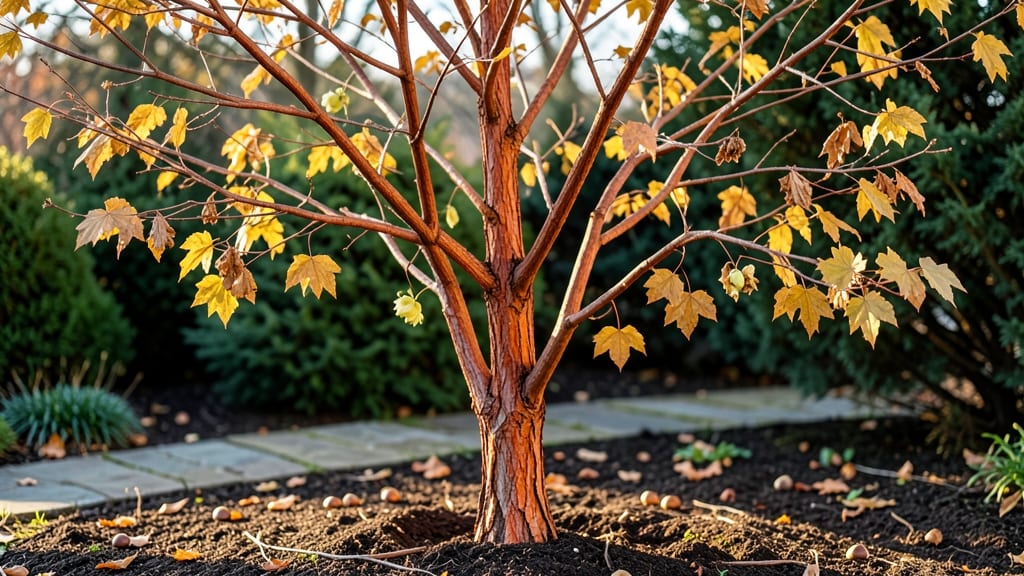
The red-barked maple trees of the Pacific Northwest aren’t just survivors—they’re year-round showstoppers that turn winter landscapes into living art. 🌿 I’ve watched my Swedish red maple stand out against snow like a brushstroke of fire, its peeling bark revealing layers of cinnamon and rust that no spring bloom can match.
These trees thrive where others struggle, their deep roots and adaptability making them the backbone of resilient gardens.
You’ll want to pair them with evergreens like douglas fir or cedar to soften their bold presence, while heuchera and Japanese forest grass add texture at their feet. Their mature sizes vary—some stay compact at 20 feet, while others reach 40—so choose based on your space.
Plant them where their winter drama gets full attention, like near patios or along driveways where their color contrasts with evergreen hedges.
What makes them special isn’t just their bark—it’s how they transform seasons. In summer, their leaves provide dappled shade, while autumn’s fiery foliage echoes their winter bark. Even in drought years, they hold their color, proving beauty and toughness go hand in hand.
The key is spacing them properly—15-20 feet apart—so their canopies don’t overshadow smaller plants.
For maximum impact, group them with other bark stars like paper birch or smoke tree to create a winter garden gallery. Their resilience means less fuss, more reward—perfect for gardeners who want drama without the upkeep. Ready to make your yard unforgettable? Let’s design around these living masterpieces.
📚 In This Guide
- What you need
- Instructions
- Tips and common mistakes
- Wrapping up and next steps
What you need
- ● Pruning shears: Bypass pruners (sharp, 6–8 inch blades) for small branches (¼"–¾" diameter). Pro tip: 💡 Sanitize blades with rubbing alcohol to prevent disease spread!
- ● Loppers: 1 pair (8–10 inch) for medium branches (¾"–2" diameter). Look for ratcheting models for extra leverage.
- ● Pruning saw: 1 curved-tooth saw (for branches >2" diameter). A blank">bow saw or blank">pruning saw with a 12–14" blade works best.
- ○ Extension pole: 6–10 ft telescoping pole with a saw attachment (optional but helpful for high branches).
- ● Gloves: Heavy-duty work gloves (cut-resistant, like mechanics' gloves) to protect hands from thorns and rough bark.
- ● Safety gear: Safety glasses (to shield eyes from debris).
- ● Long sleeves/pants (to avoid scratches from bark or branches).
- ● Sturdy, closed-toe shoes or boots (no sandals!).
- ● Cleaning supplies: Rubbing alcohol (70% isopropyl) or bleach solution (1 part bleach to 9 parts water).
- ● Paper towels or rags.
- ● Disposal bag: 1 heavy-duty trash bag (for pruned branches and debris).
- ● Ladder: Sturdy, extendable ladder (if branches are >12 ft high). Pro tip: 🌡️ Never stand on the top rungs—secure it at a 75° angle!
- ● Tree wound dressing: Pruning sealant (controversial but useful for large cuts; skip for small prunes).
- ● Notebook & pen: To sketch a quick map of cuts or note areas needing future attention.
- ● Pole saw: For very high branches (alternative to a saw on an extension pole).
- ● Choose a dry, calm day (avoid rainy or windy conditions).
- ● Check local regulations—some areas require permits for tree pruning.
- ● Research your maple species (e.g., Red Maple, Pacific Maple) to understand its growth habits and pruning needs.
How to cultivate a striking red-barked maple for Pacific Northwest landscapes
This resilient beauty thrives where winters linger—here’s how to nurture its signature bark.
🌱 Step 1: Select the Right Variety for Your Climate
Red-barked maples like the Japanese maple (Acer palmatum) or snake bark maple (Acer capillipes) are cold-hardy and perfect for the Pacific Northwest’s damp winters. Choose a dwarf variety if space is limited—these grow just 6-10 feet tall but deliver the same dramatic bark. Avoid fast-growing species; their bark matures slower and may not develop the rich red hues.
I always check the USDA hardiness zone on the tag—most red-barked maples thrive in zones 5-8, matching the PNW’s climate perfectly. If planting in a windy area, opt for a multi-stemmed cultivar like ‘Bloodgood’—its branching structure resists storm damage better than single-trunk varieties.
☀️ Step 2: Plant in Late Fall or Early Spring for Optimal Establishment
Timing matters most for winter resilience. Plant 4-6 weeks before your first frost—this gives roots time to establish before cold sets in. Dig a hole twice as wide as the root ball but only as deep as the container’s base. Amend the native soil with 2-3 inches of compost mixed into the bottom of the hole to improve drainage.
Real talk: Don’t bury the trunk too deep. The root flare (where roots meet the trunk) should sit 1-2 inches above ground level. If planted too low, water pools around the base, inviting rot. After backfilling, water deeply until the soil settles—you’ll know it’s right when moisture reaches 12 inches down.
💧 Step 3: Water Deeply but Infrequently to Encourage Deep Root Growth
The first year is critical. Water once a week during dry spells, delivering 10-15 gallons per tree to encourage roots to grow deep. Shallow watering leads to weak, surface roots that freeze in winter. Use a soaker hose or drip irrigation to avoid wetting the bark—damp bark invites fungal diseases like anthracnose, which can discolor leaves and weaken the tree.
Check moisture by digging 4 inches down with a trowel—soil should feel damp but not soggy. Mulch with 3 inches of wood chips (keep it 6 inches away from the trunk) to retain moisture and regulate soil temperature. Replenish mulch annually in early spring to protect roots during winter’s freeze-thaw cycles.
✂️ Step 4: Prune in Late Winter to Shape and Promote Bark Development
Prune just before buds swell in late winter (February-March) to remove dead or crossing branches. Use clean, sharp pruners to make cuts at a 45-degree angle just outside the branch collar. Avoid heavy pruning—red-barked maples respond best to light shaping. Focus on opening the canopy to improve airflow and reduce humidity around the bark.
Here’s the thing—you’re not just pruning for shape. Strategic cuts encourage thicker, more vibrant bark by redirecting energy to trunk growth. Remove suckers (shoots from the base) immediately—they drain energy from the main trunk. After pruning, apply a wound dressing (like tree sealant) only if cuts exceed ½ inch in diameter to prevent disease entry.
🪴 Step 5: Protect Young Trees from Winter Windburn and Frost Cracking
Young trees are vulnerable to frost cracking—a sudden freeze can split bark along the south or west side of the trunk. Wrap the trunk with tree guard (available at nurseries) in late fall, leaving 2 inches of space at the top. This flexible material expands slightly with temperature changes, reducing stress on the bark.
For extra resilience, stake the tree only if necessary—over-staking can girdle the trunk. If staking, use two stakes on opposite sides and a wide, adjustable strap to avoid indenting the bark. In exposed areas, add a burlap windbreak on the north side during the first two winters. Remove it in early spring to avoid trapping heat and encouraging pests.
Tips & tricks for cultivating stunning red-barked maples
These insights will help you coax out that signature winter drama in your Pacific Northwest maples.
Variety Selection Matters: The Japanese maple (Acer palmatum) and snake bark maple (Acer capillipes) are your best bets for vibrant red bark, but don't overlook 'Bloodgood' for windy sites—its multi-stemmed structure handles stormy PNW winters like a champ. I've seen fast-growing varieties develop duller bark because their energy goes into height rather than trunk thickness. Look for tags specifying "red bark" or "crimson" cultivars to guarantee that stunning winter show.
Planting Precision Pays Off: That 4-6 week window before frost isn't just arbitrary—it's when roots establish critical connections with native soil. I always dig the hole twice as wide but never deeper than the container base, and here's why: The root flare must sit 1-2 inches above ground level. Too deep and you'll suffocate those roots with waterlogged soil. After planting, water until moisture reaches 12 inches down—this ensures roots grow deep rather than shallow, which is crucial for winter survival.
Winter Protection Secrets: Tree guard isn't just for show—it acts like a living sleeve that expands with temperature changes, preventing frost cracks that can ruin your tree's aesthetic. For exposed sites, add a burlap windbreak on the north side during the first two winters, but remove it in early spring to prevent heat trapping. I've seen frost cracks appear on trees wrapped too tightly or with guard left on too long—always leave that 2-inch gap at the top.
Pruning for Bark Brilliance: Those late winter cuts aren't just about shaping—they're about redirecting energy to trunk growth. When you remove suckers immediately and make clean cuts at a 45-degree angle, you're telling the tree to focus on developing thicker, more vibrant bark. And here's a pro move: Only use wound dressing on cuts larger than ½ inch—smaller wounds heal faster without it, and overusing sealant can actually trap moisture.
Pro Tips for Maple Tree Red Bark
- These insights will help you coax out that signature winter drama in your Pacific Northwest maples.
- I've seen fast-growing varieties develop duller bark because their energy goes into height rather than trunk thickness.
- Planting Precision Pays Off: That 4-6 week window before frost isn't just arbitrary—it's when roots establish critical connections with native soil.
Frequently asked questions
Got questions about caring for maple trees with that stunning red bark? You’re not alone!
Here are some of the most common queries from gardeners and homeowners in the Pacific Northwest—plus the answers you need to keep your tree thriving.
Why does my maple tree’s bark turn red in winter?
The iconic red bark of acer rubrum (red maple) or acer circinatum (vine maple) is a seasonal adaptation. Cold temperatures trigger anthocyanins—natural pigments that protect the tree’s cells from winter stress. Think of it as nature’s built-in sunscreen! Pro tip: This color fades in spring as temperatures rise.
When is the best time to prune a maple tree with red bark?
Prune dormant red-barked maples in late winter or early spring (before buds swell) to avoid sap bleeding and pest attraction. Avoid heavy pruning in fall—it stresses the tree before winter. For minor shaping, summer pruning is fine, but time it for cooler days to reduce stress.
Can I prune red-barked maples the same way as other maples?
Yes—but with caution! Red-barked maples (like vine maple) are more sensitive to over-pruning than sugar or silver maples. Use clean, sharp tools to make cuts at a 45° angle just outside the branch collar. Avoid topping or removing more than 25% of the canopy in one season.
How do I protect red bark from winter sunburn or frost cracks?
Young or thin-barked red maples can suffer sun scald (southwest exposure) or frost cracks. Apply a white tree wrap in late fall for sunburn protection, and avoid heavy mulch piles against the trunk. For established trees, water deeply before freeze to reduce stress. Warning: Remove wrap in early spring to prevent bark suffocation.
What’s a good alternative if I want red bark but fewer pruning needs?
Consider the Pacific dogwood (cornus nuttallii)—it boasts vibrant red stems in winter with minimal pruning needs. For a maple-like shape, try the acer palmatum ‘Bloodgood’ (Japanese maple), though its bark is less bold. Both thrive in PNW climates!
My red-barked maple’s bark is peeling or sloughing—is it dying?
Not necessarily! Healthy maples naturally shed outer bark as they grow. However, excessive peeling, oozing sap, or cankers signal trouble (fungus, borers, or sunburn). Inspect for cracks, holes, or discolored wood. If in doubt, consult a local arborist—PNW’s wet climate can worsen issues.
Wrapping up and next steps
The maple tree’s striking red bark isn’t just a Pacific Northwest winter wonder—it’s a symbol of resilience and natural beauty. Whether you’re admiring its bold hues or pruning to maintain its health, this iconic tree rewards both patience and care.
Ready to embrace its charm? Start by scheduling a seasonal trim to keep it thriving for years to come!
- 🌲 Next step: Plan your pruning session before spring bud break.
- 📅 Pro tip: Mark your calendar for late winter—ideal timing for minimal stress.