
Pruning
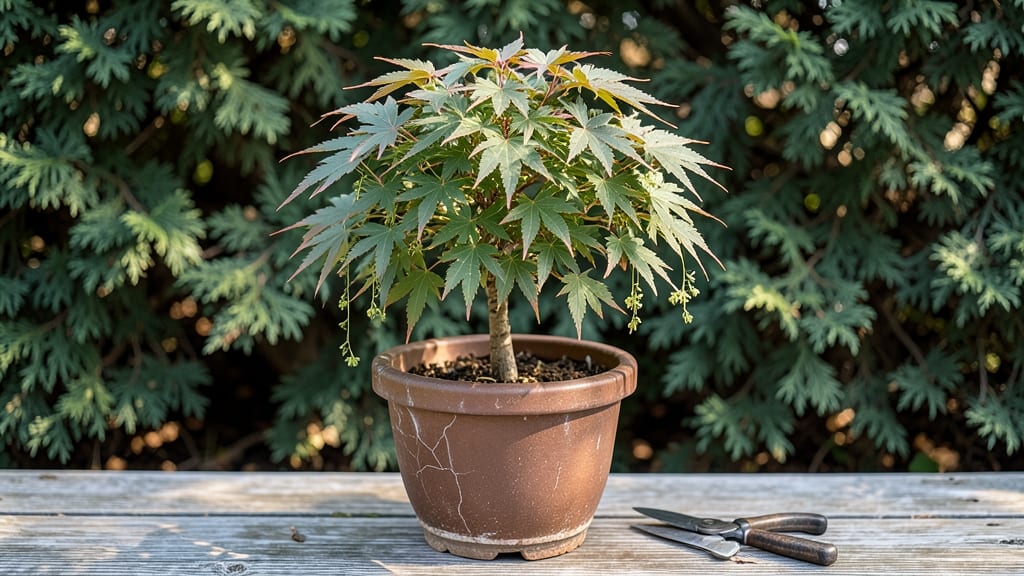
My miniature Japanese maple tree thrives in Pacific Northwest winters because I’ve pruned it the right way—every cut preserves its delicate branching while hardening it for frost.
The key isn’t just timing; it’s understanding how these trees grow in layers, like lacework, and how to shape them without stressing the wood.
Start with sharp, clean pruners and a late-winter or early-spring session when buds swell but haven’t broken yet. You’ll focus on three things: removing dead wood, thinning crowded branches, and shaping the canopy to let light reach the center.
Skip the heavy-handed cuts—these trees respond better to gentle guidance than drastic reshaping.
By summer, you’ll see vibrant new growth where you pruned, and the tree’s natural color—whether deep burgundy, bright green, or golden—will pop even brighter. The branches will hold their shape through storms, and the roots will stay strong enough to handle the region’s damp, chilly winters.
This method works for dwarf varieties like ‘Mikado’ or ‘Tiny Wine’ just as well as larger cultivars. The only difference? Scale down your pruners and adjust your patience—these little giants take time, but they’re worth every careful cut.
📚 In This Guide
- What you need
- Instructions
- Tips and common mistakes
- Wrapping up and next steps
What you need
- ● Miniature Japanese Maple Tree: Choose a dwarf variety (e.g., Acer palmatum ‘Dragon’s Blood’ or ‘Bloodgood’) with a mature height of 6–10 feet. Ensure it’s frost-hardy (Zones 5–9).
- ● Pruning Shears: Bypass pruners (sharp, 5–7 inch blades) for clean cuts on small branches.
- ● Loppers: Medium-sized (18–24 inch) for thicker branches (up to 1.5 inches in diameter).
- ● Hand Saw: Pruning saw with curved blade for stubborn, larger branches.
- ● Rubbing Alcohol (70% isopropyl): 1 small bottle to sterilize tools between cuts and prevent disease.
- ○ Pruning Sealant: Optional but recommended (e.g., Tree Seal Tape) for sealing cuts larger than 0.5 inches.
- ● Garden Gloves: Cut-resistant to protect hands from thorns and sharp branches.
- ● Wheelbarrow or Bucket: For collecting pruned branches and debris.
- ● Extension Pole: Adjustable (6–10 ft) with a saw attachment for high branches.
- ● Tree Paint: Pruning paint to protect exposed wood on larger cuts (if sealant isn’t used).
- ● Mulch: Organic mulch (cedar or pine) to retain moisture and insulate roots in winter.
- ● Watering Can or Hose: With a gentle spray nozzle for post-pruning hydration.
- ● Notebook & Pen: To sketch your tree’s structure before/after pruning.
Step-by-step guide for pruning miniature Japanese maple trees
Here’s how I keep these delicate beauties thriving through PNW winters—without losing a single branch.
Time Your Pruning for Dormancy
Prune your miniature Japanese maple late winter to early spring, just as buds begin to swell but before new growth starts. This timing ensures you’re cutting back dead or weak wood while avoiding the stress of pruning during active growth. In the Pacific Northwest, aim for February through March—after the worst frost but before the first warm rains.
Check the buds closely: if they’re still tight and haven’t begun to plump up, wait a few more weeks. Pruning too early means you’re cutting healthy wood that could’ve supported next year’s foliage. Too late, and you risk encouraging tender new growth that won’t survive late frosts.
Sterilize Tools and Assess the Tree
Clean your pruning shears with rubbing alcohol before you begin—this prevents spreading disease between cuts. A miniature Japanese maple’s small branches are especially vulnerable to bacterial infections like canker. I also wear gloves to avoid transferring oils from my skin, which can clog the tree’s pores.
Examine the tree for dead, crossing, or rubbing branches. Dead wood is easy to spot—it’s brittle, dark, and doesn’t bend. Crossing branches compete for sunlight and nutrients, weakening the tree over time. Use your fingers to gently bend each branch: if it snaps or feels hollow, it’s time to remove it.
Make Clean Cuts at the Right Angle
Cut just outside the branch collar—the swollen area where the branch meets the trunk. This ensures the tree seals the wound naturally. Angle your cut slightly downward, away from the trunk, to help water runoff. Never leave a stub; it invites rot and disease. For branches thicker than a pencil, make a second cut about ½ inch away from the first to avoid tearing the bark.
If you’re shaping the tree, remove no more than 25% of the foliage in one season. Miniature Japanese maples are slow growers, and aggressive pruning can stress them into decline. Focus on opening the center to improve airflow—this prevents fungal issues that thrive in damp, crowded canopies.
Protect Against Late Frosts
After pruning, cover the tree with frost cloth on nights where temperatures drop below 28°F. The cloth traps heat without smothering the tree. Secure it loosely so it doesn’t press against the branches. In the PNW, late frosts in April can still damage new growth, so don’t remove the cloth until the danger of frost has passed.
Water deeply after pruning—about 1 gallon per inch of trunk diameter—to help the tree recover. Mulch with 2-3 inches of organic mulch (like shredded bark) around the base, but keep it 6 inches away from the trunk to prevent rot. This insulates the roots and retains moisture during the dry spring months.
Tips & tricks for perfect miniature Japanese maple pruning
These simple strategies will help you avoid common mistakes and keep your delicate maple thriving through PNW winters.
Timing is Everything: The February through March window is critical for miniature Japanese maples. If you're unsure about the exact timing, check for bud swell—when buds are tight but beginning to plump, that's your cue. I've learned the hard way that pruning too early can remove next year's foliage buds, while waiting too late risks tender new growth vulnerable to late frosts. Don't rush this step—patience here means healthier trees later.
Tool Preparation Matters: Sterilizing your pruning shears with rubbing alcohol isn't just about cleanliness—it's about protecting your tree from bacterial infections like canker. I keep a small bottle of rubbing alcohol in my gardening toolkit specifically for this purpose. Also, wear gloves when working with these trees; the natural oils from your skin can clog the tree's pores and create entry points for disease.
Precision Cutting Technique: When making your cuts, focus on the branch collar—the swollen area where the branch meets the trunk. Cutting just outside this collar allows the tree to naturally seal the wound. For branches thicker than a pencil, make your second cut about ½ inch away from the first to prevent tearing the bark. This technique might seem fussy, but it makes all the difference in how quickly your tree recovers.
Post-Pruning Care: After you've finished pruning, don't forget about the 28°F frost protection. I've seen beautiful trees damaged by late frosts simply because the frost cloth wasn't applied in time. Remember to water deeply—about 1 gallon per inch of trunk diameter—and mulch with 2-3 inches of organic material, keeping it 6 inches away from the trunk. This combination of water and mulch creates the perfect environment for your tree to recover and thrive.
Pro Tips for Miniature Japanese Maple Tree
- These simple strategies will help you avoid common mistakes and keep your delicate maple thriving through PNW winters.
- Timing is Everything: The February through March window is critical for miniature Japanese maples.
- Tool Preparation Matters: Sterilizing your pruning shears with rubbing alcohol isn't just about cleanliness—it's about protecting your tree from bacterial infections like canker.
Frequently asked questions
Got questions about caring for your miniature Japanese maple tree—especially in the Pacific Northwest’s frost-prone climate? You’re not alone! Here are answers to the most common queries to keep your tree thriving year-round.
How cold can a miniature Japanese maple tolerate before frost damage occurs?
A healthy miniature Japanese maple can handle temperatures down to 10°F (-12°C), but prolonged exposure below 20°F (-7°C) may cause leaf scorch or bud dieback. In the PNW, protect young trees (under 5 years) with burlap wraps or a lightweight frost cloth during sudden cold snaps. Mature trees are hardier but still benefit from mulching (3–4 inches of shredded bark) in winter.
When is the best time to prune a miniature Japanese maple in the PNW?
Prune late winter to early spring (February–March) while the tree is still dormant but before new buds swell. Avoid pruning in fall—it encourages tender growth that’s vulnerable to frost. For light shaping, you can trim dead or crossing branches anytime, but wait until after flowering (late spring) if you’re correcting structure.
How do I protect my miniature Japanese maple from PNW’s wet winters?
Excess moisture can lead to root rot or fungal issues like anthracnose. Ensure your tree has well-draining soil (amend with perlite or sand if needed) and plant it in a spot with partial shade and airflow. Elevate the root ball slightly with a small mound of gravel to prevent waterlogging. Avoid overhead watering—use a soaker hose instead.
Can I grow a miniature Japanese maple in a container, and what’s the best setup?
Yes! Choose a container at least 12–15 inches wide with drainage holes. Use a fast-draining mix (50% potting soil, 30% perlite, 20% orchid bark). Repot every 2–3 years in early spring. In winter, move containers to a protected area (like a garage or under eaves) if temps drop below 20°F (-7°C)).
My miniature Japanese maple’s leaves are yellowing—what’s wrong?
Yellowing leaves usually signal overwatering, nutrient deficiency, or fungal issues. Check the soil—it should be moist but not soggy. If leaves are yellow with brown edges, it’s likely chlorosis (iron deficiency), common in alkaline PNW soils. Apply an iron chelate fertilizer in early spring. For mushy leaves, reduce watering and improve drainage.
Wrapping up and next steps
Growing a miniature Japanese maple tree in the Pacific Northwest’s frosty climate is absolutely doable with the right pruning blueprint! By mastering seasonal trimming, protecting against frost, and nurturing its delicate branches, you’ll cultivate a stunning, resilient tree that thrives year-round. 🌿✨
Ready to take the next step? Start small—pick one season to refine your skills, then gradually expand your care routine. Before you know it, your tiny maple will be the envy of every gardener in your neighborhood! 🌟