
Trees
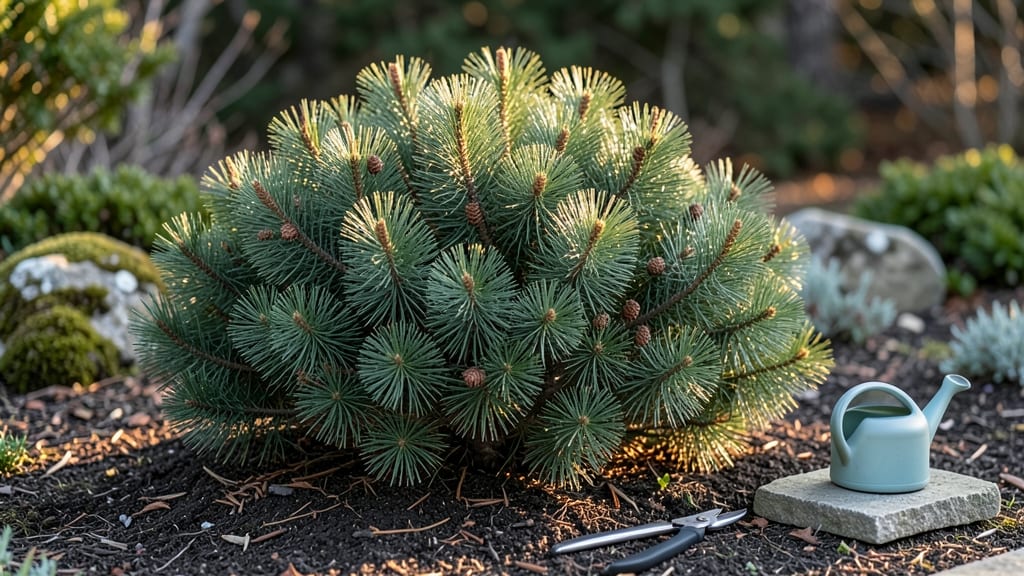
Growing a mugo pine tree means adding a frost-hardy evergreen that thrives in the Pacific Northwest's chill and damp climate. I planted mine last autumn, and its dark green needles now form a dense, wind-resistant mound that outlasts winter storms.
The secret lies in matching its natural habitat—cool summers, cold winters, and well-draining soil—so it grows strong without fuss.
You’ll need a sunny spot with 6+ hours of light daily, acidic to neutral soil, and a hole twice as wide as the root ball. Mugo pines tolerate poor soil but despise soggy roots, so amend clay with compost if needed.
Water deeply after planting, then let nature take over—these trees are drought-tolerant once established. A 3-inch layer of mulch keeps roots cool in summer and insulated in winter.
Pruning isn’t required, but shaping in early spring encourages bushier growth. Simply trim leggy branches back to a side shoot or joint. Over time, your mugo pine will develop a compact, rounded canopy perfect for hedges, slopes, or container gardens.
It’s a low-maintenance star that rewards patience with year-round structure and texture.
Perfect for beginners, urban yards, or rocky landscapes where other plants struggle. Once planted, it’s nearly self-sufficient—just watch for pine beetles in drought years and water occasionally. Your evergreen anchor will outlive trends and outperform fussy shrubs.
📚 In This Guide
- What you need
- Instructions
- Tips and common mistakes
- Wrapping up and next steps
What you need
- ● Mugo Pine Tree: 1–3 nursery-grown saplings (1–3 ft tall, Pinus mugo species, e.g., 'Mops' or 'Slowmound'). Choose locally sourced or cold-hardy cultivars for PNW resilience.
- ● Well-draining soil: 1–2 cubic yards of a mix (60% native soil, 30% compost, 10% coarse sand or perlite) to amend heavy or clay-heavy PNW soils.
- ● Organic mulch: 2–3 inches of cedar chips or pine bark (avoid cedar mulch near the trunk to prevent rot).
- ● Slow-release fertilizer: 1 lb of 10-10-10 or 5-10-10 organic fertilizer (e.g., fish emulsion or bone meal).
- ● Watering can or hose: With a gentle spray nozzle (or drip irrigation kit for efficiency).
- ● Garden gloves & pruners: Bypass pruners (sharp, sterilized) for shaping and heavy-duty gloves (to protect from resin).
- ○ Staking supplies (optional but recommended for young trees): 2–3 3–4 ft bamboo stakes
- ● Soft tree tie straps (3–4 pieces)
- ● Soil pH tester: To confirm acidic (5.5–6.5 pH) soil—Mugo Pines thrive in slightly acidic conditions.
- ● Drought-resistant ground cover: Creeping thyme or lichen to suppress weeds and retain moisture.
- ● Tree guard: Plastic spiral wrap to protect young trunks from deer/browsing (common in PNW!).
- ● Fungicide (preventative): Copper-based spray (e.g., Daconil) for fungal disease-prone areas.
- ● Automatic weather station: 😉 (For tracking PNW microclimates—because why not live like a botanist?).
Step-by-step guide to cultivating healthy mugo pine trees in the Pacific Northwest
Here's how to establish these hardy evergreens for year-round texture and frost resistance.
🌱 Step 1: Select and Prepare the Planting Site
Mugo pines thrive in well-draining soil with full sun exposure (at least 6 hours daily). In the Pacific Northwest's cooler climate, choose a location that receives morning sun and afternoon shade to prevent stress during summer heat. Avoid low spots where cold air settles—these trees handle frost beautifully but perform poorly in waterlogged conditions.
Test your soil's drainage by digging a 12-inch hole and filling it with water. If it drains within 30 minutes, your site is suitable. Amend heavy clay soil with 2-3 inches of coarse sand or composted pine bark to improve aeration. I always add a 2-inch layer of gravel at the bottom of the planting hole to create additional drainage for these shallow-rooted conifers.
🪴 Step 2: Plant at the Correct Depth and Spacing
Dig a hole twice as wide as the root ball but no deeper—Mugo pines resent being planted too low. Gently remove the tree from its container and loosen any circling roots with your fingers. Position it so the top of the root ball sits 1 inch above ground level—this prevents root rot in our region's damp winters.
Space 4-foot-tall specimens 4-6 feet apart for a dense hedge or 6-8 feet apart if you want individual statement trees. Backfill with native soil mixed with compost, pressing firmly around the edges to eliminate air pockets. Water deeply to settle the soil and encourage root contact. You'll know you've done it right when the soil surface looks slightly compacted but not hardened.
☀️ Step 3: Establish Proper Watering and Mulching Routines
Water newly planted Mugo pines twice weekly for the first month, providing 1-2 gallons per tree each time. After establishment, these drought-tolerant trees need water only during prolonged dry spells—once every 2-3 weeks in summer. Check moisture by sticking your finger 2 inches into the soil; if it feels dry, it's time to water.
Apply 3 inches of mulch (pine bark or wood chips) around the base, keeping it 6 inches away from the trunk to prevent rot. Mulch conserves moisture and regulates soil temperature, which is especially important in our region's cool, wet winters. Refresh the mulch annually in early spring to maintain its protective layer. Avoid over-mulching—too much can suffocate roots and attract pests.
✂️ Step 4: Prune for Shape and Health in Late Winter
Prune Mugo pines once yearly in late winter (February-March) before new growth begins. Remove dead, crossing, or overcrowded branches first, cutting back to the nearest healthy bud. For shaping, trim no more than ¼ of the plant's volume at a time to avoid stress. Use sharp, clean pruners to make cuts just above a healthy bud or branch collar—this encourages faster healing.
Watch for signs of stress like yellowing needles or sparse growth, which often indicate over-pruning or poor drainage. In our climate, these trees rarely need heavy pruning—their natural compact form makes them low-maintenance. After pruning, apply a balanced fertilizer (10-10-10) in early spring to support new growth, following package rates for evergreens.
Tips & tricks for perfect mugo pine tree cultivation
These pro insights will help your Pacific Northwest Mugo pines thrive year after year with minimal fuss.
Site Selection Secret: That 6-hour daily sun requirement is non-negotiable, but here's the thing about our region's climate: morning sun with afternoon shade actually works better than full sun all day. I've seen Mugo pines in full afternoon sun develop needle burn during our hotter summer months—watch for that crispy brown edge on needles as an early warning sign. The afternoon shade helps maintain moisture while still giving them enough light to photosynthesize properly.
Drainage Test Hack: When you're testing that 30-minute drainage time, don't just pour water in and wait. Dig down another 6 inches after your initial test—our region's clay soils often have better drainage deeper down. If water pools at that deeper level, you'll need to amend with more sand or gravel. I've had to go down to 18 inches deep in some spots to get proper drainage for these shallow-rooted trees.
Planting Depth Visual: Getting that 1-inch root ball elevation right can be tricky. Here's my trick: after placing the tree in the hole, use a level to check the height from the ground to the top of the root ball. Then add or remove soil until you reach exactly 1 inch. This prevents the classic mistake of planting too deep, which leads to root rot in our damp winters.
Mulching Strategy: That 3-inch mulch layer is perfect, but here's what nobody tells you—refresh it annually in early spring when the soil is still cool. Warm soil in summer can actually break down mulch too quickly, leaving your trees vulnerable to temperature swings. I use pine bark mulch specifically because it mimics the natural forest floor these trees evolved in.
Pro Tips for Mugo Pine Tree
- These pro insights will help your Pacific Northwest Mugo pines thrive year after year with minimal fuss.
- Site Selection Secret: That 6-hour daily sun requirement is non-negotiable, but here's the thing about our region's climate: morning sun with afternoon shade actually works better than full sun all day.
- Drainage Test Hack: When you're testing that 30-minute drainage time, don't just pour water in and wait.
Frequently asked questions
How fast does a mugo pine grow, and when will it reach maturity?
A mugo pine grows at a moderate pace—typically 6 to 12 inches per year. Most reach maturity (6–10 feet tall) in 10–15 years, though dwarf varieties stay smaller. Patience is key! Prune lightly in early spring to encourage a bushier shape without stunting growth.
Is a mugo pine truly frost-resistant? Can it handle PNW winters?
Mugo pines are zone 3–7 hardy, meaning they thrive in extreme cold (down to -40°F). In the PNW, they’re perfect for windbreaks, hedges, or specimen plants because they handle snow, ice, and wet winters like a champ. Just avoid soggy soil—they hate "wet feet."
When and how should I prune my mugo pine?
Prune in late winter or early spring (before new growth starts) to shape the tree and encourage density. Use clean, sharp shears to trim back overgrown branches—never cut into old wood. For a natural look, avoid heavy pruning; mugo pines have a lovely, informal shape when left slightly wild.
What pests or diseases should I watch for with a mugo pine?
Mugo pines are low-maintenance, but keep an eye out for:
- Sawfly larvae: Chew on needles—treat with neem oil if spotted.
- Spider mites: Cause yellowing needles in dry conditions; hose them off or use insecticidal soap.
- Fungal issues (like needle cast): Improve airflow and avoid overhead watering.
Healthy trees rarely face serious problems, so focus on well-draining soil and proper spacing.
Can I grow a mugo pine in a container? What’s the best alternative if I don’t have yard space?
Yes! Dwarf mugo pines (like ‘Pumilio’ or ‘Slowmound’) thrive in 15–20 gallon containers with fast-draining mix (cactus soil + perlite). For urban spaces, consider:
- Japanese black pine (Pinus thunbergii): Compact and ornamental.
- Dwarf Alberta spruce: Slower-growing and shade-tolerant.
- Creeping juniper: Ground cover alternative with similar resilience.
Just ensure containers get full sun (6+ hours/day) and winter protection (burlap wrap or move indoors if temps drop below 0°F).
Wrapping up and next steps
The mugo pine tree is a fantastic choice for Pacific Northwest gardeners—its hardy nature, stunning evergreen foliage, and low-maintenance care make it a standout addition to any landscape. Whether you’re a beginner or a seasoned gardener, nurturing this resilient tree can bring year-round beauty and structure to your outdoor space.
Ready to plant your own mugo pine? Start by selecting the right variety for your climate and soil, then follow the steps outlined above. With patience and care, you’ll enjoy a thriving, frost-resistant centerpiece for decades to come! 🌲✨