Neem Oil
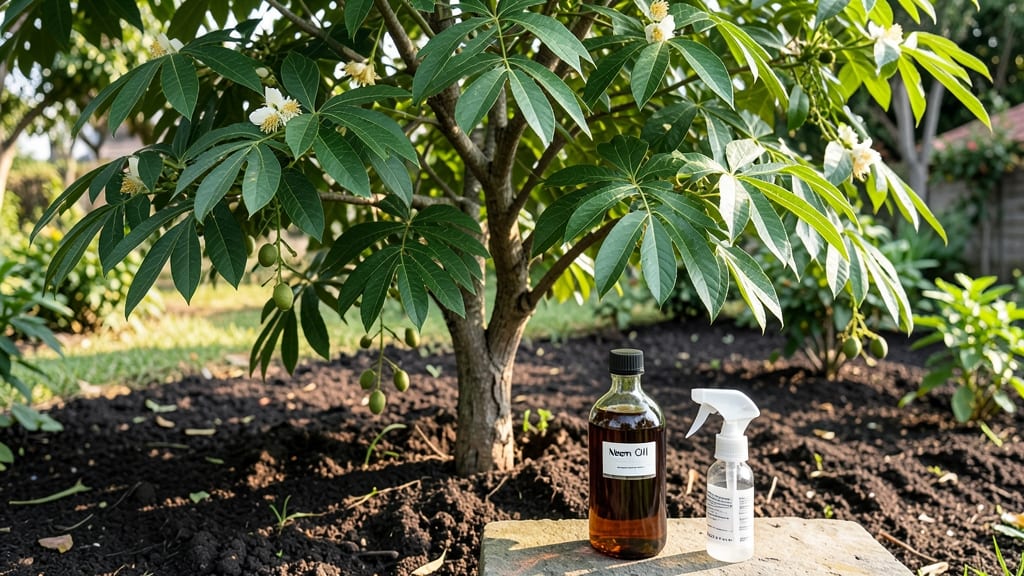
When pests like aphids and mites turn your garden into an all-you-can-eat buffet, neem tree oil pesticide is the organic game-changer you’ve been missing. I’ve used it to save struggling tomato plants from whiteflies in just 24 hours—no harsh chemicals, no waiting weeks for results.
The secret lies in its natural ability to disrupt pests’ life cycles while being gentle enough for edible gardens.
You’ll need 1 teaspoon of neem oil per quart of water plus a drop of dish soap as an emulsifier—no fancy equipment required. Spray in the early morning or evening when bees aren’t active, and reapply every 5-7 days for stubborn infestations.
The oil smothers soft-bodied pests on contact while also preventing eggs from hatching, making it one of the few sprays that actually works on all life stages of insects.
What you’ll notice first is the immediate slowdown of pests—crawling aphids stop mid-leaf, whiteflies drop like rain, and spider mites vanish from new growth. Within a week, your plants will look rejuvenated, with fewer chewed leaves and more energy going into blooms and fruit.
The best part? It’s safe for tomatoes, peppers, and herbs once fully dried, so you can harvest the same day you treat.
Fair warning: neem oil has a strong odor that fades quickly, and it works best in warm, humid conditions—so avoid spraying when rain’s forecasted. For tough cases, combine it with kaolin clay for extra protection. Once you master this, you’ll wonder how you ever tolerated chemical sprays.
📚 In This Guide
- What you need
- Instructions
- Tips and common mistakes
- Wrapping up and next steps
What you need
- ● Neem oil (100% pure, cold-pressed): 1 cup (240 mL) – Look for organic, food-grade neem oil for safety and potency.
- ● Water: 1 gallon (3.8 liters) – Use filtered or distilled water to avoid contaminants.
- ● Dish soap (mild, biodegradable): 1 tablespoon – Helps the oil emulsify and stick to pests.
- ● Spray bottle: 16–32 oz (473–946 mL) – Choose a reusable, pump-style bottle for even distribution.
- ○ Strainer or cheesecloth: 1 piece – Optional but helpful if your neem oil has sediment.
- ● Measuring cups/spoons: For precise mixing ratios.
- ● Funnel: To avoid spills when transferring the mixture.
- ● Gloves (nitrile or rubber): Protects your skin from irritation.
- ○ Garlic or chili powder (optional): 1 teaspoon each – Boosts repellent properties naturally.
- ● Label and marker: To tag your spray bottle with the date and ingredients.
Step-by-Step instructions for creating a neem oil pesticide spray
Here's how to make a fast, effective organic defense that works in minutes.
Gather and Prepare the Materials
You'll need 1 tablespoon of neem oil, 1 teaspoon of mild liquid soap (like Castile soap), and 1 quart of warm water. The soap acts as an emulsifier, helping the oil mix with water. Avoid harsh detergents—they can damage plant leaves. I like to use a spray bottle with a fine mist nozzle for even coverage.
Mix the soap and water first in your spray bottle, then add the neem oil. Shake vigorously for 30 seconds until the mixture looks cloudy and fully combined. If you see oil droplets separating, shake again. This ensures the active ingredients stay suspended and ready to work.
Apply the Spray at the Right Time
Spray your mixture early in the morning or late in the evening when temperatures are cooler. Direct sunlight can cause the oil to dry too quickly, reducing effectiveness. Focus on the undersides of leaves—this is where many pests hide. You'll see immediate results with soft-bodied insects like aphids, whiteflies, and spider mites.
For severe infestations, apply the spray every 5-7 days until pests are gone. Avoid spraying when plants are under stress or wilting—they're more vulnerable to chemical burns. If you notice any leaf discoloration after application, rinse the area gently with water.
Monitor and Reapply as Needed
Check your plants 24-48 hours after application to assess effectiveness. You should see fewer pests and possibly some dead insects on leaves. If pests persist, repeat the spray but add 1 teaspoon of horticultural oil to boost potency. This combination works well against resistant bugs like scale insects.
Neem oil is a systemic pesticide, meaning it moves through the plant's system, but it doesn't linger long-term. Reapply every 7-14 days during active pest seasons or after rain washes it away. Store your unused mixture in a cool, dark place for up to 2 weeks—just shake before each use to redistribute the oil.
Prevent Future Infestations
To keep pests away long-term, spray your plants preventatively every 2-3 weeks during growing seasons. Healthy plants are less attractive to bugs, so pair this with regular pruning, proper watering, and balanced fertilization. I also recommend companion planting—marigolds and basil near vulnerable plants naturally deter many common pests.
If you notice new pest activity after using neem oil, rotate with other organic methods like pyrethrin-based sprays or beneficial nematodes to avoid resistance. Always test your spray on a small leaf area first to ensure your plants tolerate it well. With consistent use, you'll see a noticeable reduction in pest pressure within 2-3 weeks.
Tips & tricks for perfect neem oil pesticide application
These practical strategies will maximize your organic defense and help you avoid common pitfalls that reduce effectiveness.
Mixing Technique: When combining the 1 tablespoon of neem oil with the soap and water in Step 1, use a spray bottle with a fine mist nozzle to create better emulsification. The vigorous shaking for 30 seconds is crucial—if oil droplets persist, add another drop of soap and shake for another 10 seconds. This ensures even coverage and prevents separation during storage. I've found that using a bottle with a pump mechanism helps maintain the suspension longer than flip-top bottles.
Application Timing: The early morning or late evening recommendation in Step 2 isn't just about sunlight—it's about humidity. Cooler temperatures and higher humidity levels during these times allow the neem oil to adhere better to plant surfaces and work more effectively against pests. If you must spray during the day, do it on cloudy days or when temperatures are below 85°F to prevent rapid evaporation.
Targeted Spraying: Focus on the undersides of leaves where many pests hide, but don't neglect new growth areas and stems. For large plants, consider using a handheld sprayer with a cone nozzle to direct the mist precisely. I've seen better results when I spray until the leaves are visibly wet but not dripping—this balance ensures good coverage without causing leaf burn. Remember that neem oil works by contact, so thorough coverage is key to effectiveness.
Monitoring and Adjustment: When checking plants 24-48 hours after application in Step 3, look for two key signs: reduced pest activity and any potential leaf discoloration. If you see yellowing or browning, dilute your next application with more water (up to 50% more) to reduce concentration. For persistent pests, the optional 1 teaspoon of horticultural oil can be a game-changer, but always test on a small leaf area first as oils can be more potent.
Pro Tips for Neem Tree Oil Pesticide
- These practical strategies will maximize your organic defense and help you avoid common pitfalls that reduce effectiveness.
- Mixing Technique: When combining the 1 tablespoon of neem oil with the soap and water in Step 1, use a spray bottle with a fine mist nozzle to create better emulsification.
- Application Timing: The early morning or late evening recommendation in Step 2 isn't just about sunlight—it's about humidity.
Frequently asked questions
Got questions about using neem tree oil pesticide?
Here are some of the most common ones—plus straightforward answers to help you get the best results without the guesswork.
How quickly does neem oil pesticide work?
Neem oil typically starts showing effects within 24 to 48 hours for soft-bodied pests like aphids, mites, and whiteflies. For stubborn pests (e.g., beetles or caterpillars), you may need 3 to 5 days of repeated applications. Consistency is key—think of it like a slow-acting shield, not an instant knockout.
How often should I apply neem oil pesticide?
For preventive care, apply every 7 to 14 days during peak pest seasons (spring/summer). If you’re treating an active infestation, spray every 5 to 7 days until pests disappear. Always reapply after rain or heavy watering, as neem oil washes off easily. Pro tip: Morning applications work best to avoid harming beneficial insects like bees.
Can I mix neem oil with other pesticides?
Neem oil plays well with many organic pesticides, but avoid mixing it with synthetic chemicals (like neonicotinoids or copper sprays), as they can cancel each other out or create toxic reactions. Safe pairings include:
- Soap spray (for soft-bodied pests)
- Garlic or chili pepper spray (fungal prevention)
- Diatomaceous earth (for crawling insects)
Will neem oil harm my plants or beneficial insects?
Neem oil is plant-safe when used correctly, but it can harm beneficial insects like ladybugs, lacewings, and honeybees if sprayed directly. To protect them:
- Apply late in the day when bees are less active.
- Avoid spraying flowers or blooming plants.
- Stick to foliage and soil (where pests hide).
What if neem oil doesn’t work?
If pests persist after 2–3 applications, they might be resistant to neem or the infestation is severe. Try these troubleshooting steps:
- Increase concentration: Use 1–2% neem oil (check bottle instructions).
- Add a surfactant (like dish soap) to improve adhesion.
- Rotate pesticides: Alternate with insecticidal soap or kaolin clay.
- Check for hidden pests (e.g., root gnawers or fungal issues).
Wrapping up and next steps
Harnessing neem tree oil pesticide is a game-changer for eco-conscious gardeners! 🌿 With its natural, non-toxic properties, you can effectively combat pests while keeping your plants—and the planet—safe. Whether you're a seasoned gardener or just starting out, this organic solution is simple, affordable, and powerful.
Ready to take the next step? Start small—test the oil on a few plants first, then expand your organic pest control routine. Your garden (and future generations) will thank you!