
Trees
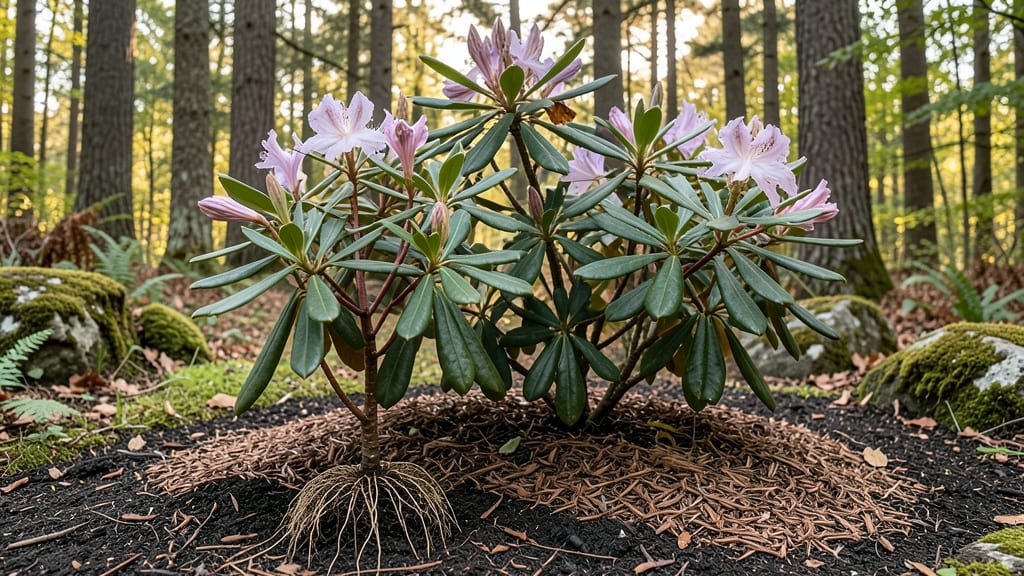
Planting rhododendrons under trees isn’t just possible—it’s a brilliant way to turn shady spots into vibrant displays of spring blooms. 🌿 I’ve learned the hard way that not all trees play well together, but the right pairing transforms bare ground into a lush, fragrant understory.
The secret lies in choosing trees that won’t smother rhododendrons’ shallow roots or steal all the moisture, plus a few clever placement tricks that keep both plants happy.
Start with the right tree partners: deciduous trees like oaks or maples let sunlight filter through in winter when rhododendrons need it most, while evergreens like pines should be avoided—their dense shade and acidic needles create competition rhododendrons can’t win.
Dig a hole twice as wide as the root ball but only as deep, then mix in 3 inches of compost to loosen the heavy soil they crave. Spacing matters too: keep rhododendrons 3-5 feet from the tree trunk to avoid root battles.
What you’ll end up with is a low-maintenance understory that blooms reliably year after year.
The key is mulching with 3-4 inches of pine bark (never wood chips) to lock in moisture and block competing weeds, plus weekly watering for the first season to help roots establish before the tree’s canopy fully closes.
By summer, you’ll notice new growth pushing through the shade, and by spring, those signature clusters of pink or purple blooms will make your yard the envy of the neighborhood.
This works best in zones 5-8, where rhododendrons thrive in partial shade, but the same principles apply if you’re dealing with dense shrubs instead of trees. The only real challenge is patience—it takes 2-3 years for the plants to fully adjust to their shady home.
Stick with it, and you’ll have a shade garden that’s both beautiful and self-sufficient.
📚 In This Guide
- What you need
- Instructions
- Tips and common mistakes
- Wrapping up and next steps
What you need
- ● Rhododendron plants: 1–3 acid-loving rhododendron varieties (e.g., Rhododendron catawbiense or Rhododendron maximum), sized 1–3 gallons (for mature trees) or 3–5 gallons (for larger gaps).
- ● Bareroot options (cheaper, best planted in early spring) or container-grown (flexible planting window).
- ● Soil amendments: 5–10 lbs of peat moss or pine bark fines (per plant) to acidify soil and improve drainage.
- ● 2–3 lbs of slow-release organic fertilizer (e.g., 10-10-10 or rhododendron-specific blend).
- ● Tools: Garden trowel or spade (for digging).
- ● Pruners (sterilized with rubbing alcohol).
- ● Garden hose with nozzle or watering can (1–2 gallons per plant initially).
- ● pH testing kit (to confirm soil acidity, ideal: pH 4.5–6.0).
- ● Mulch (2–3 inches of pine straw or wood chips) to retain moisture and suppress weeds.
- ● Epsom salt (1 tbsp per plant) for magnesium boost (if soil tests low).
- ● Slow-release fertilizer spikes (for long-term nourishment).
- ● Plant support stakes (if planting in windy areas).
Step-by-step guide for planting rhododendrons in tree shade
Here's how to create the perfect spot for rhododendrons to thrive under existing trees.
🌱 Step 1: Scout and Prepare the Planting Site
Look for a spot where the tree's canopy lets in dappled sunlight—at least 3-4 hours of filtered light daily. The roots of rhododendrons need protection from the tree's aggressive root systems, so avoid planting directly against the trunk. Instead, position your plants 3-5 feet away from the tree's dripline, where the soil stays moist but not waterlogged.
Test the soil pH with a kit—rhododendrons thrive in acidic soil (pH 4.5-5.5). If your soil tests higher, you'll need to amend it later. Gently loosen the soil with a garden fork to a depth of 12 inches, breaking up any compacted layers. This helps roots penetrate easily without struggling.
🪴 Step 2: Dig and Amend the Planting Hole
Dig a hole twice as wide as the root ball but no deeper—rhododendrons hate sitting too low, which can cause root rot. The hole should be 2-3 inches shallower than the root ball's depth to encourage upward growth. If the soil is heavy clay, mix in 2-3 inches of peat moss or pine bark fines at the bottom of the hole to improve drainage.
Gently remove the rhododendron from its container and tease apart any circling roots with your fingers. This prevents girdling as the plant matures. Place the root ball in the hole so the top sits 1 inch above ground level—this prevents water from pooling around the stem. Fill the hole with the amended soil, pressing lightly to eliminate air pockets.
☀️ Step 3: Mulch and Water for Establishment
Spread 3 inches of pine bark mulch over the soil surface, keeping it 6 inches away from the stem to prevent rot. Mulch retains moisture and mimics the acidic leaf litter rhododendrons prefer in their native woodlands. Water deeply right after planting to settle the soil and eliminate air pockets around the roots.
Keep the soil evenly moist but never soggy for the first 4-6 weeks. You'll know it's time to water again when the top 1-2 inches of soil feel dry to the touch. Avoid overhead watering—use a soaker hose or drip irrigation to deliver moisture directly to the roots without wetting the foliage, which can encourage fungal diseases.
✂️ Step 4: Monitor Light and Prune for Health
Watch for signs of stress like yellowing leaves or sparse blooms—these often mean the plant isn't getting enough light. If the tree's canopy closes too much, prune back a few branches to restore dappled light conditions. Rhododendrons can tolerate partial shade, but they need some sunlight to produce vibrant blooms in spring.
Prune spent flowers immediately after they fade to encourage more blooms next season. Use clean, sharp pruners to make cuts just above a leaf bud. Avoid heavy pruning in the first year—let the plant focus on root establishment. In late winter, you can lightly shape the plant by removing any dead or crossing branches.
Tips & tricks for perfect rhododendron placement under trees
Between us, the secret to thriving rhododendrons in tree shade isn't just about finding any spot—it's about creating the right microclimate. Here's what I've learned after watching too many plants struggle in less-than-ideal conditions.
Light Balance is Everything: That 3-4 hours of dappled sunlight is non-negotiable. I've seen gardeners place rhododendrons in spots that get only 2 hours of light, and while they survive, they never bloom like they should. Look for areas where sunlight filters through the leaves in patches—this creates the perfect balance of light and shade. A good test is to observe the ground during midday: if you can see distinct sun spots moving across the soil, that's your ideal location.
Root Competition Strategy: The 3-5 feet distance from the tree's dripline is critical for preventing root competition. I once planted a rhododendron just 2 feet from a large oak, and within two years, the tree's roots had completely crowded out the rhododendron. The key is to position your plants where the tree's roots aren't actively spreading. If you're unsure, dig a small test hole—if you hit tree roots within 6 inches, move your planting spot further away.
Soil Prep Secrets: When loosening soil to 12 inches deep, don't just poke around—really work that garden fork to break up compacted layers. I've found that adding 2-3 inches of peat moss or pine bark fines to heavy clay soil makes all the difference in drainage. For an extra boost, mix in a handful of sulfur if your soil pH is above 5.5—this helps lower the pH naturally over time. The goal is to mimic the acidic forest floor conditions these plants love.
Mulching Like a Pro: That 3 inches of pine bark mulch isn't just decoration—it's a protective barrier. Keep it 6 inches away from the stem to prevent rot, but don't skimp on coverage. I've seen gardeners use regular wood chips, but pine bark specifically helps maintain that crucial acidity. Plus, it breaks down slowly, providing a steady supply of organic matter. Refresh the mulch layer every spring to maintain its thickness and effectiveness.
Pro Tips for Planting Rhododendrons Under Trees
- Between us, the secret to thriving rhododendrons in tree shade isn't just about finding any spot—it's about creating the right microclimate.
- Light Balance is Everything: That 3-4 hours of dappled sunlight is non-negotiable.
- Root Competition Strategy: The 3-5 feet distance from the tree's dripline is critical for preventing root competition.
Frequently asked questions
Got questions about planting rhododendrons under trees?
You’re not alone! Here are some of the most common concerns—and their solutions—to help you grow happy, healthy blooms in shaded spots.
Can rhododendrons survive under any type of tree?
Not all trees are equal! Rhododendrons thrive under acid-loving trees like oaks, maples, or dogwoods, which mimic their natural forest-floor conditions. Avoid trees with aggressive roots (like willows or poplars) or those that drop heavy leaf litter, which can smother roots. If your tree isn’t ideal, amend the soil with peat moss or pine bark to replicate their preferred acidic, well-draining environment.
What’s the best time of year to plant them?
Fall (late September to early November) is the golden window—cool temps and consistent moisture help roots establish before winter. Spring (March–April) is a close second, but avoid planting in extreme heat or drought. If you’re in a mild climate, early spring can also work. Pro tip: Water deeply after planting and mulch to retain moisture.
Will rhododendrons compete with tree roots for water/nutrients?
Yes, but strategic placement minimizes conflict. Space rhododendrons 3–5 feet away from the tree’s dripline (the edge of its canopy). This gives them access to dappled light while avoiding the tree’s most competitive roots. Mulch heavily (3–4 inches) with organic matter to retain moisture and nutrients, and fertilize lightly with acid-loving plant food in early spring.
Why are my rhododendrons under a tree struggling? (Yellow leaves, poor growth)
Common culprits include:
- Too much shade: Rhododendrons need at least 3–4 hours of morning sun. If they’re in deep shade, prune nearby branches or transplant to a sunnier spot.
- Poor soil pH: Test your soil—ideal pH is 4.5–6.0. Amend with sulfur or pine needles if it’s alkaline.
- Overwatering: Soggy roots rot easily. Ensure the area has good drainage (raise beds if needed) and water at the base, not the leaves.
- Pests/disease: Check for lace bugs (tiny black dots on leaves) or fungal spots. Treat with neem oil or fungicide as needed.
Are there shade-tolerant alternatives if rhododendrons don’t thrive?
If your site is too challenging, try these low-maintenance understory plants:
- Hydrangeas: Thrive in partial shade and acidic soil.
- Azaleas: Close rhododendron cousins with similar care needs.
- Ferns (e.g., maidenhair or ostrich): Love moisture and shade.
- Heucheras: Colorful foliage for dappled light.
- Pieris japonica: Evergreen shrub with spring blooms.
Each offers different textures and colors to keep your shaded garden vibrant!
Wrapping up and next steps
Planting rhododendrons under trees can be a rewarding way to add vibrant color and texture to your shade garden—just remember to choose the right tree companions, prep the soil, and give them the care they need.
With patience and attention to their unique needs, these shade-loving beauties will thrive and wow you with their blooms year after year!
Ready to get started? Pick your spot, gather your supplies, and dig in—your future garden (and pollinators!) will thank you! 🌿✨