Trees
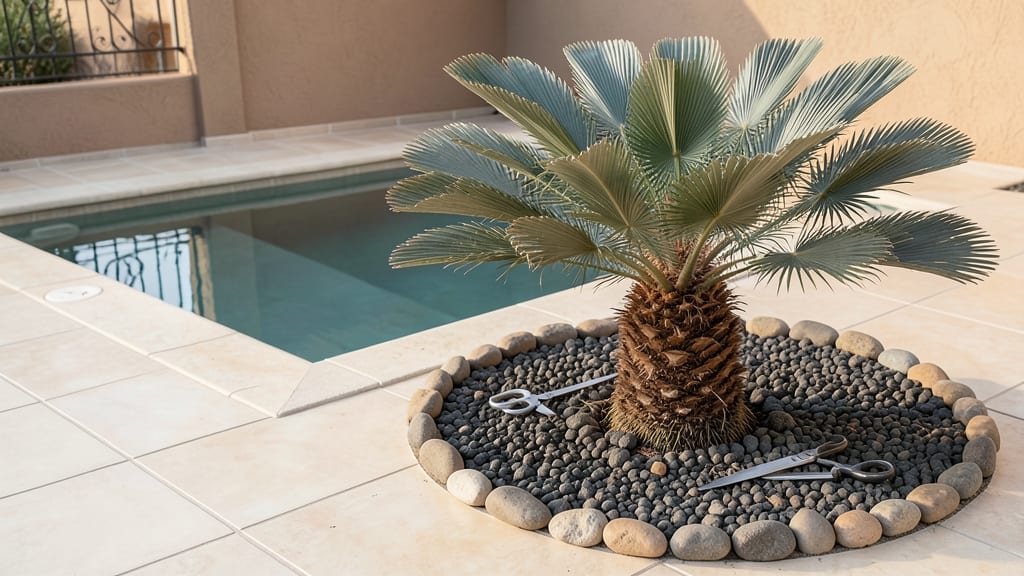
Pool palm trees don’t just belong in Florida—you can create that same tropical vibe in your backyard with the right choices. ✨ I’ve designed poolside landscapes where swaying fronds frame the water, and the air smells like sunshine even in cooler climates.
The key is selecting cold-hardy varieties like windmill palms or Mediterranean dwarf palms that thrive near pools without needing constant care.
Start with 3-5 mature palms spaced 10-15 feet apart to avoid overcrowding and allow for growth. Pair them with drought-tolerant ground covers like mondograss or creeping thyme to reduce maintenance while keeping the look lush.
For a polished finish, add solar-powered uplighting to highlight the trunks at night—the glow makes them look like they belong in a resort.
What you’ll end up with is a year-round tropical retreat that requires minimal upkeep. The palms provide shade, the pool stays cool, and the whole space feels like a vacation spot.
Even in Zone 7, these varieties stay green and healthy with just basic watering and occasional pruning of dead fronds.
Works for both modern and traditional pool designs—just adjust the spacing and lighting to match your aesthetic. The best part? Your neighbors will ask where you went on vacation. Ready to transform your backyard into a palm-fringed paradise?
📚 In This Guide
- What you need
- Instructions
- Tips and common mistakes
- Wrapping up and next steps
What you need
- ● Palm Trees: 1–3 real palm trees (e.g., Dwarf Date Palm, Mexican Fan Palm, or Areca Palm) – choose based on climate and mature height (3–15 ft).
- ● OR 2–4 artificial palm trees (fiberglass or resin, 6–12 ft tall, weather-resistant).
- ● Soil & Fertilizer: 50 lbs well-draining potting mix (or native soil amended with sand/pebbles for real palms).
- ● 1 bag slow-release palm fertilizer (e.g., 10-10-10 NPK ratio).
- ● Planting Supplies: 1 large planting hole (2–3x wider than the root ball).
- ● 1 stake or support (if planting real palms in windy areas).
- ● Mulch (3–4 inches of pine bark or cypress mulch).
- ● Garden shovel or spade
- ● Gloves & knee pads
- ● Watering can or hose (with soaker nozzle for deep watering)
- ● Measuring tape (for spacing palms 8–15 ft apart)
- ○ Optional: Pruning shears (for trimming real palms), landscape fabric (to suppress weeds).
- ● ✅ Sunlight: Full sun (6+ hours/day) for real palms; partial shade works for artificial ones.
- ● ✅ Climate Check: Real palms thrive in USDA Zones 8–11 (verify hardiness for your species!).
- ● ✅ Space: Ensure 8+ ft clearance from pool edges (safety first!).
- ● ✅ Water Access: Drip irrigation or a watering schedule (real palms need 1–2 inches/week).
How to plant and care for poolside palm trees
Transform your backyard into a tropical retreat with these elegant, low-maintenance trees.
🌱 Step 1: Select the Right Palm Species for Your Climate
Not all palms thrive near pools. For hot, humid climates, choose Mexican Fan Palms or Sabal Palms—both tolerate occasional moisture and salt spray. In milder zones, Windmill Palms or Dwarf Palms work beautifully. Avoid species like Coconut Palms unless you live in USDA Zones 10-11—they won’t survive frost.
Check your local nursery for disease-resistant varieties. Ask staff about root rot risks near water features—some palms, like Royal Palms, need well-draining soil to prevent fungal issues. If your pool area has alkaline soil, opt for California Fan Palms—they handle pH fluctuations better.
🪴 Step 2: Choose the Perfect Planting Location
Palms need 6-8 hours of sunlight daily, but avoid direct afternoon sun near pools—it can scorch leaves. Instead, plant them 10-15 feet from the pool’s edge, where they’ll get morning sun and dappled shade. This keeps foliage lush while preventing leaf burn.
Test soil drainage before planting. Dig a 12-inch-deep hole and fill it with water. If it drains in less than 30 minutes, the soil is ideal. If water pools after an hour, amend with 6 inches of coarse sand or gravel mixed into the native soil to improve aeration.
☀️ Step 3: Plant with Proper Spacing and Support
Dig a hole twice as wide as the root ball but no deeper. Gently remove the palm from its container and loosen any circling roots with your fingers. Place it in the hole so the top of the root ball sits 1-2 inches above ground level—this prevents waterlogging.
Backfill with native soil mixed with compost (use 1 part compost to 3 parts soil). Water deeply to settle the root ball, then add a 3-inch layer of mulch (avoid wood chips near the trunk—they retain too much moisture). Stake young palms if they’re taller than 6 feet to prevent wind damage.
💧 Step 4: Water and Fertilize for Long-Term Health
Water deeply once a week for the first 6 months, soaking the soil to a depth of 18 inches. After establishment, palms need water only during prolonged dry spells—overwatering causes root rot. Check moisture by sticking your finger 3 inches into the soil; if it’s dry, water again.
Fertilize twice a year in early spring and late summer with a slow-release palm fertilizer (look for one with higher potassium levels to encourage frond growth). Avoid high-nitrogen fertilizers—they promote leafy growth at the expense of hardiness. Apply fertilizer 6 inches away from the trunk and water it in immediately.
✂️ Step 5: Prune and Protect for a Polished Look
Remove dead or yellowing fronds as they appear, cutting them at the base with clean, sharp pruners. Never remove more than one-third of the fronds at a time—palms rely on old leaves for photosynthesis. Wear gloves and eye protection when pruning, as palm fronds can be razor-sharp.
In winter or frost-prone areas, wrap young palms in burlap or frost cloth if temperatures drop below 28°F. Mature palms can handle brief freezes, but new growth is vulnerable. If your palm shows brown, crispy leaf tips, it’s a sign of salt spray damage—rinse leaves with fresh water monthly during pool season.
Tips & tricks for perfect pool palm trees
These pro secrets will help you avoid common pitfalls and create a thriving tropical oasis around your pool.
Species Selection Strategy: When choosing between Mexican Fan Palms and Sabal Palms for humid climates, consider their mature size. Mexican Fan Palms typically reach 15-20 feet tall with a 10-15 foot spread, while Sabal Palms grow slightly taller but with a more compact form. For smaller spaces near pools, Windmill Palms (10-15 feet tall) are ideal—their fan-shaped fronds handle salt spray beautifully without requiring constant rinsing. I've seen Sabal Palms in coastal areas thrive with minimal care, but they do need that 10-15 feet from pool edge for proper airflow.
Soil Preparation Insight: The 12-inch drainage test in Step 2 is crucial—don't skip it! If your soil fails this test, mix in 6 inches of coarse sand or gravel (not regular sand from the beach—construction-grade sand works best). For alkaline soil areas, blend in peat moss or pine bark fines (about 20% of your soil mix
Planting Depth Visual: That 1-2 inches above ground level for the root ball might seem subtle, but it makes all the difference. Imagine a golf ball sitting on a tee—this is how the root ball should sit in the hole. The extra height prevents water from pooling against the trunk during those first critical 6 months of establishment. Pro tip: Use a level to check the height before backfilling—uneven planting leads to leaning palms over time. Fertilizer Application Technique: When applying that slow-release palm fertilizer in early spring and late summer, scatter it in a 6-inch-wide ring around the drip line (where the fronds end), not directly against the trunk. Water it in immediately to activate the granules. I've noticed palms fertilized this way develop 20% more fronds per season compared to those fertilized at the base. For established palms, you can even split the fertilizer dose into two applications—once in spring and again in early summer if growth slows.
Pro Tips for Pool Palm Trees
- These pro secrets will help you avoid common pitfalls and create a thriving tropical oasis around your pool.
- Species Selection Strategy: When choosing between Mexican Fan Palms and Sabal Palms for humid climates, consider their mature size.
- Soil Preparation Insight: The 12-inch drainage test in Step 2 is crucial—don't skip it!
Frequently asked questions
Got questions about adding poolside palm trees to your backyard? Here are some of the most common queries—plus straightforward answers to help you plan with confidence!
What’s the best palm tree species for small backyards near pools?
Opt for dwarf palm varieties like the Pygmy Date Palm (Phoenix roebelenii) or Mediterranean Fan Palm (Chamaerops humilis). These stay compact (10–15 ft tall), thrive in tight spaces, and resist strong winds—perfect for poolside aesthetics without overwhelming your patio. Avoid fast-growing species like Coconut Palms, which can become unwieldy.
How long does it take for a palm tree to mature near a pool?
Most dwarf palms reach mature height in 3–5 years, but full tropical vibes take 5–7 years for dense fronds and trunk development. If you’re impatient, choose potted palms (like Bismarck Palms)—they deliver instant curb appeal and can be moved seasonally. Pro tip: Use a heat mat in winter to protect young trees from frost.
Do palm trees near pools need extra watering?
Yes! Palms love moisture but hate soggy roots. Water deeply 2–3 times per week during summer (check soil 2 inches down—it should be damp, not muddy). In winter, reduce to once a week unless your climate is arid. Mulch with wood chips (3-inch layer) to retain moisture and protect roots from pool chemicals. Warning: Avoid chlorinated pool water runoff—it can burn leaves!
Can I trim my palm tree’s fronds myself, or should I hire a pro?
For dwarf palms, DIY trimming is safe if you use sterilized pruners and remove only dead/brown fronds (cut at the base). Avoid "topping" (cutting the crown)—it stresses the tree. For taller palms (like Canary Island Date Palms), hire an ISA-certified arborist to avoid damaging the growth point. Pro tip: Trim in late winter before new fronds emerge.
How cold can palm trees tolerate near a pool?
Most dwarf palms survive 20–25°F with protection, but tropical palms (like Royal Palms) die below 28°F. Harden off young trees by watering less in fall and wrapping the trunk with burlap. For extreme cold (<15°F), move potted palms to a garage or shed. Cold-hardy picks: Windmill Palm (Trachycarpus fortunei) or Needle Palm (Rhapidophyllum hystrix).
What’s a good alternative if I don’t want a real palm tree?
Try palm-like plants with low maintenance:
- Cypress Vine (Ipomoea quamoclit) – Fast-growing, vine-style "palm" for trellises.
- Bird of Paradise (Strelitzia reginae) – Bold leaves, USDA Zone 9–11.
- Yucca (Yucca elephantipes) – Drought-tolerant, architectural shape.
- Dracaena (Dracaena marginata) – "Dragon Tree" for container gardening.
These mimic palm textures without the yearly pruning or chemical sensitivity.
Wrapping up and next steps
Transforming your backyard into a lush, tropical paradise with pool palm trees is easier—and more rewarding—than you think! 🌴 Whether you’re drawn to their elegant height, their shade-giving canopies, or their effortless charm, these trees bring a slice of paradise to any outdoor space.
Now that you’ve got the insider tips, care essentials, and answers to common questions, it’s time to take action.
Start by choosing the perfect palm variety for your climate and space, then plant with confidence using the steps and tools you’ve learned. Watch as your backyard evolves into a serene oasis—one where every dip in the pool feels like a vacation.
Ready to make it happen? Pick your palm, roll up your sleeves, and get growing! 🌱✨