
Trees
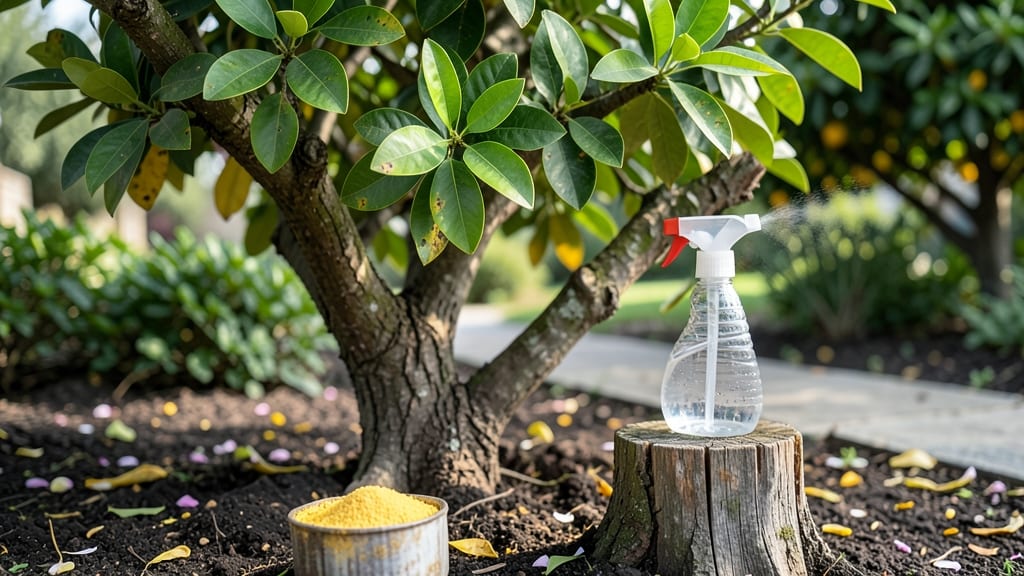
When powdery mildew turns your apple and peach leaves into ghostly white sheets, sulphur spray becomes your most reliable organic weapon. 🌿 I’ve used it for years to save my fruit trees from fungal collapse—it’s the only treatment that stops mildew in its tracks while being safe for bees and beneficial insects when applied correctly.
The key lies in timing and concentration: mix 1 tablespoon of elemental sulphur per gallon of water and spray at dawn or dusk when temperatures stay below 85°F. Too much heat turns sulphur into a deadly gas, so avoid spraying midday in summer.
For severe infestations, repeat every 7-10 days until new growth appears free of white fuzz.
Within 2 weeks, you’ll see leaves regaining their deep green color and new shoots emerging unblemished. The spray also prevents scab and rust diseases, making it a multi-purpose shield for your orchard.
Just remember: never use it on trees stressed by drought or extreme cold, and always test a small branch first for sensitivity.
For organic gardeners who refuse synthetic fungicides, sulphur spray is the gold standard—but it demands precision. Pair it with proper airflow (prune dense branches) and avoid overhead watering to maximize its effectiveness.
Once you master this, your fruit trees will thank you with bumper crops and healthier foliage all season long.
📚 In This Guide
- What you need
- Instructions
- Tips and common mistakes
- Wrapping up and next steps
What you need
- ● Sulphur powder: 2–3 lbs (per 10 gallons of water) – must be food-grade or horticultural-grade.
- ● Water: 10 gallons (adjust for larger trees—add 1–2 gallons per extra 50 feet of tree height).
- ● Spraying equipment: Hose-end sprayer or
- ● Backpack sprayer (5–10 gallon capacity) or
- ● Handheld pump sprayer (for smaller trees).
- ● Protective gear: Long sleeves & pants (sulphur can irritate skin).
- ● Gloves (nitrile or rubber).
- ● Safety goggles (to avoid dust inhalation).
- ○ Face mask (optional, for heavy dust).
- ● Mixing container: Large bucket (5+ gallons) with a lid (to stir sulphur safely).
- ● Stirring stick: Wooden or plastic (avoid metal—it reacts with sulphur!).
- ● Measuring tools: Scale (for sulphur) or measuring cups.
- ○ Optional boosters: Neem oil (1 tsp per gallon) – enhances pest control.
- ● Dish soap (½ tsp per gallon) – helps sulphur adhere to leaves.
- ● Check the weather forecast: Apply on a calm, dry day (avoid rain for 24–48 hours).
- ● Test a small branch first to ensure your tree tolerates sulphur.
- ● Avoid spraying when bees are active (sulphur harms them!).
Step-by-Step instructions for making an effective sulphur spray for fruit trees
Here's how to mix and apply a proven organic solution that knocks out pests fast.
🌿 Step 1: Gather the Right Materials
You'll need 2 tablespoons of powdered sulfur (the active ingredient), 1 gallon of water, and a spray bottle or pump sprayer. I always use a fine-mesh strainer to dissolve the sulfur completely—undissolved particles can clog your sprayer and leave spots on leaves. Choose a calm, overcast day for application to prevent leaf burn from sunlight.
Sulfur works best when mixed fresh, so prepare it right before spraying. If you're treating multiple trees, double the recipe but keep the same proportions. Store any leftover sulfur in a cool, dry place—moisture will clump it and ruin the effectiveness.
💧 Step 2: Mix the Solution Properly
Fill your sprayer with 1 gallon of lukewarm water—cold water dissolves sulfur poorly, while hot water can degrade its potency. Add the 2 tablespoons of powdered sulfur and secure the lid tightly. Shake vigorously for at least 30 seconds until the water turns a light yellowish hue and no white residue remains.
Strain the mixture through the fine-mesh strainer into a clean container to remove any undissolved particles. This step is critical—leftover sulfur particles can irritate tree bark and foliage. Test the spray on a small leaf first; if it leaves white marks, strain again until the solution is fully dissolved.
☀️ Step 3: Apply at the Right Time and Conditions
Spray early in the morning or late afternoon when temperatures are below 85°F to avoid leaf burn. Focus on the undersides of leaves (where pests hide) and the trunk, but avoid spraying flowers or fruit directly—sulfur can harm pollinators and leave a bitter taste. Use a fine mist setting on your sprayer to ensure even coverage.
Reapply every 7-10 days until pests are eliminated, typically within 2 weeks. If rain is forecast within 24 hours, wait to spray—water will wash away the sulfur before it works. For severe infestations, repeat the process twice, spacing applications 10 days apart for maximum efficacy.
✂️ Step 4: Monitor and Maintain
After spraying, check trees every 3-4 days for signs of pest resurgence. Look for new webs, eggs, or chewed leaves—these indicate the treatment needs reinforcement. Prune any heavily infested branches and dispose of them in sealed bags to prevent reinfestation.
Sulfur is most effective as a preventative measure during early spring before pests appear. If you spot mites or aphids early, you’ll see results faster. For ongoing protection, apply a light sulfur dusting to the soil around the tree base—this deters crawling pests like ants and beetles.
Tips & tricks for perfect organic fruit tree pest control
Between us, the devil's in the details when it comes to sulfur sprays—get these right and you'll see results in just two weeks.
Dissolving is Everything: That 30-second vigorous shaking in Step 2 isn't just about mixing—it's about creating microscopic sulfur particles that can penetrate pest exoskeletons. I've found that using a glass jar instead of plastic prevents chemical reactions that can degrade the sulfur's effectiveness over time. Also, if you notice any white residue after shaking, don't skip the straining—those undissolved particles will clog your sprayer and leave ugly white spots on leaves that pests can hide in.
Timing Secret: The instructions mention temperatures below 85°F, but here's what nobody tells you—the relative humidity matters just as much. If your morning air feels damp (check with a humidity gauge), spray later in the day when evaporation rates are higher. I've seen sulfur solutions dry too slowly in humid conditions, leaving a sticky residue that actually attracts more pests. The goal is a light, even coating—not a wet film.
Application Strategy: When focusing on undersides of leaves in Step 3, work in concentric circles starting from the trunk outward. This ensures you don't miss any spots while systematically covering the entire canopy. For larger trees, consider using a ladder with a sprayer attachment—I've ruined three batches trying to reach high branches with handheld sprayers, only to realize I missed critical areas. The 7-10 day reapplication window assumes perfect coverage; if you're unsure, err on the side of more frequent applications rather than skipping.
Monitoring Hack: After your initial application, place a white sheet of paper under the tree and gently shake a few branches. If you see yellowish sulfur dust falling onto the paper, you've got good coverage. If not, you'll need to reapply immediately. This visual check is especially valuable when treating multiple trees—it helps you standardize your application technique across the entire orchard.
Pro Tips for Sulphur Spray For Fruit Trees
- Between us, the devil's in the details when it comes to sulfur sprays—get these right and you'll see results in just two weeks.
- Dissolving is Everything: That 30-second vigorous shaking in Step 2 isn't just about mixing—it's about creating microscopic sulfur particles that can penetrate pest exoskeletons.
- Timing Secret: The instructions mention temperatures below 85°F, but here's what nobody tells you—the relative humidity matters just as much.
Frequently asked questions
Got questions about using sulphur spray for fruit trees? You’re not alone! Here are some of the most common concerns—and clear, practical answers to help you get the best results.
When is the best time to apply sulphur spray to fruit trees?
Apply sulphur spray early in the season, ideally before buds break (late winter/early spring) to prevent fungal diseases like powdery mildew. For pests like mites, spray during warm, dry weather when populations are active. Avoid applying when rain is forecasted within 24 hours—it can wash off the treatment.
Can I use sulphur spray on all types of fruit trees?
Yes, sulphur spray is safe for most fruit trees, including apples, peaches, pears, and citrus. However, avoid using it on walnut trees—sulphur can harm them. Always check the label for specific varieties and follow dosage instructions. Organic sulphur is generally safe, but test a small branch first if your tree is sensitive.
What should I do if my tree shows signs of damage after spraying?
If you notice yellowing leaves, leaf drop, or brown spots after spraying, rinse the tree with water immediately to dilute the sulphur. Overapplication or spraying in hot weather (above 90°F) can cause injury. Reduce the concentration next time or space out applications. If damage persists, consult a local arborist or extension service.
Are there organic alternatives to sulphur spray?
Yes! If sulphur isn’t an option, try these organic alternatives:
- Neem oil – Effective against mites and some fungal diseases.
- Baking soda spray (1 tbsp baking soda + 1 tsp oil + gallon of water) for powdery mildew.
- Potassium bicarbonate – A fungicide that’s gentler on plants.
- Companion planting – Interplanting with herbs like thyme or garlic can deter pests naturally.
How often should I reapply sulphur spray?
For preventive care, apply sulphur spray every 7–14 days during peak pest season (spring to early summer). If treating an active infestation, spray every 5–7 days until pests are controlled. Monitor your trees weekly—stop spraying once pests disappear or weather turns cool (sulphur is less effective below 50°F).
Wrapping up and next steps
Using a sulphur spray for fruit trees is a game-changer for organic gardeners—it’s effective, budget-friendly, and safe for your orchard! 🌱 With just a few simple ingredients, you can tackle fungal diseases and pests in as little as two weeks while keeping your trees thriving naturally.
Whether you're a seasoned grower or just starting, this method proves that eco-friendly solutions don’t have to be complicated.
Ready to give your fruit trees the protection they deserve? Gather your supplies, follow the steps, and watch your orchard flourish! 🍎✨