
Pruning
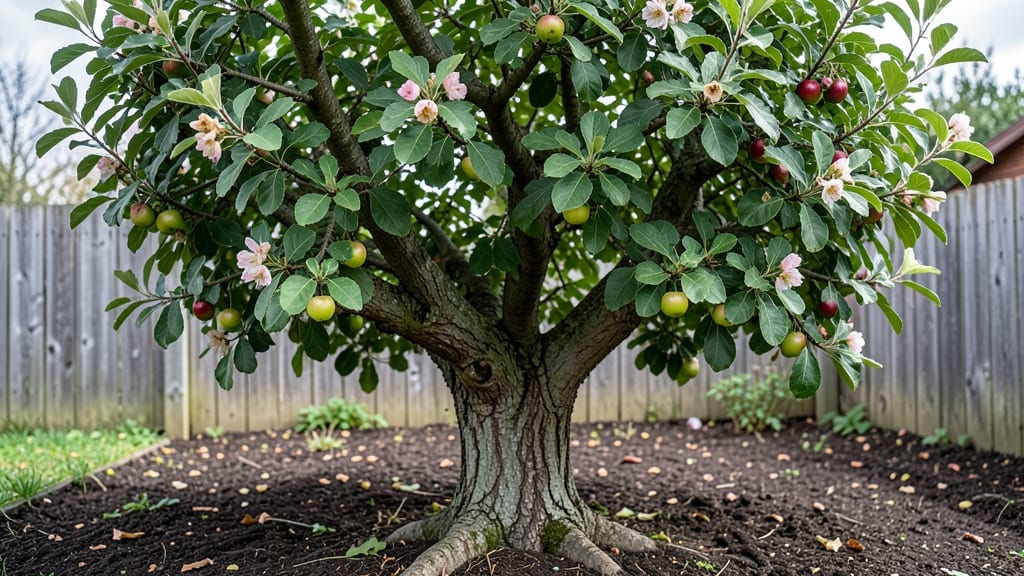
Summer pruning your crabapple tree isn't just about shaping—it's about setting up a frost-resistant canopy that thrives through Pacific Northwest summers and beyond. 🌿 I learned the hard way when my first attempt left branches too exposed, causing winter dieback.
The secret lies in strategic cuts that balance air flow, sunlight, and structural integrity while avoiding summer stress.
Most gardeners focus on winter pruning, but summer trimming actually reduces disease risk by opening up the canopy for better airflow. You'll need sharp pruners, a ladder, and a clear day—no more than 20% of the tree's foliage should be removed at once.
The goal is to remove dead wood, thin crowded branches, and shape for winter resilience without shocking the tree.
What you'll end up with is a tree that handles summer heat better, produces fewer (but higher-quality) fruits, and stands up to winter winds without losing limbs. The key is timing: prune after the first flush of summer growth but before August's heat sets in.
You'll notice fewer leaf diseases and stronger new growth by fall.
This method works equally well for young trees and mature specimens, though the approach differs slightly. For established trees, focus on removing crossing branches first—then work on shaping from the bottom up.
The Pacific Northwest's mild winters mean your tree will thank you for the extra care during the growing season.
📚 In This Guide
- What you need
- Instructions
- Tips and common mistakes
- Wrapping up and next steps
What you need
- ● Pruning shears: Bypass pruners (for cuts up to ½ inch in diameter). Recommended: Felco F-2 or Corona 2-in-1 (💡 Sharp blades = cleaner cuts!)
- ● Loppers: 1 pair (for branches ½ to 1½ inches thick). Look for: Ratchet-style for easy leverage.
- ● Pruning saw: 1 curved-tooth saw (for branches 1½+ inches thick). Example: Fiskars X7.
- ● Extension pole: 6–10 ft telescoping pole with pruning saw attachment (for high branches). Pro tip: Adjustable lengths save space!
- ● Disinfectant: 70% isopropyl alcohol or 10% bleach solution (to sterilize tools between cuts).
- ○ Pruning sealant: Optional but helpful for large cuts (>1 inch). Recommended: Tanglefoot Tree Wound Pruning Seal.
- ● Work gloves: 1 pair of heavy-duty, cut-resistant gloves (e.g., Mechanix Wear or Wormingers).
- ● Safety gear: Safety glasses (to shield from debris).
- ● Ear protection (if using a chainsaw for stubborn branches).
- ● Sturdy boots or closed-toe shoes.
- ● Chainsaw: Only if tackling very thick branches (2+ inches). Example: Husqvarna 450 Rancher (with sharp chain!).
- ● Ladder: 12–16 ft extension ladder (for hard-to-reach branches). ✨ Safety first: Use stabilizers and a helper!
- ● Tree bagging kit: For wrapping newly cut branches (reduces sunburn risk in PNW’s intense summer sun).
- ● Notebook & pen: To sketch your pruning plan or mark cuts before you start.
- ● Water & snacks: Summer pruning is a workout—stay hydrated! 💧
- ● Weather check: Prune on a cool, cloudy day (avoid midday heat to reduce tree stress).
- ● Tree health: Ensure your crabapple is not under drought stress or diseased (wait until next season if needed).
- ● Safety briefing: Clear a 10–15 ft radius around the tree (remove toys, pets, and loose items).
- ● PNW-specific prep: Have a rain cover handy—summer showers are unpredictable!
How to prune your crabapple tree for a stronger Pacific Northwest canopy
Summer shaping keeps your tree healthy and frost-resistant—here’s how to do it right.
🌿 Step 1: Identify and Remove Dead or Diseased Branches First
Start by scanning your tree for branches that are brown, brittle, or showing signs of disease like oozing sap or fungal growth. These are the first to go—they drain energy and invite pests. Grab your pruning shears and cut just outside the branch collar, the swollen area where the branch meets the trunk.
If a branch is thicker than 6 inches, use your pruning saw instead. Saw cuts should be clean and slightly angled to prevent water from pooling. Here’s the thing—if you’re unsure whether a branch is dead, scratch the bark with your fingernail. Green underneath? It’s alive and should stay.
✂️ Step 2: Thin the Canopy for Better Airflow and Light
Next, focus on thinning out the interior branches to let sunlight and air circulate through the canopy. Aim to remove 20-30% of the smallest branches—these are the ones growing inward or crossing over others. You’ll know you’re doing it right when you can see light filtering through the branches from above.
I like to work in sections, starting from the bottom and moving upward. Cut branches back to a lateral branch or bud, making sure your cuts are just above the growth point. Avoid leaving stubs—this invites decay and weakens the tree. If you’re pruning a branch thicker than 2 inches, seal the cut with pruning sealant to prevent disease entry.
☀️ Step 3: Shape the Tree for Frost Resistance and Balance
Now it’s time to shape the tree to handle Pacific Northwest frosts better. Focus on opening the center of the canopy so cold air can drain away from the trunk. Remove any branches that are growing straight upward—these are prone to breaking under heavy snow or ice.
Use your pruning shears to trim back branches that are too long or growing at sharp angles. Aim for a natural, rounded shape that allows snow to slide off easily. If your tree has branches rubbing against each other, trim one of them back to prevent future damage. Real talk: This step takes patience, but a well-shaped tree will reward you with fewer winter losses.
💧 Step 4: Clean Up and Monitor for Recovery
After pruning, rake up all the debris and dispose of it properly—don’t leave it under the tree, as it can harbor pests and diseases. Sterilize your tools with rubbing alcohol to prevent spreading any pathogens to other trees. Water the base of the tree deeply to help it recover from the stress of pruning.
Watch your tree over the next few weeks. You’ll notice new growth emerging from the pruned areas—that’s a good sign! If you see excessive weeping from the cuts, it means you’ve pruned too aggressively. Next time, go a little lighter. Summer pruning is all about balance, and your tree will thank you for it.
Tips & tricks for perfect crabapple tree summer pruning
Summer pruning transforms your crabapple tree—here’s how to avoid common pitfalls and maximize results.
Branch Health Test: That fingernail scratch test in Step 1 is your secret weapon. If you see green underneath when you scratch the bark, the branch is alive—leave it. If it's brown all the way through, it's dead wood that needs removing immediately. Confession: I skipped this test for years and wondered why my trees never recovered properly!
Canopy Thinning Strategy: When you're targeting that 20-30% removal in Step 2, focus on branches thinner than 1/4 inch—these are the ones that crowd the center. Think of it like thinning a bouquet: you want to see light and air moving through, not just dense foliage. The goal is to create an open vase shape that lets sunlight reach all parts of the canopy.
Pruning Sealant Wisdom: For branches thicker than 2 inches in Step 2, that pruning sealant isn't just optional—it's crucial. I've seen too many trees develop canker diseases from unsealed cuts. Use a high-quality sealant and apply it within minutes of making the cut. This prevents water from pooling in the wound and creating entry points for pathogens.
Frost-Resistant Shape: In Step 3, when shaping for frost resistance, aim for a natural dome shape rather than a flat top. This allows snow to slide off rather than accumulate. I've seen trees with flat tops completely collapse under heavy PNW snow loads—it's a heartbreaking sight. The rounded shape also helps cold air drain away from the trunk during winter.
Pro Tips for Crabapple Tree Summer
- Summer pruning transforms your crabapple tree—here’s how to avoid common pitfalls and maximize results.
- Branch Health Test: That fingernail scratch test in Step 1 is your secret weapon.
- Canopy Thinning Strategy: When you're targeting that 20-30% removal in Step 2, focus on branches thinner than 1/4 inch—these are the ones that crowd the center.
Frequently asked questions
Got questions about keeping your crabapple tree thriving during Pacific Northwest summers while prepping for frost? Here are answers to the most common queries—plus a few pro tips to keep your canopy in top shape.
When is the best time to prune a crabapple tree in the PNW for summer resilience?
Prune your crabapple tree late winter to early spring (February–March), just before buds swell. This timing avoids stressing the tree during summer heat and gives it time to heal before frost arrives. Wait until after heavy winter pruning if you split tasks—never prune in summer!
How do I know if my crabapple tree is ready for summer pruning?
Check for these signs: healthy new growth (2–3 inches since last prune), no wilting leaves, and no signs of pests/disease. Avoid pruning if branches are dry, cracked, or oozing sap—this indicates stress. Morning shade tests (using a thermometer) can also help gauge heat tolerance.
Can I prune a crabapple tree in summer to control its size?
Pruning in summer (June–August) is risky—it stresses the tree, attracts pests, and weakens frost resistance. Instead, lightly thin branches in late summer (September) to improve airflow. For size control, focus on winter pruning and annual shape adjustments.
What’s the best way to prepare a crabapple tree for PNW frost after summer growth?
Start in late summer (August) with these steps:
- Remove dead/diseased wood to prevent frost spread.
- Deep-water weekly to harden roots (stop 2 weeks before frost).
- Apply 2–3 inches of mulch around the base (keep 6 inches from trunk).
- Wrap young trees in burlap if temps dip below 20°F.
Are there frost-resistant crabapple varieties better for PNW summers?
Yes! Opt for these hardy varieties (USDA Zones 5–7):
- ‘Adams’ – Disease-resistant, vibrant red fruit.
- ‘Dolgo’ – Cold-tolerant, compact, and low-maintenance.
- ‘Sargent’ – Native to PNW, thrives in poor soil.
- ‘Royal Raindrops’ – Dwarf variety, great for containers.
Wrapping up and next steps
Summer pruning your frost-resistant crabapple tree in the Pacific Northwest isn’t just about aesthetics—it’s a strategic move to boost health, airflow, and future blooms. 🌿 By following the right techniques, you’ll create a stronger, more resilient canopy that thrives year-round.
Now that you’re armed with the tools, timing, and tips, it’s time to roll up your sleeves and give your tree the care it deserves!
Ready to take action? Pick a calm, sunny day this summer, gather your supplies, and start trimming with confidence. Your crabapple tree—and your future harvest of blossoms—will thank you! 🌸