Pruning
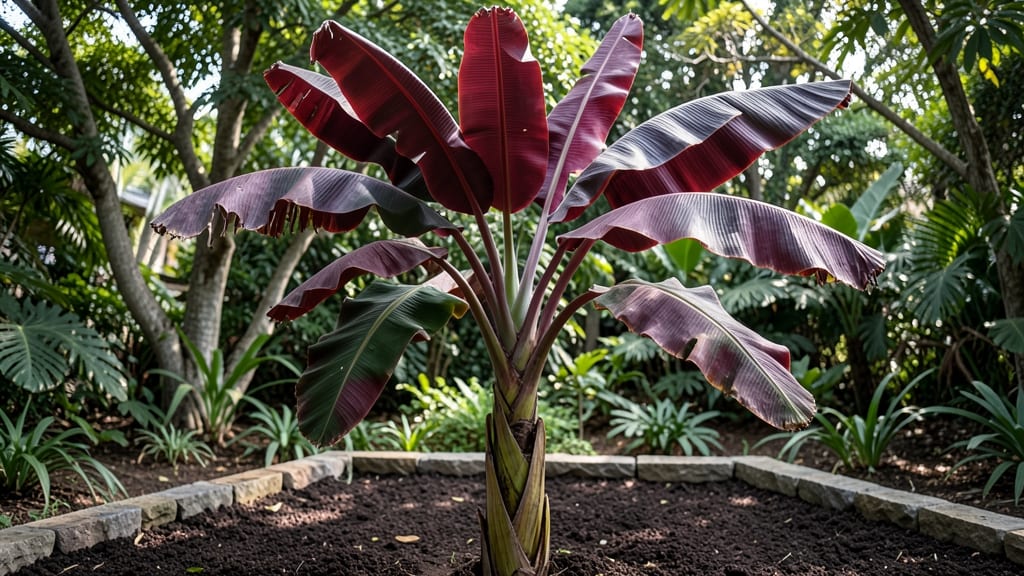
The red banana leaf tree (Ensete ventricosum) thrives in Pacific Northwest gardens with its bold, burgundy foliage and tropical flair. 🌿 I’ve learned that pruning isn’t just about shaping—it’s about keeping this stunner healthy year-round while protecting it from rain and wind.
The PNW’s damp climate means proper cuts prevent rot and encourage fresh growth.
This tree loves partial shade and rich, well-draining soil, but its real secret weapon is its adaptability. Even in cooler summers, it keeps its dramatic color and lush leaves. Pruning in late winter or early spring removes dead fronds while leaving enough foliage to shield the trunk from moisture.
A sharp pair of pruners and a clean cut are all you need.
With the right pruning, your red banana leaf tree becomes a year-round focal point—vibrant in summer, textured in winter, and always drought-tolerant once established. The bold leaves create stunning contrast against evergreens and perennials, making it a standout in any garden.
Works beautifully in containers for patios or as a specimen plant in larger landscapes. The key is patience—this tropical beauty rewards careful maintenance with bold, glossy leaves that turn heads all season long.
📚 In This Guide
- What you need
- Instructions
- Tips and common mistakes
- Wrapping up and next steps
What you need
- ● Pruning shears (bypass or anvil type) – Choose a pair with sharp, sterilized blades (5-8" blade length for precision).
- ● Loppers – For thicker branches (2-3" in diameter), opt for bypass loppers with a 10-12" cutting range.
- ● Pruning saw (folding or bow saw) – For branches too thick for loppers (3"+ diameter). A curved-tooth saw minimizes tear-out.
- ● Gloves (heavy-duty gardening gloves) – Protect your hands from thorns, sap, and rough edges. Look for nitrile-coated or leather options.
- ● Disinfectant (70% isopropyl alcohol or bleach solution) – 1 part bleach to 9 parts water to sterilize tools between cuts and prevent disease.
- ○ Pruning sealant (optional but recommended) – A wound dressing like tree paint or pruning paste to seal larger cuts and reduce sap loss.
- ● Ladder or step stool – Ensure stability for reaching higher branches (extendable ladders work best for tall trees).
- ● Heavy-duty trash bags or compost bin – For collecting pruned branches and leaves (2-3 bags, depending on tree size).
- ● Sharpie or permanent marker – For labeling branches if you’re practicing selective pruning.
- ● Safety gear – Safety glasses (to shield from debris) and closed-toe shoes (for protection).
- ● Extension pole pruners – For high branches without a ladder (great for Pacific Northwest rain-prone conditions).
- ● Tree tie or zip ties – To secure branches if you’re training the tree for shape.
- ● Hose with nozzle – To clean tools and rinse sap off leaves post-pruning.
- ● Camera or phone – Document the tree’s structure before and after pruning for reference.
- ● Compost activator – If you plan to compost pruned material, add this to speed up decomposition.
Step-by-step guide for pruning your red banana leaf tree
Here's how to maintain a lush, healthy canopy year-round—without over-pruning.
✂️ Step 1: Assess the Canopy Structure
The red banana leaf tree thrives on a balanced structure, so start by examining the branches from all angles. Look for crossing limbs that rub together, dead or yellowing fronds, and overly dense growth that blocks sunlight from reaching the center. I always prune in the late winter to early spring (February-March) when the plant is semi-dormant but before new growth begins.
Use your hands to gently trace the branch framework—healthy branches should feel firm with a slight springiness, while weak ones will bend or snap easily. Mark these areas with a soft garden marker or twist a piece of twine around them. This helps you visualize the final shape before making any cuts.
✂️ Step 2: Remove Problematic Growth
Start with dead or diseased fronds—these are the easiest to spot as they’ll be brown, brittle, or covered in black spots. Cut these back to the main trunk or healthy branch collar using clean, sharp pruning shears. Never leave stubs, as they invite fungal infections. For larger branches (over ½ inch thick), use a pruning saw to avoid tearing the bark.
Next, remove crossing or rubbing branches—these create wounds that weaken the tree over time. Make your cut just outside the branch collar (the swollen area where the branch meets the trunk). Angle the cut slightly away from the trunk to allow water to run off. If you’re unsure which branch to remove, cut the smaller one first—this minimizes stress on the tree.
✂️ Step 3: Thin Out Dense Areas
Now focus on thinning the canopy to improve airflow and sunlight penetration. Aim to remove about 20-25% of the total foliage—this encourages bushier growth without over-stressing the plant. Start at the outer edges and work inward, removing the longest or most outward-growing fronds first. This opens up the center while maintaining the tree’s natural shape.
Watch for water sprouts—these are fast-growing, weak shoots that pop up along the trunk or branches. They steal energy from the main structure, so snip them off at the base. If you’re unsure whether a shoot is a water sprout or a new growth spurt, wait a few days—water sprouts grow aggressively and will be much taller than surrounding foliage.
✂️ Step 4: Shape and Refine the Canopy
This is where you fine-tune the tree’s appearance while keeping it functional. Step back and look at the overall silhouette—do you want a taller, more upright tree or a wider, bushier look? For a taller shape, prune the lower branches slightly to encourage upward growth. For a bushier look, trim the topmost fronds to prompt lateral branching.
Use your shears to trim the tips of branches at a 45-degree angle to prevent water pooling. Avoid cutting into the leaf nodes (the small bumps where leaves attach)—these are growth points, and cutting them back will stunt that branch. Instead, focus on the outer third of the frond to maintain a natural look.
💧 Step 5: Post-Pruning Care
After pruning, give your red banana leaf tree a deep watering to help it recover. The roots will need extra moisture to support new growth, especially if you removed a significant portion of the canopy. Water slowly and deeply until it drains from the bottom of the pot or soil, then let the top 1-2 inches dry out before watering again.
Apply a balanced, slow-release fertilizer (like a 10-10-10 formula) to replenish nutrients lost during pruning. Avoid high-nitrogen fertilizers right after trimming—they encourage soft, weak growth that’s prone to damage. Instead, wait 2-3 weeks and use a low-nitrogen, high-potassium fertilizer to promote root and frond strength.
Tips & tricks for perfect red banana leaf tree pruning
Here's what nobody tells you about keeping your tropical tree thriving year-round in the Pacific Northwest's unpredictable climate.
Timing is Everything: The February-March window is critical because your red banana leaf tree is semi-dormant but not yet pushing new growth. In our damp Pacific Northwest climate, pruning too early can expose fresh cuts to fungal spores in the air, while waiting too long means you'll be removing next year's foliage. I've learned the hard way—if you miss this window, wait until late spring but expect slower recovery.
Tool Selection Matters: Never use dull shears—they tear rather than cleanly cut, creating jagged wounds that invite disease. Invest in bypass pruners for branches under ½ inch and a sharp pruning saw for thicker branches. I keep a small bottle of rubbing alcohol with me to wipe down tools between cuts, which prevents cross-contamination of any potential fungal spores lurking in your tree.
Visual Cues Over Rules: The 20-25% thinning guideline is just that—a guideline. In dense canopies, you might need to remove up to 30% to improve airflow, especially in our humid climate where stagnant air promotes fungal growth. Look for branches that create a "tunnel effect" when you walk underneath—these need immediate attention. Remember, you can always remove more, but you can't put back what's already cut.
Post-Pruning Recovery Strategy: That deep watering after pruning isn't just about hydration—it's about helping your tree flush out any fungal spores that might have entered through fresh cuts. I've found that adding a tablespoon of hydrogen peroxide to the water (the kind used for cleaning wounds) acts as a natural disinfectant without harming the roots. Follow this with the 2-3 week wait before fertilizing, which gives the tree time to heal before pushing new growth.
Pro Tips for Red Banana Leaf Tree
- Here's what nobody tells you about keeping your tropical tree thriving year-round in the Pacific Northwest's unpredictable climate.
- Timing is Everything: The February-March window is critical because your red banana leaf tree is semi-dormant but not yet pushing new growth.
- Tool Selection Matters: Never use dull shears—they tear rather than cleanly cut, creating jagged wounds that invite disease.
Frequently asked questions
Got questions about keeping your red banana leaf tree (Musa velutina) lush and healthy in the Pacific Northwest’s damp, mild climate? You’re not alone! Here are answers to the most common concerns—from pruning timing to troubleshooting—so you can care for your tropical beauty with confidence.
When is the best time to prune my red banana leaf tree?
Prune your red banana leaf tree in early spring (March–April) before new growth begins. This timing helps the tree recover faster and avoids stress during winter dormancy. In the PNW’s mild climate, avoid heavy pruning in fall—cool, wet weather can slow healing. Pro tip: If you spot dead or diseased leaves year-round, remove them immediately to prevent spread!
How do I protect my tree from Pacific Northwest rain and wind?
The PNW’s wet conditions can encourage fungal issues, but your red banana leaf tree thrives with these adjustments:
- Improve drainage: Plant in well-draining soil or raised beds to prevent root rot.
- Support young trees: Use stakes or a windbreak (like a lattice or temporary fence) for the first 2 years.
- Prune for airflow: Thin dense foliage to reduce humidity buildup in the canopy.
If leaves develop brown spots, it’s likely anthracnose—prune affected areas and apply fungicide if needed.
Can I prune my red banana leaf tree too much?
Yes! Over-pruning weakens the tree and may reduce fruiting (if yours is mature enough). Stick to removing no more than 20–30% of the canopy per year. Focus on:
- Dead or yellowing leaves.
- Crossing branches that rub together.
- Overly long pseudostems (the "trunk" of banana trees) to encourage bushier growth.
If your tree looks sparse after pruning, it’s likely just shedding old leaves—new growth will return in spring!
What should I do if my red banana leaf tree isn’t growing after pruning?
Slow growth could stem from several issues. Check these first:
Issue
Solution
Poor soil
Amend with compost or a balanced fertilizer (10-10-10) in early spring.
Underwatering
Water deeply 1–2 times per week (more in summer). The PNW’s cloud cover can trick you—monitor soil moisture!
Pests (e.g., spider mites)
Spray with neem oil or insecticidal soap if you spot webbing or tiny bugs.
Cold damage
Move potted trees indoors or mulch heavily if temps drop below 20°F.
If the problem persists, your tree might need repotting (every 2–3 years for container-grown specimens).
Are there alternatives to red banana leaf trees for PNW gardens?
If you love the red banana leaf tree’s dramatic foliage but want hardier options, consider:
- Strelitzia nicolai (Giant White Bird of Paradise): Cold-hardy to 15°F and drought-tolerant.
- Cordyline fruticosa (Ti Plant): Thrives in shade and handles PNW’s humidity well.
- Dracaena marginata (Dragon Tree): Low-maintenance and adaptable to indoor/outdoor settings.
For edible alternatives, try Musa acuminata (hardy banana varieties) or Heliconia species for tropical vibes with slightly better cold tolerance.
Wrapping up and next steps
The red banana leaf tree thrives in the Pacific Northwest’s unique climate when given the right care—especially through mindful pruning. By following seasonal best practices, you’ll ensure a lush, healthy canopy while protecting its vibrant foliage and fruit. Whether you’re trimming for aesthetics, growth, or harvest, consistency is key!
Ready to give your tree the TLC it deserves? Start small—grab your tools, pick a calm day, and take it step by step. Your efforts will pay off with stunning foliage and bountiful harvests all year long! 🌿✨