
Trees
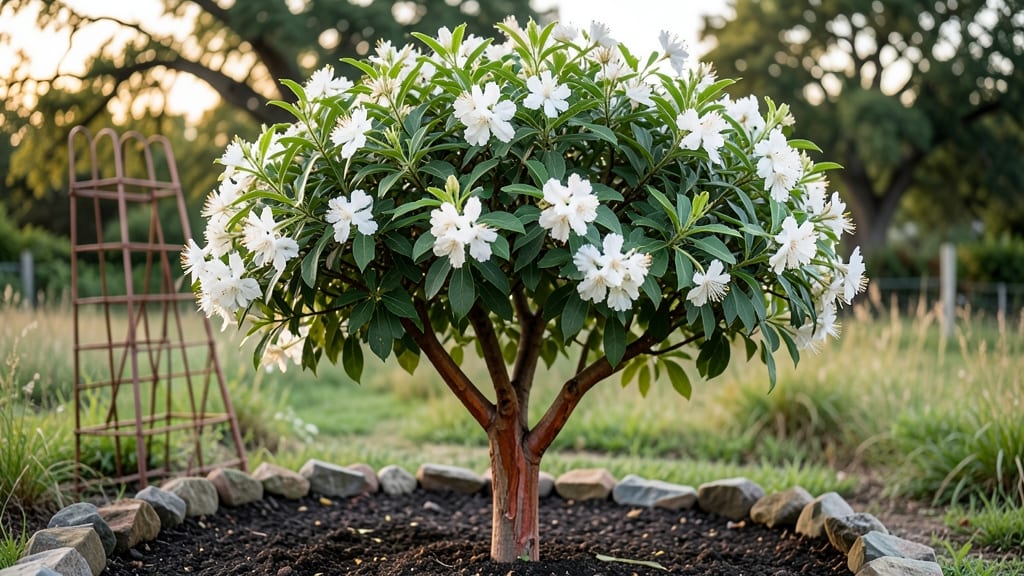
The white crape myrtle trees in my Pacific Northwest garden are frost-resistant bloomers that defy expectations—planted last spring after years of struggling with finicky shrubs, they’re now the star of my yard, handling winter chills like a champ. 🌿 The key?
Choosing the right variety and giving them the perfect spot.
These trees love full sun but tolerate partial shade, making them versatile for your climate. Plant in well-draining soil with a pH between 5.5 and 7.0, and space them 6 to 10 feet apart for mature growth.
Varieties like 'Biloxi' and 'Tonto' are drought-tolerant and resist pests, so they’re low-maintenance once established.
You’ll see showy white blooms from summer through fall, with bark that peels dramatically in winter—adding texture even when flowers fade. Prune lightly in late winter to shape the tree, and water deeply once a week during dry spells.
The result? A tree that’s hardy, beautiful, and effortless to care for.
Perfect for urban yards, cottage gardens, or as a focal point in your landscape. These crape myrtles don’t just survive the PNW—they thrive in it. Let’s get yours growing!
📚 In This Guide
- What you need
- Instructions
- Tips and common mistakes
- Wrapping up and next steps
What you need
- ● White crape myrtle plants (e.g., Lagerstroemia indica ‘Tuscarora’ or ‘Natchez’—both frost-resistant and PNW-friendly!)
- ● Well-draining soil mix (50% native soil, 30% compost, 20% perlite or sand)
- ● Organic mulch (3–4 inches of shredded bark or wood chips)
- ● Balanced fertilizer (10-10-10 or 20-20-20, 1–2 tbsp per plant)
- ● Pruning shears (sterilized with rubbing alcohol)
- ● Watering can or hose with a gentle nozzle
- ● Gloves & long sleeves (to protect from thorns)
- ● Slow-release fertilizer tablets (for steady nutrition)
- ● Plant support stakes (if young trees need stability)
- ● Frost cloth (for late-season protection in chilly PNW nights)
- ● Soil pH test kit (ideal range: 5.5–6.5)
- ● White flowering companion plants (e.g., lilacs or hydrangeas for a cohesive look)
Step-by-Step guide for planting and caring for white crape myrtle trees
Here's how to establish these stunning frost-tolerant trees in your Pacific Northwest garden.
🌱 Step 1: Choose the Perfect Planting Location
White crape myrtles thrive in full sun—select a spot that gets at least 6-8 hours of direct sunlight daily. In the Pacific Northwest, where mornings can be cool, afternoon sun exposure is ideal. Avoid low-lying areas where cold air settles, as these trees are more frost-sensitive when young.
Test the soil pH with a simple kit—crape myrtles prefer slightly acidic to neutral soil (6.0-7.0). If your soil is heavy clay (common in PNW), amend with 2-3 inches of compost mixed into the top 12 inches of soil. This improves drainage while retaining moisture without waterlogging roots.
🪴 Step 2: Dig and Prepare the Planting Hole
Dig a hole twice as wide as the tree's root ball but no deeper. This encourages roots to spread horizontally rather than settling into a deep, compacted spot. Gently loosen the sides of the hole with a shovel to prevent soil compaction.
Place the tree in the hole so the top of the root ball sits 1-2 inches above ground level. This prevents water from pooling around the trunk. Backfill with native soil, tamping lightly every 6 inches to eliminate air pockets. Water deeply to settle the soil around roots.
☀️ Step 3: Water and Mulch for Frost Resistance
After planting, water deeply—10-15 gallons for mature trees, proportionally less for younger ones. The goal is to moisten the soil to a depth of 12-18 inches. Water again every 7-10 days during dry spells, aiming for 1-2 inches of water per week. Overwatering can suffocate roots, especially in heavy PNW soils.
Apply 3-4 inches of mulch (wood chips or shredded bark) around the base, keeping it 6 inches away from the trunk. This insulates roots from temperature swings and retains moisture. Replenish mulch annually in spring to maintain a 3-inch layer.
✂️ Step 4: Prune for Strong Growth and Winter Hardiness
Prune in late winter or early spring before new growth begins. Remove dead, crossing, or weak branches first, cutting back to the nearest healthy bud. Thin out crowded branches to improve airflow—this reduces disease risk and helps flowers bloom more abundantly.
Never "top" crape myrtles by cutting the main trunk—this weakens the tree and encourages unsightly growth. Instead, focus on shaping the canopy to allow sunlight to reach the lower branches, which is crucial for flower production. After pruning, apply a balanced fertilizer (10-10-10) in early spring to support new growth.
Tips & tricks for perfect white crape myrtle planting
Here's what I've learned after years of growing these stunning trees in our PNW climate.
Sunlight Strategy: In Step 1, when selecting your spot, prioritize southern or southwestern exposure for those crucial 6-8 hours of sunlight. I've noticed that even in our cloudy summers, afternoon sun makes all the difference for vibrant blooms. If your yard has limited sun, consider planting near a reflective surface like a light-colored fence or patio to maximize light exposure.
Soil Prep Secret: That 2-3 inches of compost in Step 1 isn't just about drainage—it introduces beneficial microbes that help roots establish faster. I always mix in a handful of worm castings too (optional) for an extra nutrient boost. This is especially important in our heavy PNW clay soils where roots can become waterlogged.
Planting Depth Tip: When placing your tree in Step 2, use a level to ensure the top of the root ball sits exactly 1-2 inches above ground level. I've seen many gardeners bury the root ball too deep, which can suffocate the tree. A simple trick is to use a pencil to mark the level on the root ball before planting.
Watering Wisdom: For the 10-15 gallons of water in Step 3, I recommend using a soaker hose to deliver water slowly at the base rather than pouring from above. This prevents soil erosion and directs moisture exactly where the roots need it. In our dry summers, I often water twice weekly to maintain that 1-2 inch weekly target.
Pro Tips for Crape Myrtle Trees White
- Here's what I've learned after years of growing these stunning trees in our PNW climate.
- Sunlight Strategy: In Step 1, when selecting your spot, prioritize southern or southwestern exposure for those crucial 6-8 hours of sunlight.
- Soil Prep Secret: That 2-3 inches of compost in Step 1 isn't just about drainage—it introduces beneficial microbes that help roots establish faster.
Frequently asked questions
Got questions about keeping your crape myrtle trees blooming white in the Pacific Northwest? Here are some of the most common concerns—and their answers—to help you grow a stunning, frost-resistant display:
Why aren’t my crape myrtle blooms staying white?
Crape myrtles naturally produce white flowers, but environmental factors like over-fertilizing with high nitrogen (which encourages leafy growth over blooms) or late pruning (after summer) can shift focus away from flowers. Ensure you’re using a balanced, low-nitrogen fertilizer (like 5-10-10) and prune in late winter or early spring to maintain vibrant white blooms.
Are white crape myrtles more frost-sensitive than other varieties?
Not necessarily! While young trees or tender new growth may suffer in hard freezes (<30°F), mature crape myrtles (especially Lagerstroemia ‘Natchez’ or ‘Tonto’) are hardy to USDA Zone 6 and can handle light frost. Mulch the base and avoid late-season pruning to boost resilience. For extra protection, wrap young trees in burlap during extreme cold snaps.
When is the best time to plant white crape myrtles in the PNW?
Plant in early spring (March–April) or fall (September–October) to give roots time to establish before winter. Avoid planting in late summer or fall—new roots struggle to harden off before frost. Choose a sunny, well-draining spot (they hate soggy soil!) and water deeply 1–2 times per week for the first year to encourage strong growth.
Can I dye or treat white crape myrtle blooms to keep them brighter?
No need for dyes! White crape myrtle flowers stay naturally bright with proper care. For longer-lasting blooms, deadhead spent flowers gently (don’t prune aggressively) and avoid overwatering. If blooms look dull, check for powdery mildew (a white fungal coating)—treat with neem oil and improve airflow around the tree.
What’s a good alternative if white crape myrtles don’t thrive in my PNW yard?
If your site has poor drainage or heavy shade, consider these PNW-friendly white-blooming alternatives:
- Mock Orange (Philadelphus): Fragrant, hardy to Zone 4, thrives in partial shade.
- Japanese Tree Lilac (Syringa reticulata): Large white panicles, Zone 4–8, drought-tolerant.
- Deutzia (Deutzia): Light, airy blooms, Zone 5–8, loves moist soil.
Wrapping up and next steps
Transforming your crape myrtle trees into stunning white blooms is a rewarding project that brings elegance and resilience to your Pacific Northwest garden! 🌸 With the right variety, pruning techniques, and care, you’ll enjoy frost-resistant beauty year after year.
Whether you’re a beginner or a seasoned gardener, every step you take brings you closer to a breathtaking landscape.
Now that you’re armed with knowledge, take action! Start by selecting the perfect white crape myrtle variety and give your garden the gift of enduring charm. Happy planting! 🌿