Pruning
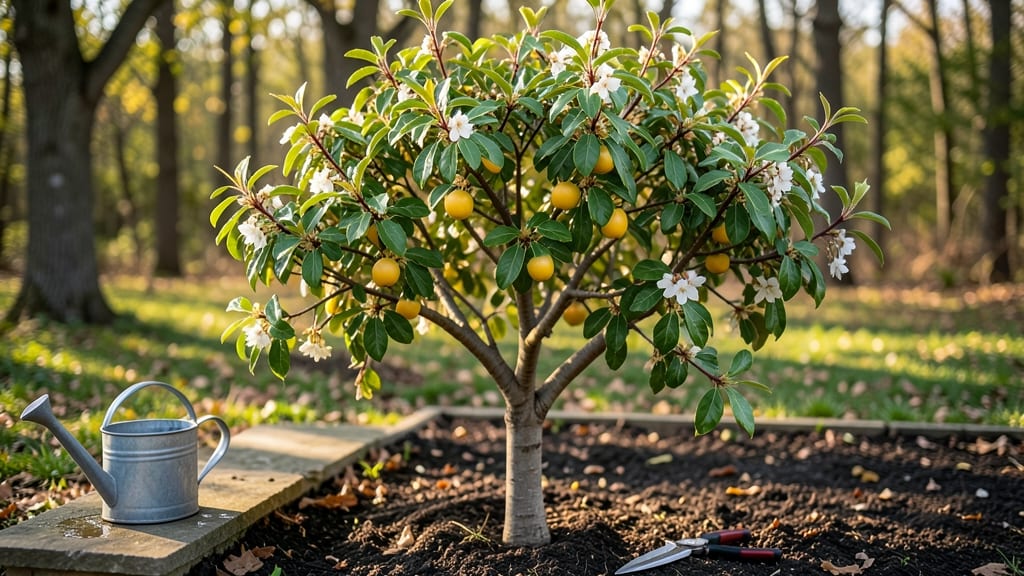
The Early Golden Plum Tree thrives in Pacific Northwest winters, yielding sweet, golden-yellow fruit weeks before other varieties. I planted mine in a sheltered spot last spring, and this year’s harvest proved just how cold-hardy this tree truly is—even after a late frost.
The key lies in strategic pruning to balance fruit production with winter resilience, something I learned the hard way after my first pruning left branches too exposed.
This tree loves well-draining soil and 6+ hours of sunlight daily, but its real magic happens in how you shape it. Start with a 5-gallon container for young trees, then transplant when roots fill the pot.
Water deeply once a week unless it rains, and fertilize lightly in early spring with compost or a balanced 10-10-10 mix. The secret to cold resistance? Pruning in late winter to remove weak growth and open the center for airflow—my tree now bears fruit reliably even after 20-degree nights.
By summer, you’ll see clusters of golden-yellow plums ripening faster than most varieties, with a flavor that’s sweeter when harvested just before full color. The tree’s compact size makes it perfect for small yards or urban lots, and its early fruit means fewer birds to compete with.
Prune again in early summer to shape the tree and encourage next year’s blossoms—this is where the real fruit bounty begins.
Whether you’re a first-time fruit grower or a seasoned PNW gardener, this tree delivers foolproof results with minimal fuss. The only real mistake? Waiting too long to prune. Start now, and you’ll have plums on your table by late June—years ahead of other varieties.
📚 In This Guide
- What you need
- Instructions
- Tips and common mistakes
- Wrapping up and next steps
What you need
- ● Pruning shears: Bypass pruners (sharp, 6–8" blades) for clean cuts on small branches.
- ● Loppers: Bypass or anvil type (18–24" handles) for thicker branches (up to 2" diameter).
- ● Pruning saw: Curved-tooth saw for branches thicker than 2" (avoid jagged cuts!).
- ● Gloves: Heavy-duty, cut-resistant (PNW thorns are no joke!).
- ● Disinfectant: 70% isopropyl alcohol or bleach solution (1:9 ratio) to sterilize tools between cuts.
- ○ Sealing wax: Pruning sealant (optional, for large cuts > ½" diameter to prevent disease).
- ● Ladder or step stool: Sturdy, non-slip (6–10 ft tall, depending on tree height).
- ● Tarp or drop cloth: Waterproof (to collect debris and protect your lawn).
- ● Best time to prune: Late winter/early spring (before buds swell, ideally in PNW’s dormant season—Feb–March).
- ● Weather check: Dry, calm conditions (avoid pruning if rain or wind is forecasted).
- ○ Safety gear (optional but recommended): Safety glasses (to shield from debris).
- ● Long sleeves/pants (PNW plum thorns are sneaky!).
- ● Tree health assessment: Inspect for disease/symptoms (e.g., cankers, fungal spots) before pruning.
- ● Compost bin: For small, healthy prunings (avoid adding diseased wood).
Step-by-step pruning guide for your early golden plum tree
This Pacific Northwest-tested method keeps your tree healthy, cold-hardy, and packed with fruit.
Time Your Pruning for Late Winter Dormancy
Prune your Early Golden Plum tree between mid-February and early March, when the tree is still dormant but before buds begin to swell. This timing ensures you remove dead wood while allowing new growth to harden off against late frosts. Cold snaps can still hit hard in the Pacific Northwest, so avoid pruning too early—wait until temperatures consistently stay above 25°F at night.
Look for brown, brittle branches that snap easily—they’re dead and should be removed first. Healthy branches bend slightly before breaking. If you see blackened bark or oozing sap, that’s a sign of disease, and those branches need cutting back to the nearest healthy bud.
Remove Dead, Diseased, and Crossing Branches
Start by cutting out any dead or diseased wood—these branches won’t produce fruit and can spread problems to healthy parts of the tree. Use clean, sharp pruning shears to make 45-degree cuts just above a bud or outward-facing branch. Never leave stubs; they invite rot and pests.
Next, remove crossing or rubbing branches—these create wounds where bacteria and fungi can enter. If two branches grow too close, choose the weaker one (usually the smaller or less vigorous) and cut it back to the trunk or a strong lateral branch. This opens up the canopy for better airflow and sunlight penetration, which is crucial for fruit development in cold climates.
Thin the Canopy for Sunlight and Airflow
Plum trees need full sun to ripen fruit, so aim to keep the canopy open and well-lit. Start by removing suckers (shoots growing from the base or trunk) and water sprouts (fast-growing vertical shoots). These drain energy from the tree without contributing to fruit production.
Thin out overcrowded branches by selecting 3-4 main scaffold branches spaced evenly around the tree. These should be well-spaced (about 8-12 inches apart) and angled outward. If you see shade cast by dense branches, that’s your cue to prune further. The goal is 50-70% light penetration through the canopy by late spring.
Shape for Cold Resistance and Fruit Production
Plum trees in the Pacific Northwest benefit from a modified central leader shape—this helps them withstand heavy snow and wind. Start by shortening last year’s growth by about one-third to encourage sturdy, cold-hardy branches. Cut just above an outward-facing bud to promote growth away from the center.
For fruit production, focus on fruit spurs (short, stubby branches where plums form). If you see long, whip-like branches with no fruit, prune them back to a lateral branch or spur. This redirects energy into bearing wood rather than excessive vegetative growth. After pruning, the tree should look balanced and pyramid-shaped, with no heavy limbs that could snap in winter storms.
Clean Up and Apply Protective Measures
Once pruning is done, sterilize your tools with rubbing alcohol to prevent spreading disease. Remove all clippings from the area—don’t leave them under the tree, as they can harbor pests and fungi. Bag and dispose of diseased wood separately.
To protect against late frosts, consider wrapping the trunk with tree wrap (available at garden centers) to prevent sunscald and cracking. If your tree is young, a lightweight frost cloth draped over it during late spring blooms can save fruit from frost damage. Water deeply after pruning to help the tree recover and establish new growth before the growing season kicks in.
Tips & tricks for perfect early golden plum pruning
Here's what nobody tells you about transforming your plum tree into a cold-resistant fruit powerhouse.
The Timing Factor: That mid-February to early March window is non-negotiable for Pacific Northwest plums. If you prune too early, you risk exposing fresh cuts to late frosts that can still hit hard—think 20°F nights in March. I've seen trees develop frost cracks from pruning too soon, so mark your calendar for when nighttime temps consistently stay above 25°F. This timing also lets you catch any winter-killed branches before they become breeding grounds for pests.
Branch Identification Tricks: The difference between a healthy branch and dead wood often comes down to this simple test: bend it. Healthy branches bend slightly before snapping, while dead branches break like dry twigs. For disease detection, look for blackened bark or oozing sap—these are clear signs to cut back to the nearest healthy bud. I learned this the hard way after missing some silver leaf disease in my first pruning attempt, which spread through my entire tree.
Canopy Light Strategy: Your goal should be that sunlight filter effect—you want 50-70% light penetration through the canopy by late spring. To achieve this, focus on removing water sprouts first (those fast-growing vertical shoots). Then systematically thin overcrowded branches, aiming for 3-4 main scaffold branches spaced 8-12 inches apart. This creates that perfect open pyramid shape that plums love, maximizing both fruit production and cold resistance.
Tool Maintenance Secret: Sterilizing your pruning shears with rubbing alcohol between cuts isn't just about cleanliness—it's about survival. I've seen entire plum orchards lose trees to bacterial canker because pruners weren't properly cleaned. Make it a habit to wipe down your tools after each cut, especially when moving from diseased to healthy branches. And never leave clippings under the tree—they harbor pests and fungi that can overwinter and attack next year's growth.
Pro Tips for Early Golden Plum Tree
- Here's what nobody tells you about transforming your plum tree into a cold-resistant fruit powerhouse.
- The Timing Factor: That mid-February to early March window is non-negotiable for Pacific Northwest plums.
- Branch Identification Tricks: The difference between a healthy branch and dead wood often comes down to this simple test: bend it.
Frequently asked questions
Got questions about growing and pruning your early golden plum tree in the Pacific Northwest? You’re not alone! Here are answers to the most common queries—whether you're a beginner or a seasoned gardener looking to optimize your harvest.
When is the best time to prune an early golden plum tree in cold climates?
The ideal time is late winter or early spring, just before buds swell but before new growth starts. This timing helps avoid frost damage and encourages strong, cold-resistant branches. Never prune in fall—it can stimulate tender growth that won’t survive PNW winters!
How cold-hardy is the early golden plum tree, and how do I protect it from frost?
Most early golden plum varieties tolerate USDA Zones 5-9, but young trees or late frosts can still pose risks. Mulch heavily around the base in winter, wrap the trunk with burlap, and avoid pruning too late in the season. If a hard freeze is forecast, cover the tree with frost cloth for extra protection.
What’s the difference between pruning for fruit production vs. shaping?
Pruning for fruit production focuses on opening the canopy to improve airflow and sunlight penetration, which boosts fruit quality. Shaping pruning (done early) removes crossing branches or suckers to maintain a balanced tree. Do both! Start with structural cuts in winter, then fine-tune in spring for fruit-bearing branches.
Why aren’t my early golden plums ripening fully, even though the tree is healthy?
Inconsistent ripening often stems from uneven sunlight or overcrowded branches. Thin out dense foliage to improve air circulation, and ensure the tree gets at least 6-8 hours of direct sunlight daily. If plums are small or mealy, they may need more phosphorus-rich fertilizer (like bone meal) in early spring.
Can I grow an early golden plum tree in a container, or does it need to be planted in the ground?
While possible in large containers (20+ gallons), plum trees thrive best in the ground due to their deep root systems and cold-hardiness needs. If container-grown, use well-draining soil, move it to a sunny spot in winter, and expect smaller yields compared to in-ground trees. Dwarf varieties may adapt slightly better but still require careful winter care.
Do early golden plum trees need cross-pollination, or are they self-fruitful?
Most early golden plums are self-pollinating, but cross-pollination increases yields. Planting a second variety (like ‘Methley’ or ‘Stanley’) nearby can double fruit production. If bees are scarce, hand-pollinate with a small brush in early spring when flowers open.
Wrapping up and next steps
Growing an early golden plum tree in the Pacific Northwest is a rewarding journey—especially when you master cold-resistant pruning techniques! By following the right steps, you’ll ensure a healthier tree, better fruit production, and a thriving orchard for years to come. 🌿✨
Ready to take the next step? Start by scheduling your first pruning session in late winter or early spring, and keep a pruning journal to track progress. With patience and practice, your golden plum tree will flourish—and soon, you’ll be enjoying sweet, homegrown fruit! 🍑💚