Pruning
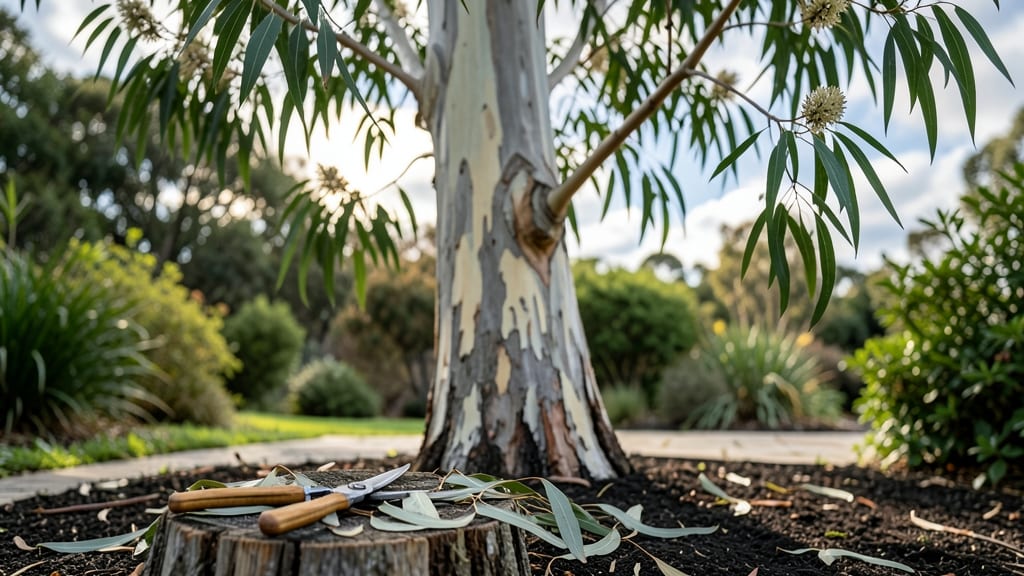
Pruning eucalyptus trees keeps them healthy and prevents that tangled, overgrown look—something I learned the hard way after my first tree turned into a tangled mess. The key isn’t just when to cut but how: eucalyptus responds best to strategic trims that encourage airflow and sunlight penetration.
Most gardeners wait for spring, but eucalyptus can handle light pruning almost year-round, as long as you avoid heavy cuts in winter when the tree is dormant.
You’ll need sharp bypass pruners, loppers for thicker branches, and safety gear—gloves and eye protection, since eucalyptus sap can irritate skin. The goal is to remove dead wood first, then thin out crowded branches to let light reach the center.
I’ve found that shaping in stages (a little every 3–4 months) keeps the tree looking intentional without shocking it. Over-pruning in one go can stress the tree, leading to weak growth or even dieback.
What you’ll end up with is a eucalyptus tree that’s lush, upright, and resistant to pests—no more brown, tangled limbs or pests hiding in dense foliage. The scent alone makes it worth the effort, but the real payoff is how much better it thrives.
Once you see the difference after just one season of proper pruning, you’ll never go back to neglecting it. Ready to transform that wild growth into a structured, fragrant beauty?
This method works for both small potted eucalyptus and mature trees in the ground, though larger specimens need more planning. If you’re in a windy climate, focus on reinforcing the structure to prevent storm damage.
The rest is just patience—eucalyptus grows fast, so regular maintenance keeps it looking its best without overwhelming you.
📚 In This Guide
- What you need
- Instructions
- Tips and common mistakes
- Wrapping up and next steps
What you need
- ● Pruning saw: A bypass pruning saw (10–14 inches) for thicker branches (1–3 inches in diameter). Choose one with a sharp, durable blade for clean cuts.
- ● Loppers: Bypass loppers (8–10 inches) for medium branches (up to 2 inches thick). Look for ergonomic handles and a smooth cutting action.
- ● Hand pruners: Bypass pruners (5–7 inches) for smaller branches and twigs (under ½ inch). Opt for bypass-style to avoid crushing.
- ● Extension pole: A 10–15-foot telescoping pole with a saw or pruner attachment for high branches (safety first!).
- ● Work gloves: Heavy-duty, cut-resistant gloves (ANSI-rated) to protect your hands from splinters and sharp edges.
- ● Safety glasses: Impact-resistant goggles to shield your eyes from debris.
- ● Ladder: A stable, extension ladder (rated for your height needs) with non-slip feet. Always inspect for sturdiness before use!
- ● Disposable pruning bags: Large, heavy-duty bags (5–10 gallons) to collect and dispose of clippings easily.
- ○ Sharpie or pruning sealant: For marking cuts (optional) or applying sealant to larger wounds (½ inch or wider).
- ● Pruning shears with ratchet: For stubborn branches that need extra force.
- ● Tree rope or harness: If working on very tall trees, consider a climbing harness for safety.
- ● Disinfectant (70% isopropyl alcohol): Wipe tools between cuts to prevent disease spread.
- ● Wheelbarrow or tarp: For hauling away large volumes of debris.
- ● First-aid kit: Just in case—because safety always comes first!
Step-by-step guide to pruning eucalyptus trees for year-round health
Here's how to keep your eucalyptus thriving through every season.
✂️ Step 1: Assess the Tree and Gather Tools
First, examine your eucalyptus for dead, diseased, or crossing branches. Look for brown or brittle limbs that snap easily—these are prime candidates for removal. I always start by scanning from the ground up, using a flashlight on cloudy days to spot hidden damage. Healthy eucalyptus branches have smooth, green bark and vibrant leaves.
Grab your tools: clean, sharp pruning shears for small branches, loppers for thicker limbs, and a pruning saw for anything wider than 2 inches. Sterilize your tools with rubbing alcohol to prevent spreading disease between cuts. I keep a small spray bottle of diluted bleach solution nearby for quick disinfection between cuts on different trees.
✂️ Step 2: Remove Dead and Crossing Branches First
Begin by cutting out any dead wood—these branches won't regrow and can harbor pests. Make clean cuts just outside the branch collar (the swollen area where the branch meets the trunk). Avoid leaving stubs, which invite rot. For crossing branches, remove the one growing at a sharper angle to the trunk, as this creates better airflow and reduces disease risk.
I always work from the bottom up, removing lower branches first to improve airflow to the canopy. Watch for branches rubbing against each other—they'll eventually tear bark and create entry points for fungal infections. If you're unsure whether a branch is dead, scratch the bark with your thumbnail. Green underneath means it's alive; brown means it's dead and should go.
✂️ Step 3: Shape for Airflow and Light Penetration
Eucalyptus trees benefit from an open, airy shape that lets sunlight reach all branches. Focus on thinning the canopy by removing about 20-30% of the smallest branches—this encourages new growth while reducing congestion. Never remove more than one-third of the tree's foliage in a single session, or you'll stress the plant.
For larger trees, I make my cuts just above a leaf node or side branch to promote healing. Avoid "topping" (cutting the main trunk)—this creates unsightly stubs and weak growth. Instead, aim for a natural, rounded silhouette. Step back frequently to visualize the tree's shape from all angles; eucalyptus responds well to gradual shaping over time.
✂️ Step 4: Prune for Seasonal Growth Patterns
Late winter or early spring (just before new growth begins) is ideal for major pruning. If you must prune in summer, do so on cooler days to reduce stress. Avoid heavy pruning in fall, as the tree needs energy to prepare for dormancy. I mark my calendar to prune young eucalyptus trees annually and mature trees every 2-3 years, focusing on maintenance cuts in between.
Watch for "water sprouts"—fast-growing, vertical shoots that appear after pruning. These compete with your main branches for nutrients. Simply cut them back to a lateral branch as soon as you spot them. New growth will emerge from the sides, creating a fuller, healthier tree. After pruning, water deeply to help the tree recover, especially if you've removed a significant portion of foliage.
✂️ Step 5: Clean Up and Monitor Recovery
Rake up all fallen branches and debris to prevent fungal growth. I use a leaf blower to clear small particles from the base of the tree, as eucalyptus mulch can become too dense and trap moisture. Dispose of diseased branches immediately—don't compost them, as pathogens can survive.
In the weeks following pruning, keep an eye out for new growth at the cut sites. Healthy eucalyptus will produce fresh leaves within 4-6 weeks. If you notice yellowing leaves or wilting, the tree may be stressed—reduce watering slightly and avoid fertilizing until it recovers. Pruned eucalyptus trees often reward you with accelerated growth and more vibrant foliage in the following season.
Tips & tricks for perfect eucalyptus tree pruning
Here's what nobody tells you about keeping your eucalyptus thriving after every trim.
Tool Prep Matters: Before you start cutting, sharpen your pruning shears and loppers—dull blades tear bark and create jagged wounds that invite disease. I test my tools by making a clean cut through a piece of paper; if it tears, I sharpen again. Sterilizing between cuts is non-negotiable: a quick wipe with rubbing alcohol between trees prevents spreading fungal spores that could ruin your hard work. Confession: I skipped this step for years and wondered why my trees kept getting infections.
Branch Angle Strategy: When removing crossing branches in Step 2, always cut the one growing at the sharper angle to the trunk. This creates a more natural silhouette and reduces the risk of bark tearing. For larger branches over 2 inches, make your cut just outside the branch collar—the swollen area where the branch meets the trunk. This promotes faster healing and prevents rot from setting in at the wound site. I learned this the hard way after seeing several trees develop cankers from improper cuts.
Seasonal Timing Secret: While late winter or early spring is ideal for major pruning, don't panic if you miss that window. You can safely prune in summer on cooler days, but avoid heavy cuts during fall when the tree needs to conserve energy. For young eucalyptus, I stick to annual pruning, but mature trees only need maintenance every 2-3 years. The key is to never remove more than one-third of the foliage in a single session—this prevents stress that could weaken the tree's natural defenses.
Post-Prune Recovery Watch: After your cuts, keep an eye on new growth at the pruning sites. Healthy eucalyptus should produce fresh leaves within 4-6 weeks. If you notice yellowing leaves or wilting, your tree might be stressed—reduce watering slightly and avoid fertilizing until it recovers. I've seen trees bounce back beautifully after proper pruning, with accelerated growth and more vibrant foliage in the following season. The difference between a mediocre result and an absolutely stellar one often comes down to this single, seemingly insignificant step.
Pro Tips for Eucalyptus Tree Pruning
- Here's what nobody tells you about keeping your eucalyptus thriving after every trim.
- Tool Prep Matters: Before you start cutting, sharpen your pruning shears and loppers—dull blades tear bark and create jagged wounds that invite disease.
- Branch Angle Strategy: When removing crossing branches in Step 2, always cut the one growing at the sharper angle to the trunk.
Frequently asked questions
Got questions about eucalyptus tree pruning?
You’re not alone! Here are some of the most common concerns—and straightforward answers—to keep your tree thriving.
When is the best time to prune a eucalyptus tree?
Prune eucalyptus trees in late winter or early spring (before new growth starts) to avoid stressing the tree during active growth. Light trimming can also be done in summer to shape the tree, but avoid heavy pruning in fall or winter, as cold weather slows healing.
How much can I trim off a eucalyptus tree without harming it?
Eucalyptus trees are resilient, but avoid removing more than 25-30% of the canopy at once. Heavy pruning can stress the tree, leading to dieback or pest issues. Focus on selective trimming—remove dead, diseased, or crossing branches first, then shape gradually over time.
What should I do if my eucalyptus tree starts oozing sap after pruning?
Sap oozing is normal and usually harmless—it’s the tree’s way of sealing wounds. However, if the sap is thick, dark, or accompanied by wilting leaves, it could signal disease (like Phytophthora) or pest damage. Clean tools with rubbing alcohol, and monitor the tree closely.
Can I prune a eucalyptus tree in summer to control its size?
Yes, but go light! Summer pruning is best for minor shaping (e.g., trimming wayward branches) rather than heavy cuts. Prune on overcast days or late afternoon to reduce stress. Avoid pruning during drought or extreme heat, as it can shock the tree.
Will pruning attract pests like borers or beetles?
Pruning can attract pests if cuts are too large or left jagged. To minimize risks:
- Use sterilized tools (bleach or rubbing alcohol).
- Make cuts just outside the branch collar (the swollen area where the branch meets the trunk).
- Seal large wounds with pruning sealant (optional but helpful for thick branches).
Wrapping up and next steps
Pruning your eucalyptus tree isn’t just about keeping it looking sharp—it’s a year-round investment in its health, airflow, and even safety. By following the right techniques and timing, you’ll encourage vibrant growth, prevent disease, and enjoy a stunning tree for years to come. 🌿
Now that you’re armed with the know-how, roll up your sleeves and get pruning! Start with a quick assessment of your tree’s needs, gather your tools, and take it step by step. And remember: consistency is key—your eucalyptus will thank you with lush foliage and strong branches.
Pro tip: Snap a photo before and after your pruning session—it’s a rewarding way to track progress and celebrate your green thumb! 🌟