
Trees
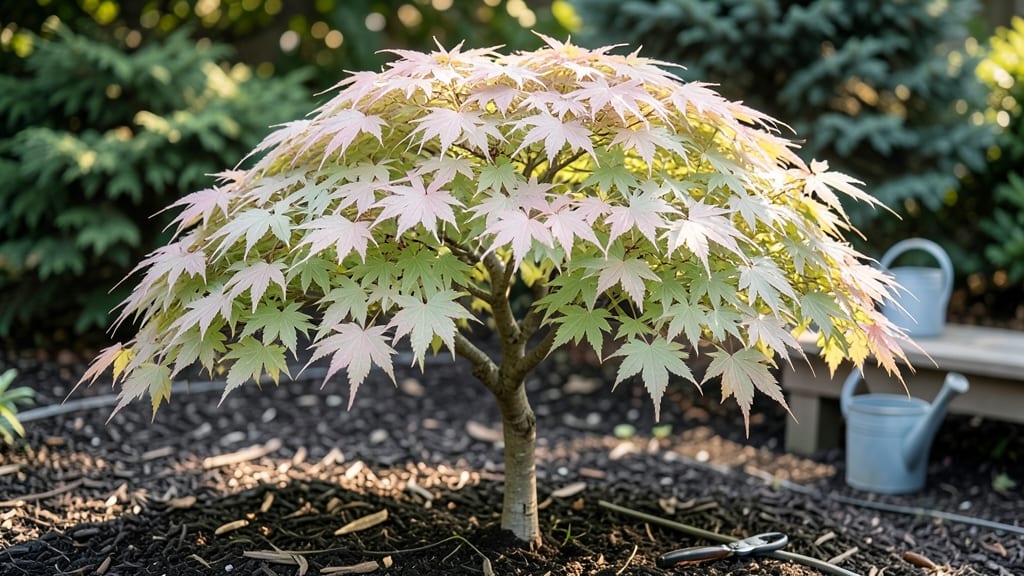
That stunning floating cloud maple tree, the Acer palmatum 'Floating Cloud,' steals every show with its shimmering white bark glowing against Pacific Northwest skies. This isn't just another maple—it's a living sculpture, its branches arching like a painter's brushstroke across your garden.
I planted mine near a reflective pond, and the way its bark mirrors the water creates a scene straight out of a fantasy novel.
Perfect for focal points, it thrives in containers too—ideal for patios or small spaces. Pair it with dwarf conifers or ornamental grasses to frame its drama, and let it anchor a seating area where guests will pause to admire its year-round texture.
The secret? Prune lightly in late winter to maintain its natural, cloud-like silhouette—no heavy-handed shaping needed.
Imagine this: crisp autumn leaves turning apricot and gold, then winter's stark white bark contrasting with evergreen shrubs. Spring brings delicate pink blossoms, and summer's deep green foliage casts dappled shade. It's the kind of tree that makes neighbors ask, "What is that?"—and the answer is, "A masterpiece."
Works in partial shade to full sun, though its bark shines brightest with morning light. For maximum impact, plant it where you'll see it from indoors—like a living postcard waiting to be admired. The design possibilities are endless, but the effect is always magical.
📚 In This Guide
- What you need
- Instructions
- Tips and common mistakes
- Wrapping up and next steps
What you need
- ● Floating Cloud Maple Tree (Acer circinatum ‘Pacific Fire’ or similar cultivar): 1 mature tree (3–6 ft tall, 3–5 gal container) or 10+ seeds (if propagating from seed)
- ● Note: Nursery-grown saplings (1–2 ft) are easier for beginners!
- ● Well-draining soil mix: 50% native soil (sandy loam ideal for PNW)
- ● 30% compost or aged manure
- ● 20% perlite/pumice (for aeration)
- ● Organic mulch: 2–3 inches of cedar chips or wood shavings (retains moisture, suppresses weeds)
- ● Slow-release fertilizer: 10-10-10 or balanced organic (e.g., fish emulsion) for young trees
- ● Container (if potted): 15–20 gal pot with drainage holes (for saplings)
- ○ Fabric grow bag (optional, for easier transplanting later)
- ● Digging tools: Trowel (for small holes)
- ● Shovel or spade (for mature trees)
- ● Garden fork (to loosen compacted soil)
- ● Watering supplies: Garden hose with adjustable nozzle (or watering can for containers)
- ○ Drip irrigation kit (optional, for deep watering)
- ● Pruning shears: Sharp, sterilized (for shaping or removing dead branches)
- ● Staking materials (if needed): 3 bamboo stakes + soft tree tie straps (for young trees in windy PNW sites)
- ● Protective gear: Gloves (nitrile for seed handling, leather for pruning)
- ● Knee pads (for comfort during planting)
- ● Epsom salt (1 tbsp/month for magnesium-rich foliage)
- ● Tree collar spray (to prevent fungal issues in damp PNW climates)
- ● Reflective mulch (e.g., black plastic under containers to warm roots in spring)
- ● Wildlife deterrents (e.g., deer repellent if local critters are a concern)
How to plant and care for a Floating Cloud Maple tree
This striking Pacific Northwest native delivers seasonal drama with minimal fuss once established.
Choose the Perfect Planting Location
Select a site with dappled sunlight—this tree thrives under 4-6 hours of morning sun and afternoon shade, especially in hotter climates. The Pacific Northwest's mild, moist climate suits it best, but it adapts well to USDA Zones 5-8 with proper moisture management. Avoid low-lying areas where cold air pools, as this tree dislikes prolonged frost.
Test your soil's drainage by digging a 12-inch deep hole—water should drain within 2-3 hours. Amend heavy clay with 2-3 inches of compost mixed into the top 6 inches of native soil. The tree's delicate foliage responds poorly to compacted roots, so prioritize loose, well-draining soil over rich amendments.
Plant at the Right Depth and Stake for Support
Dig a hole twice as wide as the root ball but no deeper—this prevents root suffocation. Gently remove the tree from its container and loosen any circling roots with your fingers. Position the tree so the top of the root ball sits 1 inch above ground level—this ensures proper drainage and prevents waterlogging.
Fill the hole halfway with water and let it absorb completely. Backfill with native soil mixed with 1 part compost (use the 2 gallons you prepared earlier), tamping gently as you go. Install 2-3 stakes at 45-degree angles, securing the tree with soft tree ties—never use wire, which can girdle the trunk as it grows. Water deeply after planting to settle the soil.
Establish a Consistent Watering Routine
The first year is critical—water deeply twice weekly during dry spells to encourage deep root growth. Check moisture by inserting your finger 2 inches into the soil; if it feels dry, water again. Overhead watering causes fungal issues, so use a soaker hose placed 12 inches from the trunk for targeted hydration. Mulch with 3 inches of wood chips (extending 2 feet outward) to retain moisture and suppress weeds.
Reduce watering in winter to once every 2-3 weeks unless temperatures drop below 20°F, when you should provide a light snow cover to protect the roots. The tree's silver-blue foliage signals healthy moisture balance—wilting leaves or yellowing indicate either drought stress or overwatering.
Prune for Structure and Airflow
Prune in late winter or early spring before new growth begins. Remove dead, crossing, or inward-growing branches first, cutting back to the collateral bud just outside the branch collar. Thin the canopy by 20-30% to improve airflow and reduce disease risk—this tree's fine branches can become dense if neglected. Never remove more than one-third of the foliage in a single season.
Shape the tree by encouraging an open, airy habit—this enhances its cloud-like appearance. Use clean, sharp pruners and make cuts at a 45-degree angle just above a leaf node. Seal larger cuts (over ½ inch in diameter) with pruning sealant to prevent disease entry. The tree's fall color—shades of orange and red—will intensify with proper pruning.
Monitor for Pests and Seasonal Care
Inspect leaves monthly for aphids or spider mites, common pests that thrive in dry conditions. Treat infestations with a neem oil spray applied in the early morning to avoid harming beneficial insects. Avoid chemical pesticides—the tree's delicate foliage is sensitive to residues. Healthy trees rarely suffer from pests, so focus on proper watering and mulching as prevention.
In fall, apply a 2-inch layer of mulch to insulate roots, and in spring, fertilize lightly with a balanced 10-10-10 formula (use ½ cup per year of growth). The tree's year-round interest—from silver-blue summer leaves to vibrant fall colors—makes it a standout, but it rewards patience with minimal maintenance once established.
Tips & tricks for perfect Floating Cloud Maple tree planting
Between us, these small details make all the difference when establishing your Floating Cloud Maple Tree. The Pacific Northwest's mild climate is ideal, but even here, subtle adjustments can mean the difference between a struggling specimen and a thriving centerpiece.
Site Selection Nuance: While the instructions mention dappled sunlight, I've found that in hotter inland areas of Zone 8, you can extend the afternoon shade period to 8 hours to prevent leaf scorch. The tree's silver-blue foliage actually darkens slightly when stressed by too much direct sun—watch for this color shift as your early warning system. For urban planting, consider the 4-6 hour morning sun guideline as non-negotiable, but don't be afraid to experiment with afternoon shade in microclimates.
Root Ball Preparation: The 1-inch elevation above ground level is critical, but I've learned to go even further in heavy clay soils. Add ½ inch extra elevation if your soil drains slowly—this prevents waterlogging that can cause root rot. When loosening circling roots, don't just pull them outward; gently tease them apart with your fingers to encourage outward growth rather than maintaining a tight root ball shape.
Watering Precision: The 2-inch soil moisture check is your best friend, but I've developed a more reliable test: press your finger into the soil—if it springs back slowly (not immediately), that's your signal to water. In summer heatwaves, I've found that deep watering every 4 days works better than the strict twice weekly schedule, as it encourages deeper root development. The key is maintaining consistent moisture without creating soggy conditions.
Pruning Strategy: When thinning the canopy by 20-30%, focus on removing branches that grow directly upward—these compete with others for sunlight and weaken the tree's natural open habit. For the fall color enhancement, I've noticed that leaving some of the orange-red stems uncovered through winter actually intensifies next year's color. These stems act as natural reminders of the tree's seasonal transformation.
Pro Tips for Floating Cloud Maple Tree
- Between us, these small details make all the difference when establishing your Floating Cloud Maple Tree.
- Site Selection Nuance: While the instructions mention dappled sunlight, I've found that in hotter inland areas of Zone 8, you can extend the afternoon shade period to 8 hours to prevent leaf scorch.
- Root Ball Preparation: The 1-inch elevation above ground level is critical, but I've learned to go even further in heavy clay soils.
Frequently asked questions
How fast does a Floating Cloud Maple grow?
The Floating Cloud Maple (Acer palmatum 'Osakazuki') is a slow-to-moderate grower, typically adding 6–12 inches per year. Its compact size (15–20 feet tall and wide at maturity) makes it perfect for smaller gardens or as a striking focal point. Patience pays off—its delicate foliage and vibrant colors develop gradually but beautifully!
Can this tree handle cold winters?
This Pacific Northwest native thrives in USDA Zones 5–8, making it a resilient choice for chilly climates. While young trees may need winter protection (like burlap wraps), mature Floating Cloud Maples handle frost, snow, and even light ice with ease. Just ensure it’s planted in well-draining soil to avoid root rot.
What’s the best time to prune for maximum fluff?
Prune your Floating Cloud Maple in late winter or early spring (before buds swell) to shape it and encourage lush, cloud-like foliage. Avoid heavy pruning in fall—it can stress the tree before winter. Use sterilized tools and focus on removing dead branches or crossing limbs to maintain its airy, ethereal form.
Are there dwarf alternatives if my space is limited?
Yes! If you love the Floating Cloud Maple but need a smaller version, consider these cultivars:
- 'Bloodgood' (15–20 ft tall) – Dark red foliage, classic shape.
- 'Tamukeyama' (8–12 ft tall) – Compact with fiery fall colors.
- 'Emperor I' (6–8 ft tall) – Miniature with striking purple-red leaves.
Why are my leaves turning yellow or brown?
Yellowing leaves often signal overwatering or poor drainage, while brown edges may mean underwatering or heat stress. Check the soil—it should stay moist but not soggy. If pests (like spider mites) are the culprit, hose down the tree or use neem oil. For fungal issues (e.g., powdery mildew), improve airflow and avoid wetting foliage during watering.
Wrapping up and next steps
The Floating Cloud Maple Tree is a stunning, low-maintenance gem that brings year-round beauty to the Pacific Northwest’s landscapes—whether you’re a seasoned gardener or just starting out.
With its delicate foliage, vibrant fall colors, and adaptable nature, it’s the perfect choice for adding drama and texture to your outdoor space. 🌿✨
Ready to transform your garden? Start by researching local nurseries or reputable online sellers, then plan your planting spot with care. The effort will pay off in a breathtaking, ever-evolving centerpiece that keeps your surroundings lively and inspiring!