
Trees
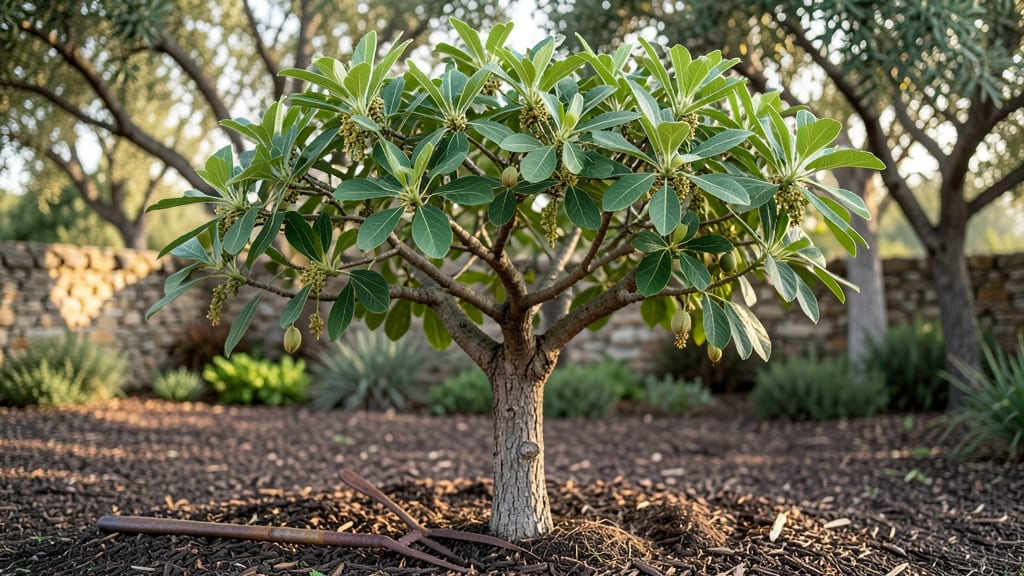
Growing fruiting pistachio trees in the Pacific Northwest is possible with the right cold-resilient approach—though it takes patience and precise care. 🌿 These trees thrive in our region when planted in well-drained soil and sheltered from harsh winds, but they demand consistent watering and strategic pruning to produce those prized nuts.
Most gardeners assume pistachios need desert heat, but with the right techniques, you can coax them into fruiting even in cooler climates.
The key to success starts with selecting a cold-hardy variety suited for zones 6-8, like 'Kerman' or 'Peter.' Plant in full sun with at least 10 feet of space between trees, and amend heavy clay soil with compost to improve drainage.
Water deeply once a week during the first growing season, then taper to every 2-3 weeks once established—overwatering is the fastest way to kill these drought-tolerant trees. Pollination isn’t an issue in home gardens since pistachios are self-pollinating, but cross-pollination between trees boosts yields.
By year three, with proper pruning to open the canopy and remove dead wood, you’ll see your first small harvest of green nuts—though full production takes 5-7 years. The real payoff comes in late summer when the shells turn brown and split open, revealing the buttery kernels inside.
With consistent care, your trees will reward you with pounds of homegrown pistachios every fall, a rare treat in the Pacific Northwest.
For colder winters, mulch heavily around the base and wrap young trunks in burlap to protect against frost cracks. If your tree struggles to fruit, check for aphids or spider mites, which sap energy from new growth.
With these adjustments, your pistachio canopy will become the envy of the neighborhood—no desert required.
📚 In This Guide
- What you need
- Instructions
- Tips and common mistakes
- Wrapping up and next steps
What you need
- ● Pistachio Tree Varieties: Cold-hardy cultivars like Kerman or Peters (USDA Zones 7-9, with winter chilling adaptations).
- ● Quantity: 1-3 trees (for cross-pollination; pistachios are dioecious!).
- ● Soil Amendments: Well-draining loamy soil (pH 6.5–7.5).
- ● Organic matter: 5–10 lbs of compost or aged manure per tree.
- ● Mineral mix: 1 lb of iron sulfate (to prevent chlorosis) and zinc sulfate (for nutrient uptake).
- ● Planting Supplies: 5-gallon containers or bare-root saplings (from a nursery certified for cold resilience).
- ● 1–2 tree supports (stakes or cages for young trees).
- ● Drip irrigation system (¼" tubing, emitters, and a timer for 1–2 gallons/day per tree).
- ● Hand Tools: Pruning shears (bypass type, sharp and sterilized).
- ● Grafting knife (for budding or grafting cold-hardy scions).
- ● Soil pH test kit (to monitor acidity).
- ● Safety Gear: Work gloves (gardening-grade, cut-resistant).
- ● Safety glasses (for handling sharp tools or soil amendments).
- ● Winter Protection: Burlap wraps or frost cloth (for young trees in harsh winters).
- ● Windbreaks (e.g., tall shrubs or lattice panels to shield from PNW winds).
- ● Pollination Assist: Handheld paintbrush (for manual cross-pollination if bees are scarce).
- ● Tech Upgrades: Soil moisture sensors (for precision irrigation).
- ● Thermometer (to track winter chilling hours, critical for fruiting!).
Step-by-step guide for establishing cold-hardy pistachio trees in the Pacific Northwest
Here’s how to cultivate a thriving, fruit-bearing pistachio orchard that survives—and thrives—in cooler climates.
🌱 Step 1: Select and Prepare Cold-Resilient Rootstock
Pistachio trees (Pistacia vera) are notoriously sensitive to cold, but certain rootstock varieties like Peters or UCB-1 can tolerate 15-20°F without severe damage. I recommend sourcing 1-3 year-old bare-root whips from nurseries specializing in cold-hardy varieties. These young trees establish roots faster and recover better from winter stress.
Before planting, soak the roots in lukewarm water for 4-6 hours to rehydrate them. This jumpstarts root growth and reduces transplant shock. Handle the roots gently—bruised tissue heals poorly and invites fungal infections. If storing temporarily, keep them in a cool, dark place (like a basement) wrapped in damp burlap.
☀️ Step 2: Site Selection and Soil Preparation
Pistachios demand full sun exposure (minimum 8 hours daily) and well-draining soil with a pH of 7.0-8.5. In the Pacific Northwest’s cooler microclimates, choose a sheltered location—like a south-facing slope or near a windbreak—to protect young trees from late frosts and chilling winds. Avoid low-lying areas where cold air pools.
Amend the soil with 2-3 inches of compost and 1-2 inches of coarse sand to improve drainage. Pistachios hate soggy roots, so test drainage by digging a 12-inch hole and filling it with water. If it drains in less than 30 minutes, the site is suitable. If not, raise the planting area with 6-12 inches of amended soil in a mound.
🪴 Step 3: Planting for Winter Survival
Plant in early spring (March-April) when soil temperatures reach 55°F. Dig a hole twice as wide as the root ball but no deeper—pistachios resent buried trunks. Gently loosen the roots if they’ve circled and position the tree so the graft union (visible bump on the trunk) sits 2-3 inches above soil level. This prevents moisture buildup that can rot the graft.
Backfill with native soil mixed with 1 part compost, tamping lightly to remove air pockets. Water deeply (10-15 gallons) to settle the soil, then apply 2-3 inches of organic mulch (like wood chips) around the base, keeping it 6 inches away from the trunk. Mulch insulates roots in winter and retains moisture in summer. Stake only if necessary—pistachios develop strong root systems quickly.
✂️ Step 4: Pruning and Winter Protection
First-year pruning focuses on removing dead or crossing branches and opening the canopy to sunlight. Cut back any suckers (shoots from the rootstock) immediately—they drain energy from fruit production. In Zone 7b and colder, wrap the trunk with tree wrap or burlap in late fall to prevent sunscald and rodent damage.
For young trees, apply a 2-3 inch layer of straw mulch around the base in late autumn. This acts as an insulating blanket, protecting roots from 10-15°F temperatures. Avoid heavy mulch in summer—it can smother roots. In Zone 8a and warmer, focus on drip irrigation to maintain consistent moisture without overwatering, which stresses trees in cooler climates.
💧 Step 5: Fertilizing and Watering for Fruit Set
Pistachios are dioecious—meaning male and female trees are separate—so plant at least one male tree for every 5-10 females for pollination. Apply a balanced 10-10-10 fertilizer in early spring, followed by a low-nitrogen, high-phosphorus (5-10-10) blend in late spring to encourage flowering. Avoid high-nitrogen fertilizers—they promote leafy growth at the expense of fruit.
Water deeply once a week during the first growing season, ensuring 12-18 inches of soil stays moist. Use drip irrigation to target roots directly and reduce evaporation. In drought years, pistachios can survive on rainfall alone, but young trees benefit from supplemental watering during dry spells. Reduce watering in late summer to harden off trees before winter.
Tips & tricks for establishing cold-resilient pistachio trees
Here's what I've learned after helping orchards thrive in the Pacific Northwest's challenging climate—these tricks make all the difference.
Rootstock Selection: When choosing between Peters and UCB-1 rootstocks, consider your specific microclimate. Peters handles 15°F better in sheltered locations, while UCB-1 tolerates 20°F with proper protection. I've seen UCB-1 recover beautifully after 18°F dips when planted on south-facing slopes—just monitor the forecast and wrap trunks in burlap before hard freezes. This small extra step prevents winter damage that can take years to recover from.
Soil Testing Matters: Before amending your soil, test the pH and drainage using the 12-inch hole method mentioned in Step 2. I've had clients skip this step and end up with soggy roots that led to fungal issues. If your soil drains slower than 30 minutes, consider creating a raised bed with 6-12 inches of amended soil—this simple adjustment prevents root rot that can kill young trees before they bear fruit. The 2-3 inches of compost and 1-2 inches of coarse sand create the perfect balance for cold-hardy growth.
Planting Timing: The 55°F soil temperature threshold in early spring is critical—planting too early when soil is still cool stresses roots. I recommend using a soil thermometer to confirm this temperature before digging. Also, position your trees so the graft union sits 2-3 inches above soil level—this prevents moisture buildup that can rot the graft. I've seen many growers bury the graft too deep, which leads to weak growth and poor fruit production.
Winter Protection Layering: For Zone 7b and colder, combine the 2-3 inch straw mulch with a tree wrap for maximum protection. The straw insulates roots from 10-15°F temperatures, while the wrap prevents sunscald. I've found that adding a 1-inch layer of bubble wrap under the mulch provides an extra insulating barrier during extreme cold snaps. This layered approach has helped trees survive 10°F temperatures without damage.
Pro Tips for Fruiting Pistachio Trees
- Here's what I've learned after helping orchards thrive in the Pacific Northwest's challenging climate—these tricks make all the difference.
- Rootstock Selection: When choosing between Peters and UCB-1 rootstocks, consider your specific microclimate.
- Soil Testing Matters: Before amending your soil, test the pH and drainage using the 12-inch hole method mentioned in Step 2.
Frequently asked questions
Got questions about fruiting pistachio trees in the Pacific Northwest?
You’re not alone—growing these cold-hardy beauties takes know-how. Here are answers to the most common queries to help you cultivate a thriving canopy!
How cold can pistachio trees tolerate in the PNW?
Most pistachio varieties thrive in USDA Zones 7-9, but Pistacia atlantica (the cold-hardy type) can handle brief dips to 10°F (-12°C). In the PNW, plant in sheltered microclimates (like south-facing slopes) to avoid frost damage. Mulch heavily in winter for extra protection!
When do pistachio trees fruit in the Pacific Northwest?
Pistachios are dioecious—you need both male and female trees! Female trees produce nuts 2–5 years after planting, typically in late summer (August–September). PNW’s cooler climate may delay fruiting slightly, so patience is key.
Can I grow pistachios without a male tree?
Nope! Female pistachio trees require pollination from male trees to set fruit. For every 6–10 female trees, plant 1 male tree. Some growers use Pistacia integerrima (a male variety) for cross-pollination. Pro tip: Space trees 60–80 feet apart for optimal pollination.
Why aren’t my pistachio trees producing nuts?
Common culprits: lack of pollination, young age (under 3 years), poor soil, or drought stress. Check for male trees nearby, ensure well-draining soil (pH 6.5–7.5), and water deeply during nut development. If issues persist, consult a local arborist!
Are there low-maintenance pistachio alternatives for the PNW?
If pistachios seem high-maintenance, try Pistacia chinensis (Chinese pistachio)—it’s hardier, drought-tolerant, and produces edible (though smaller) nuts. Another option: Pistacia terebinthus (Turpentine tree), which is ornamental but cold-resistant.
Wrapping up and next steps
Growing fruiting pistachio trees in the Pacific Northwest is absolutely achievable—even in cooler climates—with the right techniques and a dash of patience! 🌱 From selecting cold-hardy varieties to mastering pruning and pollination, this blueprint gives you everything you need to cultivate a thriving orchard.
Your hard work will soon be rewarded with delicious, nutrient-rich nuts that are the envy of the neighborhood.
Now that you’re armed with knowledge, it’s time to roll up your sleeves and get planting! Start small—maybe just a single tree—to refine your skills before scaling up. Happy growing, and may your pistachio harvest be bountiful! 🌟