
Container Gardens
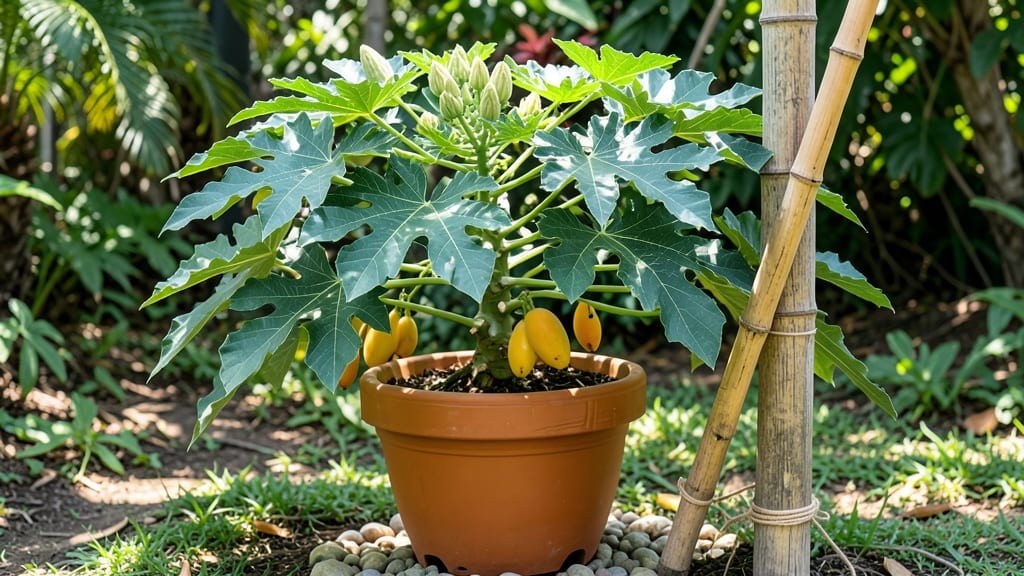
Growing papaya trees in containers lets you enjoy tropical fruit even in small spaces—no backyard required. 🌱 I’ve grown these vibrant trees on my city balcony, and the sweet, orange harvests in winter are worth every effort.
The key is matching their tropical needs to container life: warm spots, well-draining soil, and regular feeding to compensate for limited root space.
You’ll need a 5-gallon container minimum (bigger for mature trees) with drainage holes, lightweight potting mix, and a sunny window or patio that gets 6+ hours of direct light daily. Papayas thrive in heat but hate cold drafts, so move them indoors before temperatures dip below 50°F.
Water when the top inch of soil dries out—overwatering is the fastest way to kill these thirsty but sensitive plants.
With the right setup, you’ll see lush, glossy leaves within months and fruit in 12-18 months for dwarf varieties. The trees stay compact (under 6 feet tall), making them perfect for patios or sunny kitchens. Just watch for root-bound stress—repot every 2-3 years to keep them productive.
Works indoors or out, but outdoor growers in warmer zones can overwinter containers with extra mulch. The biggest challenge? Pollination—hand-pollinate flowers with a paintbrush for fruit set. Once you master this, you’ll have tropical fruit year-round, even in a tiny space.
📚 In This Guide
- What you need
- Instructions
- Tips and common mistakes
- Wrapping up and next steps
What you need
- ○ Container: A minimum 15-gallon pot (18"+ diameter) with drainage holes. Optional: Self-watering pots or fabric grow bags for better moisture control.
- ○ High-quality potting mix: A well-draining, peat-based mix (e.g., 60% peat moss, 20% perlite, 20% coconut coir). Optional: Add 1 cup of compost per 5 gallons for extra nutrients.
- ● Papaya seeds or seedlings: Choose dwarf or semi-dwarf varieties (e.g., 'Solo' or 'SunUp'). Pro tip: If starting from seed, soak seeds in warm water for 24 hours to speed up germination! 💡
- ● Fertilizer: A balanced, slow-release fertilizer (10-10-10 or 8-3-9) or organic options like fish emulsion or worm castings.
- ● Support system: A bamboo stake or trellis (4-6 ft tall) for training vines as the plant grows.
- ● Pruning shears: Sharp, sterilized shears for trimming and shaping.
- ● Mulch: Organic mulch (e.g., straw or wood chips) to retain moisture and regulate soil temperature.
- ● Watering can or hose with a gentle spray nozzle: Papayas love consistent moisture but hate soggy roots!
- ● Sunlight: Full sun (6+ hours daily). Place your container in a south-facing window, balcony, or greenhouse if indoors.
- ● Warmth: Papayas thrive in 70–90°F (21–32°C). Avoid drafts or cold snaps (<50°F/10°C can stunt growth).
- ● Humidity: 60–80% humidity is ideal. Use a humidifier or pebble tray if your climate is dry. ✨
- ● Patience: Container-grown papayas may take 12–18 months to bear fruit, but the wait is worth it!
Step-by-step guide to growing papaya trees in containers
Here's how to cultivate a thriving papaya tree in limited space—just follow these expert steps.
🌱 Step 1: Select the Right Container and Soil Mix
Papaya trees need room to grow, so choose a 5-gallon or larger container with drainage holes. I recommend fabric grow bags for their breathability—roots stay aerated and won’t suffocate. Avoid plastic, which traps moisture and encourages root rot.
Fill the container with a well-draining mix of 60% coconut coir, 30% perlite, and 10% compost. This mimics tropical forest soil while preventing compaction. Tap the container gently after filling to eliminate air pockets, but don’t pack it down—papaya roots need loose, oxygen-rich soil to thrive.
☀️ Step 2: Plant and Provide Warmth for Germination
Sow papaya seeds (fresh is best) ½ inch deep in the prepared mix. Place the container in a warm, humid spot—think 75-85°F—like a greenhouse or near a heat mat. Papaya seeds germinate fastest in warmth, so avoid drafty windowsills.
Keep the soil evenly moist (not soggy) using a spray bottle. Cover the container with plastic wrap to retain humidity until sprouts appear in 7-14 days. If germination takes longer, don’t worry—your room might run cooler. Just stay patient and consistent with moisture.
🌿 Step 3: Transition to Bright, Indirect Light
Once seedlings emerge, remove the plastic wrap and move them to bright, indirect light for 2-3 weeks. Direct sun at this stage can scorch tender new leaves. A south-facing window with sheer curtains works well, or use a grow light set 12 inches above the plants for 12-14 hours daily.
Watch for leggy growth—thin, stretched stems with large gaps between leaves. This means your light isn’t intense enough. Adjust by moving the plant closer to the light or raising the grow light to 6 inches above the top leaves. Strong seedlings should have thick stems and dark green leaves spaced 1-2 inches apart.
💧 Step 4: Fertilize and Train for Fruit Production
After 4-6 weeks, when your papaya has 4-5 true leaves, switch to a balanced liquid fertilizer (10-10-10) diluted to half-strength. Feed every 2 weeks during the growing season. Papayas are heavy feeders, but overdoing fertilizer burns roots—always water thoroughly before applying.
To encourage bushier growth, pinch off the top set of leaves when the plant reaches 18 inches tall. This redirects energy to lateral branches, increasing fruit potential. Male and female flowers develop on separate plants, so if you’re growing from seed, you’ll need at least two trees for pollination (or hand-pollinate with a small brush).
✂️ Step 5: Prune and Harvest for Continued Growth
Prune dead or yellowing leaves regularly to improve airflow and reduce disease risk. Papayas also benefit from light pruning of overcrowded branches—aim to keep the canopy open so sunlight reaches the center. Harvest green fruit when it’s 6-8 inches long for cooking, or wait until it ripens on the tree (yellow with red blush) for sweet, creamy flesh.
After harvest, reduce watering slightly but keep the soil consistently moist. Papayas thrive in warmth year-round, so if temperatures drop below 55°F, move the container indoors near a sunny window or under grow lights. With proper care, your container-grown papaya can produce fruit twice a year—just keep feeding and pruning!
Tips & tricks for perfect container-grown papaya trees
Container gardening can be tricky, but these pro-level insights will help you grow a thriving papaya tree in limited space.
Container Selection Matters: While the instructions recommend a 5-gallon container, don't be afraid to go bigger if possible. A 7-10 gallon container gives roots more room to establish before fruit production begins, which translates to healthier plants and potentially larger yields. Just ensure any container has proper drainage—those holes aren't optional! For tropical plants like papaya, fabric grow bags are ideal as they allow roots to breathe while preventing waterlogging. If using traditional pots, elevate them on feet to improve drainage.
Germination Game-Changer: The 75-85°F temperature range for germination is critical, but here's what nobody tells you—papaya seeds often germinate faster when soaked overnight in warm water before planting. This mimics tropical rainfall patterns and can cut your germination time from 14 days to just 5-7 days. Just make sure to plant them immediately after soaking rather than letting them dry out. Pro tip: Place a heating pad under your seedling tray if your home runs cooler than 70°F—this creates an ideal tropical microclimate right in your kitchen.
Lighting Strategy: That 12-14 hour daily light requirement can be challenging with natural light alone. If using grow lights, consider adding a timer to automate the process—consistency is key. For window-grown papayas, rotate your container 180 degrees daily to prevent lopsided growth toward the light source. You'll notice this particularly during the 2-3 week indirect light phase when seedlings are most vulnerable to leggy growth. A simple trick: Place a small mirror opposite your south-facing window to reflect additional light onto the plant without increasing heat.
Fertilizer Timing: The instructions specify switching to fertilizer after 4-6 weeks, but here's the secret—start with a very weak solution (quarter-strength) for the first feeding, then gradually increase to half-strength over two weeks. This gentle transition prevents root burn while still providing the nutrients your fast-growing papaya needs. I also recommend using a seaweed-based fertilizer occasionally—it contains natural growth hormones that help container-grown plants handle their limited root space more effectively. Always water thoroughly before fertilizing to protect those delicate roots.
Pro Tips for Growing Papaya Trees In Containers
- Container gardening can be tricky, but these pro-level insights will help you grow a thriving papaya tree in limited space.
- Container Selection Matters: While the instructions recommend a 5-gallon container, don't be afraid to go bigger if possible.
- Germination Game-Changer: The 75-85°F temperature range for germination is critical, but here's what nobody tells you—papaya seeds often germinate faster when soaked overnight in warm water before planting.
Frequently asked questions
Got questions about growing papayas in containers? You’re not alone! Here are some of the most common concerns—and their solutions—to help you cultivate your own tropical fruit without the fuss.
How big should my container be for a papaya tree?
A papaya tree needs at least 15–20 gallons of space (a 12–18-inch diameter pot works well). Since they grow fast, opt for a deep container (18+ inches tall) to support their root system. If you’re growing dwarf varieties, a slightly smaller pot (10–12 gallons) may suffice, but always add drainage holes!
How long does it take for a papaya tree to bear fruit in a container?
Patience is key! Papayas grown in containers typically take 12–24 months to produce fruit, depending on the variety and growing conditions. Dwarf types like ‘SunUp’ may fruit faster (10–12 months), while standard varieties could take longer. Pro tip: Ensure full sun (6+ hours daily) and consistent warmth (70°F+) to speed up fruiting.
Can I grow a papaya tree indoors, or does it need outdoor conditions?
Papayas love warmth and sunlight, so they thrive outdoors in containers. However, if you live in a cold climate, you can grow them indoors near a sunny window or under grow lights (12+ hours of light daily). Just mimic tropical conditions: 70–90°F, high humidity, and a well-ventilated space to prevent pests.
What are the most common pests or diseases for container-grown papayas?
Watch for aphids, mealybugs, and spider mites (common in dry conditions). Prevent them with neem oil or insecticidal soap. Overwatering can lead to root rot, so ensure pots drain well. Yellow leaves? Often a sign of nutrient deficiency—fertilize with a balanced, citrus-friendly mix (10-10-10) every 4–6 weeks during growing season.
Can I grow more than one papaya tree in a single container?
Not recommended! Papayas need plenty of space and can become competitive for nutrients. If you’re set on multiple trees, use separate containers at least 3 feet apart. Bonus tip: If you’re short on space, try pollinating by hand (papayas are self-pollinating but benefit from a gentle shake of flowers to encourage fruit set).
Wrapping up and next steps
Growing papaya trees in containers is a rewarding way to enjoy tropical fruit even in small spaces! With the right container, soil, sunlight, and care, you’ll be harvesting sweet, vibrant papayas in no time.
Whether you’re a beginner or a seasoned gardener, this method proves that big flavors don’t need big yards—just a little patience and love.
Ready to taste the tropics? Start by choosing your variety (like ‘SunUp’ or ‘Solo’) and gather your supplies. Then, plant with confidence—your future harvest is just a season away! 🌱✨