
Pruning
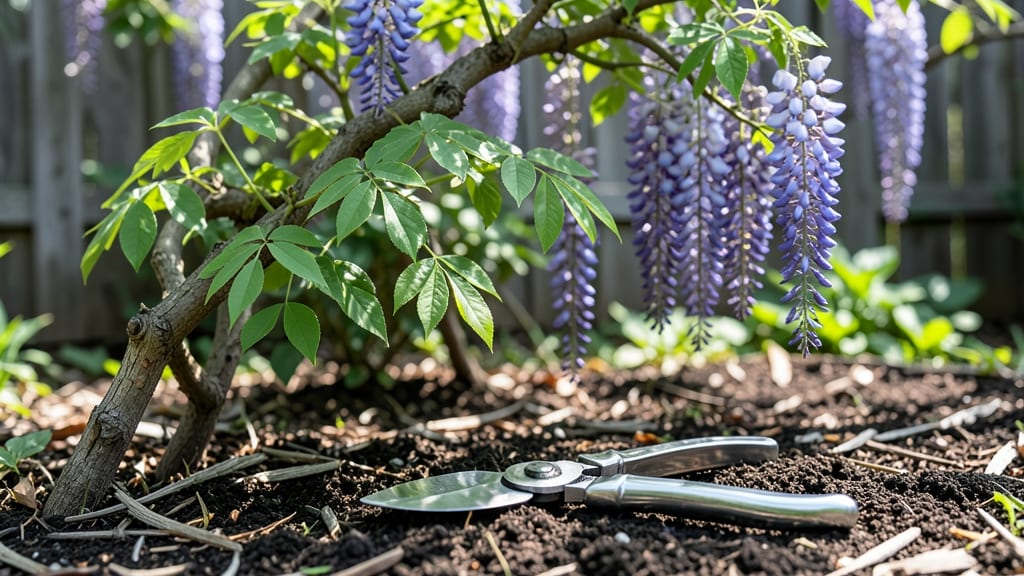
Trimming wisteria trees in late winter unlocks the secret to vibrant blooms and strong growth—something I learned the hard way after my first overzealous pruning session left bare branches.
The key isn’t just cutting back; it’s understanding which stems hold next year’s flowers and how to shape the plant for both beauty and health. Wisteria blooms on old wood, so aggressive pruning in summer or fall can rob you of spring’s fragrant purple cascades.
Instead, we’ll focus on strategic cuts that encourage lush, flowering vines while keeping the plant manageable.
You’ll need sharp pruning shears, loppers for thicker branches, gloves (wisteria thorns are no joke), and a ladder if your tree is taller than your reach. Timing matters too—late winter or early spring, just before new growth begins, is ideal.
The goal is to thin out crowded stems, remove dead or weak wood, and shape the vine to grow where you want it, whether that’s along a trellis, arbor, or fence. This isn’t about drastic cuts; it’s about guided growth that keeps the plant thriving for decades.
By the end of the season, you’ll see healthier foliage, better airflow to prevent disease, and more abundant blooms next spring. The secret is patience—wisteria responds slowly but dramatically to careful pruning.
You’ll also avoid the common pitfalls like over-pruning (which stresses the plant) or cutting back too late (which removes next year’s flowers). Think of it as sculpting a living masterpiece, where every cut is a step toward a stronger, more beautiful vine.
This method works for both mature wisteria trees and younger plants, so whether you’re tackling a 20-year-old vine or a new sapling, the same principles apply. The only difference? Mature trees need more aggressive thinning, while younger vines just need guidance to grow in the right direction.
Ready to transform your wisteria into a blooming powerhouse? Let’s get started with the right cuts.
📚 In This Guide
- What you need
- Instructions
- Tips and common mistakes
- Wrapping up and next steps
What you need
- ● Pruning shears (bypass pruners): Sharp, high-quality shears (e.g., Felco or Fiskars) for cutting smaller branches (up to ½ inch in diameter). Invest in a good pair—they make all the difference!
- ● Loppers: For thicker branches (½ to 1½ inches in diameter). Look for bypass loppers with long handles for leverage.
- ● Pruning saw: A curved-tooth pruning saw (like the Corona or Bahco) for branches over 1½ inches thick. Safety tip: Wear gloves to avoid splinters!
- ● Ladder or extension pole: A sturdy, non-slip ladder (e.g., aluminum or fiberglass) or a 10–12-foot telescoping pole to reach high branches safely.
- ● Disinfectant (e.g., rubbing alcohol or 10% bleach solution): Clean tools between cuts to prevent disease spread.
- ● Rope or twine: For tying down heavy branches or securing the ladder.
- ● Heavy-duty gloves: Protect your hands from thorns and rough bark (gardening gloves with reinforced palms work best).
- ● Work boots or closed-toe shoes: Essential for foot protection—wisteria thorns are serious!
- ● Trash bags or bucket: For collecting pruned branches and debris.
- ● Pole pruners: Extendable shears for high branches (saves ladder time!).
- ● Safety glasses: Protect your eyes from debris, especially when using a pruning saw.
- ○ Tree wound dressing (optional): Some gardeners use pruning sealant, but research shows it’s not always necessary for wisteria.
- ● Notebook & pen: Jot down notes on cuts made or areas to focus on next year.
- ● Friend or helper: Wisteria can be heavy—having an extra pair of hands (or eyes) is a game-changer!
- ● Check the weather: Trim on a dry, calm day—wet branches are heavier, and wind can make climbing risky.
- ● Know your wisteria’s age: Young trees (under 3 years) need light pruning; mature trees require more aggressive shaping.
- ● Identify dead/diseased branches: Remove these first to prevent spreading issues to healthy growth.
- ● Plan your cuts: Sketch a rough outline of your goals (e.g., open the center, encourage blooms) before starting.
Step-by-Step guide to pruning a wisteria tree
Pruning wisteria might seem intimidating, but with the right timing and technique, you'll encourage lush blooms and strong growth.
Prune Immediately After Flowering
Wisteria blooms on last year's growth, so the best time to prune is right after the flowers fade—typically in late spring or early summer. This timing ensures you don’t cut off next year’s flower buds, which form on the previous season’s wood. If you prune too late, you risk removing potential blooms for the following year.
Start by removing any dead, diseased, or crossing branches first. These compete for energy and can weaken the plant. Use sharp, clean pruning shears to make clean cuts just above a outward-facing bud or leaf node. This encourages new growth to sprout in the right direction, away from the center of the plant.
Thin Out Excess Growth to Improve Airflow
Wisteria grows aggressively, and over time, branches can become dense and tangled. To prevent this, focus on thinning out about one-third of the oldest wood each year. This not only improves airflow but also directs the plant’s energy toward producing stronger, healthier new growth.
Look for branches that are growing inward or rubbing against each other. These should be removed entirely at the base. Avoid cutting back to stubs—always cut just outside the branch collar where it meets the trunk or larger branch. This prevents damage and promotes faster healing.
Shape the Plant for Balance and Bloom Production
Once you’ve removed dead, diseased, and crossing branches, it’s time to shape the wisteria. Start by identifying the main stems or scaffold branches—these are the thickest, oldest branches that form the structure of the plant. Prune back these branches by about one-third to one-half to encourage bushier growth and more flowering.
For a more controlled shape, you can also trim back the tips of the current season’s growth to encourage branching. This is especially useful if your wisteria is growing too leggy. Make sure to step back occasionally and assess the plant’s overall shape—you want to maintain a natural, balanced look while still promoting airflow and sunlight penetration.
Lightly Prune in Late Summer for Controlled Growth
In late summer, give your wisteria a lighter pruning session to keep growth in check before winter. This is not a heavy pruning—just a way to tidy up any overly long or unruly branches. Focus on trimming back the tips of new growth to encourage thicker, more compact branches for next year.
This late-summer pruning also helps harden the wood before winter, making it less susceptible to damage from frost or heavy snow. Avoid heavy pruning at this time, as it can stimulate tender new growth that won’t survive the colder months. Instead, think of this as a maintenance step to keep the plant healthy and manageable.
Tips & tricks for perfect wisteria pruning
Real talk: Pruning wisteria feels like walking a tightrope between encouraging blooms and overdoing it. Here’s how to strike that balance without losing next year’s flowers.
Timing is everything: The late spring or early summer window is non-negotiable for Step 1—this is when wisteria’s flower buds for next year are already forming on last year’s wood. If you prune too late, you’ll be cutting off potential blooms. I’ve learned this the hard way after seeing beautiful wisteria turn into a bare vine the following spring. Mark your calendar right after flowers fade to avoid this mistake.
Look for these visual cues: When thinning in Step 2, focus on branches growing inward or rubbing against each other—these are the ones causing energy competition. The branch collar (that swollen area where a branch meets the trunk) is your target for clean cuts. I always step back every few minutes to visualize the plant’s shape; it’s amazing how much clearer the structure becomes from a distance.
Shape with intention: In Step 3, when you’re pruning back those main scaffold branches by one-third to one-half, think of it like sculpting. You’re not just cutting randomly—you’re directing energy toward the center while maintaining an open structure. This is where the magic happens for those cascading blooms. I’ve seen wisteria go from a tangled mess to a flowering masterpiece just by focusing on this step.
Light summer maintenance: That late summer trim in Step 4 isn’t about heavy pruning—it’s about tidying up. Focus on the tips of new growth to encourage compact branches. This small effort prevents winter damage and keeps your wisteria looking intentional rather than wild. I treat it like a quick haircut rather than a major haircut.
Pro Tips for Trim Wisteria Tree
- Real talk: Pruning wisteria feels like walking a tightrope between encouraging blooms and overdoing it.
- Timing is everything: The late spring or early summer window is non-negotiable for Step 1—this is when wisteria’s flower buds for next year are already forming on last year’s wood.
- Look for these visual cues: When thinning in Step 2, focus on branches growing inward or rubbing against each other—these are the ones causing energy competition.
Frequently asked questions
Got questions about trimming your wisteria tree? You’re not alone—this fast-growing beauty can be tricky! Here are some of the most common concerns and straightforward answers to keep your wisteria thriving.
When is the best time to trim wisteria?
The ideal window is late winter or early spring, just before buds swell (typically February–March in most climates). Avoid cutting after blooms appear—you’ll sacrifice next year’s flowers! If you miss this timing, a light trim after flowering can help shape the plant, but expect fewer blooms the following season.
How much can I cut back wisteria safely?
For established wisteria, you can prune up to ⅓ of the plant’s length in one season, but don’t overdo it. Focus on removing dead, crossing, or overcrowded branches first. For young plants, limit cuts to 1–2 feet per year to encourage strong growth. Never remove more than ⅓ of the foliage—this can stress the plant and reduce blooms.
Why isn’t my wisteria blooming after pruning?
Wisteria blooms on old wood, so aggressive summer pruning or cutting back too late in the season can stunt flowers. If your plant isn’t blooming, check these fixes:
- Timing: Prune only in late winter/early spring.
- Light: Ensure it gets 6+ hours of sun daily.
- Age: Young wisteria (under 3 years) may need patience—blooms often take 2–3 years to establish.
- Fertilizer: Test soil for phosphorus (key for blooms) and amend if needed.
Can I trim wisteria in summer?
Summer pruning is not recommended unless you’re dealing with safety hazards (e.g., tangled branches near structures). If you must trim, do so after flowering and keep cuts minimal—focus on removing only the longest, leggy growth. Heavy summer pruning can reduce next year’s blooms and stress the plant.
What if my wisteria is too large or out of control?
If your wisteria has grown wild, tackle it in stages over 2–3 years to avoid shocking the plant. Start by:
- Removing dead or diseased wood first.
- Thinning overcrowded branches to improve airflow.
- Using support structures (like trellises or cables) to guide growth.
Pro Tip:
After pruning, sanitize your tools with rubbing alcohol to prevent spreading disease. And if your wisteria is climbing a fence or arbor, leave a few strong branches untouched to anchor the plant—this helps it recover faster!
Wrapping up and next steps
Trimming your wisteria tree doesn’t have to be intimidating—with the right tools, timing, and technique, you can encourage stunning blooms while keeping it healthy and manageable. 🌸 Remember to prune in late winter or early spring, remove dead or crossing branches, and shape it gently to avoid over-trimming.
The key is patience and consistency!
Now that you’re armed with these tips, roll up your sleeves and give your wisteria the care it deserves. Ready to tackle your next gardening project? Check out our full pruning guide for even more expert advice!