Pruning
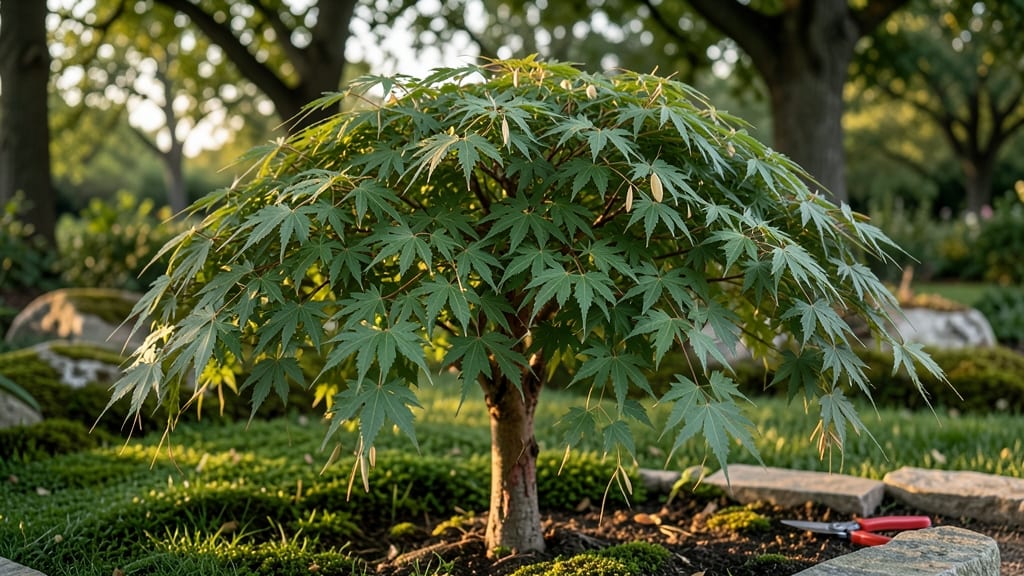
That lace leaf Japanese maple tree flourishes in the Pacific Northwest’s damp, mild climate—but its delicate branches require careful pruning to preserve its signature, feathery shape. I’ve spent five seasons refining my approach, and what works here differs from standard maple care.
The key? Pruning for both structure and seasonal stress, because this tree’s beauty comes from its fineness, not its thickness.
You’ll need sharp bypass pruners, a 3-foot ladder, and a clear day—rain makes cuts heal poorly. Start in late winter before buds swell, then do light touch-ups in summer to shape new growth.
The goal isn’t to cut back hard; lace leaf maples recover slowly, and aggressive pruning turns those elegant branches into stubby scars. Think of it as sculpting with shears, not hacking.
By summer’s end, you’ll see fuller foliage with fewer gaps, and the tree’s signature lace-like leaves will cascade like a living waterfall. The real magic happens in autumn, when the foliage turns fiery orange—proof your pruning paid off.
This method keeps the tree healthy for decades, not just a few seasons.
Works equally well in containers or planted beds, though container-grown trees need pruning earlier to prevent root-bound stress. The same rules apply whether your tree is 5 feet tall or 15—just scale the tools. Let’s get those branches looking intentional, not overgrown.
📚 In This Guide
- What you need
- Instructions
- Tips and common mistakes
- Wrapping up and next steps
What you need
- ● Pruning shears: Sharp, bypass-style shears (for cuts up to ½ inch thick). Quantity: 1 pair.
- ● Pruning saw: Curved or folding saw for thicker branches (over ½ inch). Quantity: 1.
- ● Hand pruners: For smaller, precise cuts (e.g., dead or crossing branches). Quantity: 1 pair.
- ● Loppers: Long-handled for reaching higher branches (up to 1.5 inches thick). Quantity: 1 pair.
- ● Disposable gloves: Heavy-duty, nitrile-coated for protection. Quantity: 1–2 pairs.
- ● Rubbing alcohol (70%+) or bleach solution: For sterilizing tools between cuts (1:10 bleach-to-water ratio). Quantity: Small bottle or spray bottle.
- ○ Sealing wax or pruning sealant: Optional but recommended for cuts over ½ inch to prevent disease. Quantity: Small tub.
- ● Bucket or trash bag: For collecting pruned branches. Quantity: 1.
- ● Step ladder or sturdy stool: For safe access to higher branches (ensure it’s rated for your weight). Quantity: 1.
- ● Sharpie or permanent marker: For marking branches to remove (if planning ahead). Quantity: 1.
- ● Extension pole pruners: For branches too high for loppers (3–6 feet reach).
- ● Tree wound dressing: Alternative to sealant (e.g., Tanglefoot Tree Wound Pruning Seal).
- ● Safety glasses: Protects eyes from debris.
- ● Knee pads: For comfort if you’ll be kneeling frequently.
- ● Camera or phone: Document your tree’s progress before/after pruning!
Step-by-Step pruning guide for lace leaf Japanese maple trees
Here's the method I've used for years to keep these delicate trees thriving in our damp Pacific Northwest climate.
Assess the Tree for Seasonal Needs
Start by examining your lace leaf Japanese maple in late winter, just as buds begin to swell. Look for dead, crossing, or diseased branches—these are your first targets. I always prune when the tree is dormant but before new growth begins, usually between mid-February and early March in our region. This timing ensures the tree can heal quickly before spring stress.
Run your fingers along branches to feel for any rough spots or hollow areas—these indicate dead wood. Healthy branches should have smooth bark and firm structure. Avoid pruning when the tree is under stress from drought or extreme cold, as this weakens its recovery ability.
Remove Problem Branches with Precision
Use clean, sharp bypass pruning shears for branches under ½ inch in diameter. For thicker branches, switch to a pruning saw to make clean cuts without tearing the bark. Always cut just outside the branch collar—the swollen area where the branch meets the trunk—at a 45-degree angle. This prevents water from pooling and rotting the wound.
When removing branches, make your first cut about 6 inches out from the trunk on the underside of the branch. This reduces weight and prevents bark from tearing when you make the final cut. For larger branches, I often make a third cut to clean up the stub. Never leave stubs—they invite disease and weaken the tree.
Shape for Balance and Airflow
Step back and study the tree's natural shape. Lace leaf Japanese maples have a graceful, layered form, so avoid heavy pruning that disrupts this. Focus on opening the canopy to improve airflow, which reduces humidity-related diseases like powdery mildew. Remove any branches that rub against others or grow inward.
For structural pruning, prioritize removing branches that grow downward or cross the main trunk. These compete with the tree's natural growth pattern and can create weak points. Thin out crowded areas by removing one-third of the smallest branches first. This maintains the tree's delicate lace-like foliage while improving its overall health.
Light Summer Maintenance Pruning
After the initial winter pruning, give your lace leaf Japanese maple a lighter check in early summer, around June. This is when you address any water sprouts—those fast-growing, upright shoots that detract from the tree's elegant form. Remove them at the base with a clean cut to encourage stronger branching.
If you notice any branches that have been damaged by wind or pests, prune them out immediately. Summer pruning should be minimal—just enough to maintain the tree's shape and remove any obvious problems. Avoid heavy pruning in summer, as it can stimulate weak, late-season growth that won't harden off before winter.
Autumn Cleanup and Winter Prep
In late autumn, after the leaves have fallen but before the first hard frost, do a final inspection. Remove any remaining dead or diseased branches, as well as any suckers that have sprouted at the base. This keeps the tree tidy and reduces overwintering pests.
Apply a 2-3 inch layer of mulch around the base of the tree, keeping it 6 inches away from the trunk to prevent rot. Water deeply before the ground freezes to ensure the roots stay hydrated through winter. In our Pacific Northwest climate, lace leaf Japanese maples benefit from this extra care, especially in wet winters that can lead to root rot if drainage isn't ideal.
Tips & tricks for perfect lace leaf Japanese maple pruning
These practical insights will help you maintain your tree's health while preserving its stunning lace-like foliage.
Timing is Everything: The mid-February to early March window is critical for winter pruning. This dormant period allows the tree to heal quickly before spring growth begins. I've learned the hard way—pruning too early can expose fresh cuts to freezing temperatures, while waiting too long risks stressing the tree as buds swell. In our Pacific Northwest climate, this timing also helps avoid the rainy season that can lead to fungal issues on fresh wounds.
Tool Selection Matters: Never use dull tools on lace leaf Japanese maples. Their delicate bark tears easily with improper cuts. I always clean my bypass pruning shears with rubbing alcohol between cuts to prevent spreading disease. For branches over ½ inch thick, switch to a pruning saw—it gives you the control needed for clean cuts at that 45-degree angle. The branch collar should always remain intact; this is where the tree's natural healing begins.
Thinning Technique: When removing one-third of the smallest branches in Step 3, focus on those growing inward or rubbing against others. These are the branches that create weak points and reduce airflow. I like to use a string or garden twine to outline the tree's natural shape before making cuts. This helps me visualize how each removal will affect the overall form. Remember, lace leaf maples have a naturally layered growth pattern—preserve that elegance.
Seasonal Care: The June summer maintenance is often overlooked, but it's crucial for preventing water sprouts. These fast-growing shoots detract from the tree's delicate appearance. I make a habit of checking my trees in June and removing any new growth at the base. This encourages stronger branching and maintains that signature lace-like foliage. In our wet climate, summer pruning also helps prevent fungal issues by improving airflow through the canopy.
Pro Tips for Lace Leaf Japanese Maple Tree
- These practical insights will help you maintain your tree's health while preserving its stunning lace-like foliage.
- Timing is Everything: The mid-February to early March window is critical for winter pruning.
- Tool Selection Matters: Never use dull tools on lace leaf Japanese maples.
Frequently asked questions
Got questions about keeping your lace leaf Japanese maple thriving year-round? You’re not alone! Here are answers to the most common concerns from PNW gardeners—plus a few pro tips to keep your tree looking its best.
When is the best time to prune a lace leaf Japanese maple in the Pacific Northwest?
The ideal window is late winter to early spring (February–March), just before new growth begins. This minimizes stress and prevents disease. Avoid pruning in fall or winter—cold snaps can harm fresh cuts. For light shaping, you can also prune in early summer, but avoid heavy cuts then.
Can I prune my lace leaf Japanese maple in winter?
Pruning in winter (December–January) is risky for lace leaf maples. Cold, wet PNW winters can stress fresh cuts, making them vulnerable to fungal infections or dieback. If you must prune, wait until late winter when temperatures stabilize. Always use sharp, sterilized tools to reduce risks.
How much can I trim back without harming my lace leaf Japanese maple?
Never remove more than 25–30% of the canopy in one season. Lace leaf maples are sensitive to over-pruning, which can lead to weak growth or even tree death. For mature trees, spread heavy pruning over 2–3 years. Focus on removing dead, diseased, or crossing branches first.
What’s the difference between pruning for shape vs. pruning for health?
- Health pruning: Removes dead, diseased, or damaged branches (even if it disrupts shape). Prioritize this first!
- Shape pruning: Aesthetic cuts to maintain form, but avoid over-thinning or "lion’s tailing" (cutting back to stubs). Use thinning cuts (removing entire branches) over heading back (cutting back to a bud).
Pro tip: Step back often to check your work—lace leaf maples have delicate foliage, so subtle adjustments go a long way!
My lace leaf Japanese maple has yellow leaves after pruning. Is this normal?
Mild yellowing can occur due to transplant shock or seasonal stress, but it’s usually temporary. If leaves are crispy, brown, or falling prematurely, you may have over-pruned or stressed the tree. Ensure it’s well-watered (but not soggy) and mulched. Avoid fertilizing immediately after pruning—wait until spring.
Are there alternatives to pruning if my lace leaf Japanese maple is too delicate?
If your tree is extremely sensitive, try these gentler approaches:
- Selective removal: Only prune dead or rubbing branches—skip aesthetic cuts.
- Growth redirection: Use tie-downs or stakes to guide wayward branches.
- Natural shaping: Let the tree grow organically and prune only for safety (e.g., weak limbs).
Remember: Lace leaf maples are prized for their natural elegance—sometimes less intervention is best!
Wrapping up and next steps
The lace leaf Japanese maple is a stunning addition to any Pacific Northwest garden, and with the right pruning care, it will thrive year-round. Remember to prioritize clean cuts, seasonal timing, and gentle shaping—your tree will reward you with vibrant foliage and graceful form for decades.
Now that you’re armed with the knowledge, grab those pruners and give your lace leaf maple the TLC it deserves! 🌿✂️
Need inspiration? Sketch a quick vision for your tree’s future—whether it’s a classic tiered shape or a whimsical topiary—and start small. Happy pruning!