
Pruning
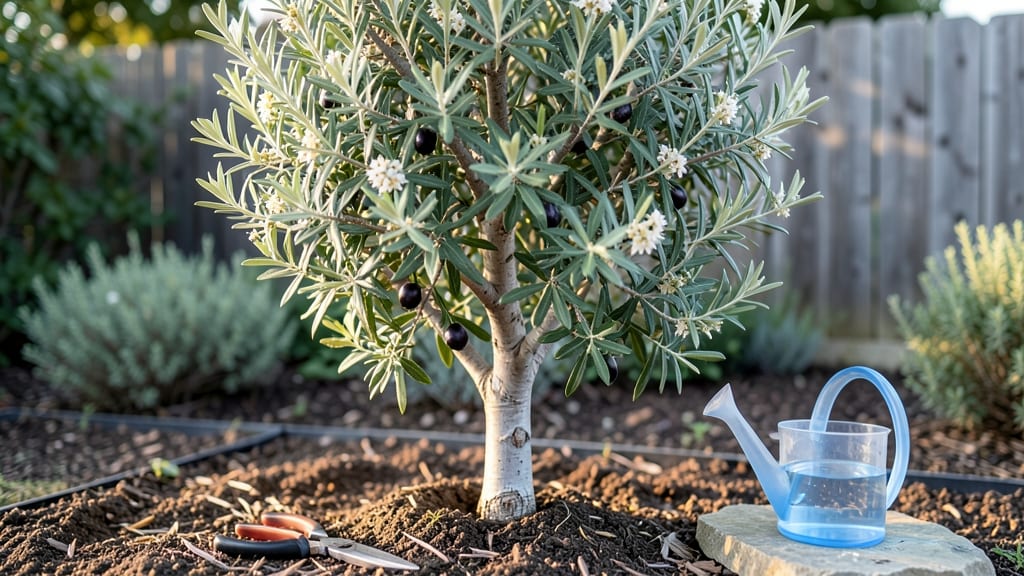
The ornamental olive tree thrives in the Pacific Northwest when pruned to handle frost—its silvery foliage and compact shape make it a standout in any landscape. I’ve shaped mine into a tidy, frost-resistant form that still blooms beautifully each spring, and the technique is simpler than you’d think.
The key is timing: prune just after the last hard frost when new growth can harden off before winter’s chill returns.
You’ll need sharp pruning shears, a ladder if your tree is tall, and a clear day to work—cloudy days reduce stress on the plant. Focus on removing dead or crossing branches first, then shape the canopy to let light reach the center.
My tree stays compact and bushy because I avoid heavy cuts; instead, I trim back about one-third of the new growth each year to encourage dense, frost-tolerant branches.
What you’ll end up with is a tree that looks polished year-round, with silvery leaves that shimmer in the PNW’s soft light. The pruned shape also improves airflow, reducing frost pockets where cold air can damage tender new growth.
Plus, the tree blooms earlier in spring because it’s not struggling to support a tangled mess of branches.
This method works for Arbequina and other compact varieties, but avoid pruning in late summer—you’ll risk soft new growth that won’t survive winter. For extra frost protection, wrap young trees in burlap during the coldest months, and you’ll have a tree that stays healthy, handsome, and productive for decades.
📚 In This Guide
- What you need
- Instructions
- Tips and common mistakes
- Wrapping up and next steps
What you need
- ● Pruning shears: Bypass pruners (for cuts up to ½ inch thick) – look for sharp, stainless-steel blades (e.g., Felco F-2 or similar).
- ● Loppers: 1 pair (for branches ½ to 1½ inches thick) – choose ratcheting or bypass types for cleaner cuts.
- ● Pruning saw: 1 handheld saw (for branches 1½+ inches thick) – avoid cheap models; invest in a curved blade.
- ● Gardening gloves: 1 pair (cut-resistant, like Mechanix or heavy-duty leather).
- ● Disinfectant: 70% isopropyl alcohol or a 10% bleach solution (in a spray bottle) – 1–2 cups total.
- ● Sealing wax: Pruning sealant (e.g., Tanglefoot Tree Wound Pruning Seal) – small jar (4–8 oz).
- ● Ladder: Extendable aluminum ladder (tall enough to reach the tree’s highest branches) – check weight limit for safety.
- ● Heavy-duty trash bags: 2–3 bags (for debris cleanup).
- ● Frost cloth: 1 roll (3–4 ft wide) – for wrapping vulnerable branches if early/late frosts are forecasted.
- ○ Anti-desiccant spray: Optional (e.g., Wilt-Pruf) – apply after pruning to protect leaves in dry PNW winters.
- ● Mulch: 2–3 bags of wood chips or straw (to insulate roots post-pruning).
- ● Timing: Prune in late winter/early spring (Feb–March) for PNW resilience—avoid pruning in frost or rainy periods.
- ● Safety first: Check for dead/diseased branches before starting (burn or bag these separately).
- ● Weather: Aim for a dry, calm day (50–65°F)—humidity can spread fungal spores.
- ● Tree health check: Inspect for olive knot disease (common in PNW); treat with copper fungicide if spotted.
Step-by-step guide for pruning frost-resilient ornamental olive trees
Here’s how I shape my Pacific Northwest olives—keeping them healthy and stunning through winter.
Time Your Pruning for Late Winter Dormancy
Wait until late February or early March when the tree is fully dormant but before new growth begins. The ideal time is when temperatures stay above 32°F but haven’t yet triggered bud swell. Pruning too early risks frost damage to fresh cuts, while waiting too long encourages weak spring growth.
Check for dormancy by looking for tight, unopened buds along the branches. If you see any green shoots, hold off for another week. I always prune on a dry, sunny day to prevent fungal issues from settling into fresh wounds.
Remove Dead, Diseased, or Crossing Branches First
Start by cutting out any dead wood (branches that snap easily or lack bark) and diseased branches (blackened, oozing, or with fungal spots). Use clean, sharp pruners to make cuts just outside the branch collar—the swollen area where the branch meets the trunk. This prevents tearing and promotes faster healing.
Next, remove crossing branches that rub against each other. These create wounds that invite pests and disease. If two branches grow parallel, trim the weaker one—usually the smaller or more inward-facing branch. I like to step back every few cuts to visualize the tree’s natural shape.
Thin Out Interior Branches for Airflow
Olive trees thrive with good airflow, so focus on thinning out crowded interior branches. Aim to remove 20-30% of the foliage to let light and air penetrate to the center. Start at the bottom and work upward, cutting back branches that grow straight up or inward.
Look for suckers (vigorous shoots at the base) and water sprouts (fast-growing vertical shoots). These steal energy from the tree. Cut them back to a lateral branch or the main trunk. I always leave 3-5 main scaffold branches evenly spaced around the trunk for a balanced shape.
Shape the Canopy for Balance and Form
Now it’s time to refine the tree’s silhouette. Step back and decide whether you prefer a rounded, vase-like shape or a tapered, natural form. For frost resilience, avoid heavy topping—this encourages weak growth that may not survive winter. Instead, make smaller cuts to encourage branching lower on the tree.
Use hand pruners for branches under ½ inch thick and loppers for thicker branches. Make cuts at a 45-degree angle just above an outward-facing bud. This directs growth outward and away from the center. For larger branches, consider three-cut pruning to avoid tearing the bark.
Clean Up and Protect Fresh Cuts
After pruning, rake up all debris and dispose of it in the trash—never compost diseased branches. Wipe your pruners with rubbing alcohol between cuts to prevent spreading pathogens. For larger wounds, apply pruning sealant (optional but helpful in damp PNW climates) to protect against fungal infections.
Water the tree deeply after pruning to help it recover. Avoid fertilizing immediately—wait until new growth appears in spring. I also mulch around the base with 2-3 inches of wood chips to retain moisture and regulate soil temperature.
Tips & tricks for pruning frost-resilient ornamental olive trees
Pruning your Pacific Northwest ornamental olive tree properly makes all the difference in winter survival and spring vitality. Here's what I've learned after years of shaping these resilient trees.
Timing is Everything: The late February to early March window is critical because it balances frost risk with growth readiness. I check for dormancy by looking for tight, unopened buds and avoiding any green shoots—this tells me the tree is truly prepared. If you're unsure, prune on a day when temperatures stay above 32°F consistently, as this prevents frost damage to fresh cuts while still keeping the tree dormant.
Visualizing the Tree's Shape: Step back frequently during pruning to visualize the final silhouette. I like to imagine the tree's natural growth pattern and work from the bottom up, removing branches that grow straight up or inward first. This creates that beautiful rounded or tapered shape while maintaining the tree's structural integrity. Think of it like sculpting—every cut should serve a purpose in the overall form.
Protecting Against Fungal Issues: In our damp Pacific Northwest climate, fungal infections are a real concern. After each cut, I wipe my pruners with rubbing alcohol to prevent spreading pathogens between branches. For larger wounds, I apply pruning sealant—it's optional but worth the extra protection in our rainy climate. This simple step can mean the difference between a healthy tree and one struggling with infections.
Pruning Technique for Healthy Growth: When making cuts, always aim just outside the branch collar at a 45-degree angle above an outward-facing bud. This directs new growth outward and away from the center, creating a stronger structure. For branches thicker than ½ inch, use the three-cut pruning method to avoid tearing the bark—this prevents larger wounds that can invite pests and disease.
Pro Tips for Ornamental Olive Tree
- Pruning your Pacific Northwest ornamental olive tree properly makes all the difference in winter survival and spring vitality.
- Timing is Everything: The late February to early March window is critical because it balances frost risk with growth readiness.
- Visualizing the Tree's Shape: Step back frequently during pruning to visualize the final silhouette.
Frequently asked questions
Got questions about pruning your ornamental olive tree in the Pacific Northwest? You’re not alone! Here are some of the most common concerns—and answers—to help you keep your tree thriving, even in frost-prone climates.
When is the best time to prune an ornamental olive tree?
The ideal time is late winter or early spring (February–March) before new growth begins. This timing minimizes frost damage and allows the tree to heal before summer heat. Avoid heavy pruning in fall, as new growth may not harden off before cold snaps.
How do I protect my ornamental olive tree from PNW frost?
Olive trees are semi-frost-hardy (USDA Zones 8–11), but PNW winters can push them to their limits. Wrap the trunk with burlap or tree wrap in winter, and mulch heavily at the base. For young trees, use frost cloth on branches. Avoid overhead watering before freezes—wet wood is more vulnerable.
Can I shape my ornamental olive tree like a topiary?
Olive trees respond well to structured pruning for topiary shapes. Use sharp bypass pruners to make clean cuts at 45-degree angles just above leaf nodes. For dense shapes, trim 1/3 of new growth in spring, then maintain with light pruning every 4–6 weeks. Pro tip: Wear gloves—olive leaves can be prickly!
What if my ornamental olive tree’s leaves turn yellow or drop?
Yellowing leaves often signal overwatering, nutrient deficiency, or frost damage. Check soil moisture (olives hate soggy roots!) and amend with citrus-specific fertilizer in early spring. If leaves drop after frost, the tree is likely recovering—prune only dead branches until spring. Bonus: Olive trees are drought-tolerant once established!
Are there frost-resistant olive tree alternatives for the PNW?
If your site gets below 15°F, consider these cold-hardy options:
- ‘Arbequina’ olive (Zone 8, milder winters)
- ‘Frantoio’ olive (Zone 8, Italian variety with better cold tolerance)
- Russian olive (Elaeagnus angustifolia) (Zone 3–9, not a true olive but hardy)
Wrapping up and next steps
Pruning your ornamental olive tree in the Pacific Northwest doesn’t have to be intimidating—it’s all about timing, technique, and a little patience! 🌿 With the right tools, frost-resilient shaping strategies, and seasonal care, you’ll keep your tree thriving year after year.
Whether you’re a beginner or a seasoned gardener, every snip brings you closer to a stunning, healthy centerpiece for your landscape.
Ready to level up your pruning game? Start by booking a consultation with a local arborist or grabbing a guidebook on olive tree care. Then, roll up your sleeves and give your tree the love it deserves—your future self (and your tree!) will thank you! 🌟