
Trees
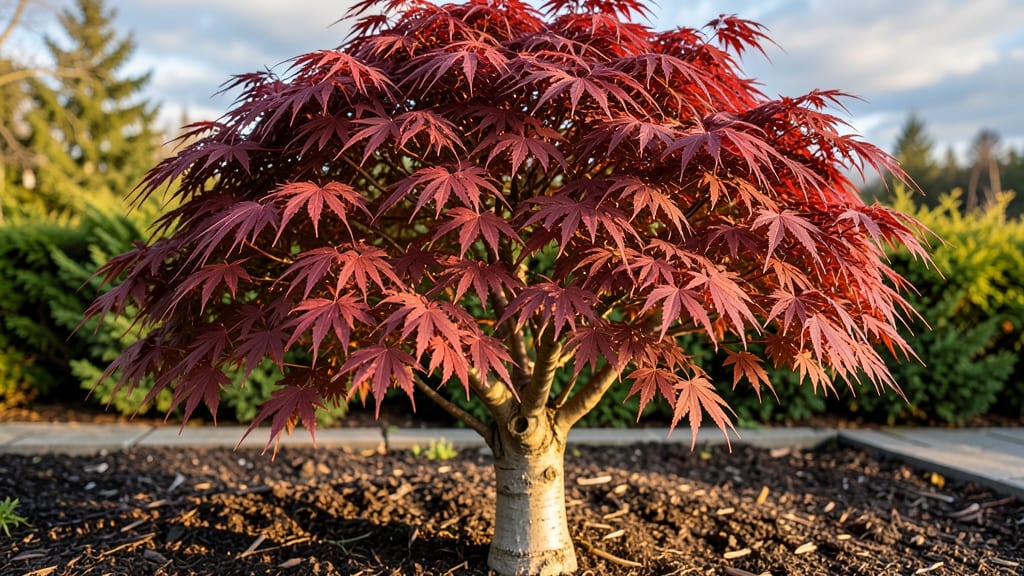
Red-leaved trees are the Pacific Northwest’s secret weapon for year-round drama—their fiery foliage turns every season into a showstopper. 🌿 I remember the first time I saw a scarlet maple blazing against a gray winter sky; it changed how I thought about trees forever.
These aren’t just plants; they’re living art pieces that steal the spotlight in any garden.
What makes them special? Their bold, ever-changing hues—deep crimson in summer, molten gold in fall, and even icy pink in winter’s chill. They thrive in our damp, mild climate, making them low-maintenance stars for focal points, borders, or as dramatic accents near patios.
Pair them with evergreens like pine or hemlock to create contrast, or let them shine alone as a statement piece.
Imagine your garden transformed: scarlet leaves rustling in spring breezes, amber foliage glowing in autumn sunlight, and soft burgundy adding warmth to winter landscapes. These trees don’t just survive—they command attention, turning ordinary spaces into vibrant canvases. Let’s explore how to make them the centerpiece of your outdoor vision.
From compact varieties for small yards to towering specimens for grand statements, red-leaved trees adapt to any design. They play well with perennials, shrubs, and even other trees, creating layered interest that evolves with the seasons.
Whether you’re redesigning a whole yard or just adding a single showstopper, these trees deliver unmatched impact with minimal effort.
📚 In This Guide
- What you need
- Instructions
- Tips and common mistakes
- Wrapping up and next steps
What you need
- ● Red-leaved tree varieties: Choose from species like Japanese Maple (Acer palmatum), Smoke Tree (Cotinus coggygria), Red Twig Dogwood (Cornus sericea), or European Beech (Fagus sylvatica 'Purpurea'). Pro tip: Opt for dwarf or compact varieties (e.g., 'Bloodgood' Japanese Maple) for smaller spaces! 🎯
- ○ High-quality potting soil: 5–10 gallons (or enough to fill your planting hole), enriched with organic compost (20–30% mix). Optional: Add slow-release fertilizer (10-10-10 NPK ratio) for a nutrient boost. ✨
- ● Mulch: 2–3 inches of wood chips or bark mulch (avoid dyed mulch—it can harm roots!). Bonus: Use cedar mulch for natural pest resistance. 🌡️
- ● Hand trowel or spade (for digging small holes or transplanting seedlings).
- ● Shovel (for larger planting holes, at least 12–18 inches wide and deep).
- ● Garden gloves (to protect your hands—some soil and mulch can be abrasive!).
- ● Watering can or hose with a gentle spray nozzle (red-leaved trees hate soggy roots—avoid heavy water pressure).
- ● Pruning shears (for shaping or removing dead branches post-planting).
- ● Measuring tape (to ensure proper spacing—most red-leaved trees need 6–15 feet between plants, depending on maturity).
- ● Sunlight: Most red-leaved trees thrive in partial shade to full sun (6+ hours/day). Exception: Some, like Japanese Maples, prefer dappled shade in hot climates. 🌞
- ● Soil pH: Aim for slightly acidic to neutral (6.0–7.0). Test your soil locally or amend with peat moss if needed.
- ● Water source: Ensure easy access to water for the first 2–3 weeks (deep watering 2–3 times per week is ideal).
- ● Local climate checks: Verify your hardiness zone (most red-leaved trees suit Zones 4–8, but some, like Smoke Trees, tolerate Zones 3–9). ❄️☀️
- ● Tree stakes & ties (for young or top-heavy trees in windy areas).
- ● Epsom salt (1 tbsp dissolved in water monthly for magnesium-rich foliage).
- ● Decorative rocks or gravel (for a polished look around the base).
- ● Tree guard or wire mesh (to protect from deer or rabbits—they love red-leaved trees!).
How to select and plant stunning red-leaved trees for Pacific Northwest landscapes
Here’s how to choose and establish these vibrant, climate-resilient trees for year-round visual impact.
🌱 Step 1: Choose the Right Varieties for Your Site
Pacific Northwest red-leaved trees thrive best in USDA Zones 6-9, with some varieties like Japanese maple (Acer palmatum) and European beech (Fagus sylvatica 'Purpurea') tolerating cooler microclimates. For sun exposure, opt for red oak (Quercus rubra) or red maple (Acer rubrum) in full sun, while dwarf ninebark (Physocarpus opulifolius 'Little Devil') handles partial shade gracefully.
Check mature height and spread—European beech can reach 30-40 feet, while dwarf varieties like 'Royal Purple' smokebush stay under 6 feet. Match your site’s dimensions to prevent overcrowding. I always sketch the tree’s canopy over existing structures to avoid future pruning headaches.
🪴 Step 2: Prepare the Planting Site for Optimal Growth
Dig a hole twice as wide as the root ball but no deeper—red-leaved trees resent buried roots that restrict growth. Amend the native soil with 2-3 inches of compost mixed into the bottom 12 inches of the hole. This improves drainage while retaining moisture, critical for Japanese maples that hate soggy roots.
For clay-heavy soils common in the PNW, add 1 part perlite to 3 parts native soil in the backfill mix. Test soil pH—most red-leaved trees prefer slightly acidic to neutral (6.0-7.0). If your soil runs alkaline, incorporate sulfur amendments before planting. Water the hole thoroughly 24 hours ahead to settle the soil and prevent compaction during transplanting.
☀️ Step 3: Plant with Proper Spacing and Support
Position the tree so the top of the root ball sits 1-2 inches above ground level—this prevents stem rot. Spread roots gently if pot-bound, then backfill with native soil mixed with compost, tamping lightly every 6 inches to eliminate air pockets. For larger specimens, use 2-3 people to lower the tree to avoid root damage.
Stake only if necessary—young Japanese maples or European beeches benefit from temporary support in windy sites. Use 2-3 stakes positioned 6 inches from the trunk and 18 inches deep, secured with wide, flexible straps (never wire, which girdles stems). Water deeply immediately after planting to settle soil around roots.
💧 Step 4: Establish a Watering and Mulching Routine
Water deeply 2-3 times per week for the first 6-8 weeks, ensuring moisture reaches 12-18 inches deep. Red-leaved trees like red oak develop deep root systems but need consistent moisture during establishment. Check soil moisture by pushing a 6-inch probe—if it resists, water again. Avoid overhead sprinkling, which promotes fungal diseases on broadleaf varieties.
Apply 3-4 inches of mulch (wood chips or bark) in a 3-foot diameter ring, keeping it 6 inches away from the trunk. Replenish annually in spring. Mulch conserves soil moisture and regulates temperature, but never let it pile against the stem—this invites rot. I always top-dress with a slow-release fertilizer in early spring to support new foliage growth.
✂️ Step 5: Prune and Maintain for Long-Term Vibrancy
Prune red-leaved trees in late winter or early spring before new growth begins. Remove dead, crossing, or rubbing branches first, then thin the canopy to improve airflow. For Japanese maples, limit pruning to light shaping—these trees respond poorly to heavy cuts. Use clean, sharp tools and make cuts just outside the branch collar to prevent tearing.
Fertilize annually in early spring with a balanced 10-10-10 formula, applying ½ cup per inch of trunk diameter. Red-leaved trees like red maple benefit from iron supplements if yellowing appears between veins—a sign of chlorosis common in alkaline soils. Monitor for pests like aphids or spider mites, which thrive on stressed foliage, and treat with neem oil if needed.
Tips & tricks for perfect red-leaved tree plantings
Transforming your Pacific Northwest landscape with these vibrant trees requires thoughtful planning—and these insider tips will help you avoid common pitfalls while maximizing their dramatic color potential.
Variety Selection Strategy: When choosing between sun-loving varieties like red oak or shade-tolerant options like 'Little Devil' ninebark, consider the tree's mature form. The European beech might dominate a space with its 30-40 foot reach, while 'Royal Purple' smokebush offers bold color without overwhelming smaller gardens. I always recommend sketching the tree's canopy projection onto your property map before purchasing—this prevents costly mistakes when the tree outgrows its welcome.
Soil Preparation Secret: The 24-hour pre-watering of the planting hole is non-negotiable for PNW clay soils. This critical step prevents compaction when you handle the root ball during planting. For heavy clay sites, I've found that mixing 1 part perlite to 3 parts native soil in the backfill creates ideal drainage while maintaining moisture retention—exactly what Japanese maples crave. Test your soil pH before planting; most red-leaved varieties prefer 6.0-7.0, and alkaline soils can cause chlorosis that dulls their signature colors.
Planting Technique: Positioning the root ball's top 1-2 inches above ground level prevents stem rot, but this subtle detail makes all the difference in long-term health. When backfilling, tamp the soil every 6 inches to eliminate air pockets—this ensures immediate root contact with moisture. For larger specimens, I can't emphasize enough how crucial 2-3 people are during planting to avoid crushing delicate roots. The extra effort pays off in vibrant foliage.
Establishment Care: The 6-8 week watering window is your best chance to develop deep root systems. Use a 6-inch soil probe to verify moisture reaches 12-18 inches deep—this depth encourages downward root growth that anchors the tree against PNW winds. Apply mulch in a 3-foot diameter ring, keeping it 6 inches from the trunk, to regulate soil temperature while preventing rot. I've seen too many beautiful red-leaved trees fail because mulch was piled against the stem.
Pro Tips for Red Leaved Trees
- Transforming your Pacific Northwest landscape with these vibrant trees requires thoughtful planning—and these insider tips will help you avoid common pitfalls while maximizing their dramatic color potential.
- Variety Selection Strategy: When choosing between sun-loving varieties like red oak or shade-tolerant options like 'Little Devil' ninebark, consider the tree's mature form.
- Soil Preparation Secret: The 24-hour pre-watering of the planting hole is non-negotiable for PNW clay soils.
Frequently asked questions
Got questions about red-leaved trees? You’re not alone! Here are some of the most common queries from gardeners, landscapers, and nature lovers in the Pacific Northwest—and beyond.
What are the most popular red-leaved trees for the Pacific Northwest?
The PNW’s mild, wet climate favors hardy red-leaved varieties like Japanese maples (Acer palmatum), European beech (Fagus sylvatica 'Purpurea'), Red Oak (Quercus rubra), and Ninebark (Physocarpus opulifolius 'Little Devil'). These thrive in zones 6–8 and offer stunning fall/winter color. Pro tip: Dwarf varieties (like 'Bloodgood' Japanese maple) are perfect for small yards!
When is the best time to plant red-leaved trees?
Plant in early spring or fall when soil is cool but workable. Avoid extreme heat or frost—root systems need time to establish before winter. For container-grown trees, you can plant year-round (except in freezing temps). Bonus: Bare-root trees planted in late winter (before buds swell) often adapt faster!
Do red-leaved trees need special soil or sunlight?
Most prefer well-draining, slightly acidic soil (pH 5.0–7.0), but Ninebark and Oaks tolerate clay. Sunlight needs vary:
- Full sun (6+ hours): Red Oak, Ninebark, Crimson King Maple
- Partial shade (3–6 hours): Japanese maples, Purple Smoke Bush
Can I grow red-leaved trees in containers? Yes—but with limits!
Dwarf varieties (like 'Ember' Sumac or 'Royal Purple' Smokebush) thrive in 15–25 gallon pots with drainage holes. Use lightweight potting mix and repot every 2–3 years. Warning: Larger trees (e.g., Oaks) need ground planting—their roots outgrow containers quickly!
Why do some red-leaved trees lose their color in summer?
This is normal! Many (like Japanese maples) turn green in summer to maximize photosynthesis, then revert to red/purple in fall due to anthocyanin pigments. Variegated varieties (e.g., 'Bloodgood' Maple) may fade slightly but stay vibrant. Stress factors (drought, poor soil) can dull colors—keep them consistently moist but not soggy.
Are red-leaved trees deer-resistant?
Not always! Japanese maples and Ninebark are moderately deer-resistant, but hungry deer may nibble young shoots. Spiny varieties (like Hawthorn) deter them better. Protective measures:
- Apply deer repellent (like Rotten Egg Spray)
- Use physical barriers (fencing or tree guards)
- Plant near deer-deterrent shrubs (e.g., Boxwood)
Wrapping up and next steps
Red-leaved trees aren’t just stunning—they’re year-round stars in the Pacific Northwest’s ever-changing landscapes. From fiery maples to deep burgundy dogwoods, these trees bring drama, texture, and seasonal magic to gardens and forests alike.
Whether you’re a gardener, nature lover, or simply someone who adores bold beauty, their vibrant hues prove that color doesn’t have to wait for summer.
Ready to bring this fiery flair to your space? Start small—plant a single red-leaved tree as a statement piece, or dive deeper by exploring native varieties that thrive in your region. The PNW’s forests are waiting for you to add your own chapter to their story! 🌿✨