
Trees
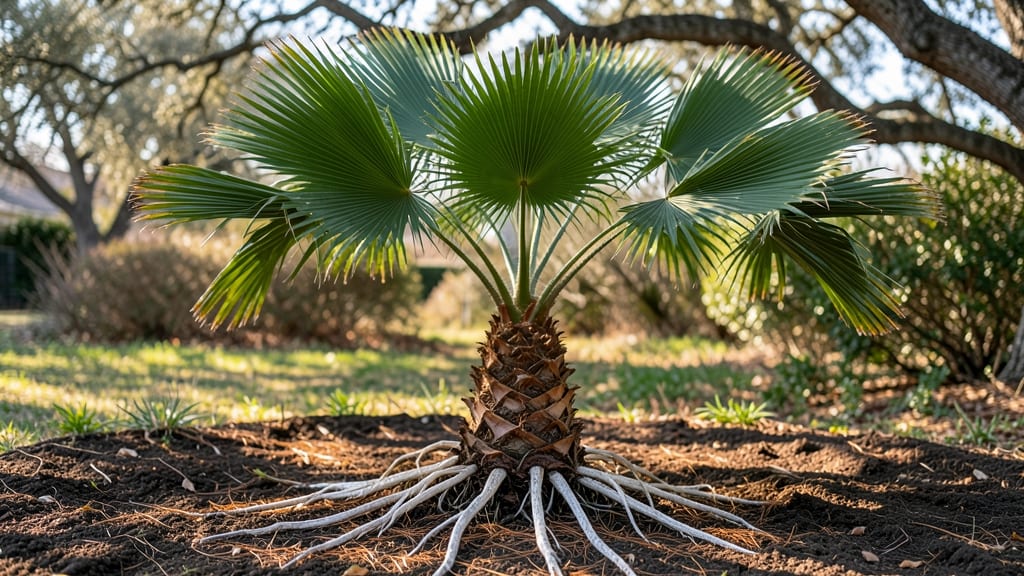
Palm trees thrive in the Pacific Northwest thanks to their fibrous root systems, which spread wide to anchor in shallow, wet soils—unlike tropical palms that rely on deep taproots.
I’ve watched my own palms weather our rainy winters by sending roots just inches below the surface, soaking up moisture while avoiding waterlogged roots. The key to their success? A well-drained soil mix that mimics their natural habitat.
Most Pacific Northwest palms develop shallow lateral roots that spread outward, creating a sturdy network perfect for our windy conditions. Unlike desert palms, they don’t need deep soil—just loose, airy mixes with organic matter to prevent compaction.
Overwatering is the biggest threat, so I always plant in raised beds or mounds to keep roots dry while still hydrated.
When planting, space palms 10-15 feet apart to give roots room to expand without competing. Amend native soil with compost and perlite for drainage, and avoid heavy clay. With the right setup, your palm’s roots will establish quickly, supporting lush fronds even in our cooler climate.
For beginners, the trick is patience—roots take 6-12 months to fully establish. Mulch lightly to retain moisture without suffocating the system, and watch for yellowing fronds, which often signal root stress. Once settled, these palms become low-maintenance giants that outlast our driest summers.
📚 In This Guide
- What you need
- Instructions
- Tips and common mistakes
- Wrapping up and next steps
What you need
- ● Garden trowel or digging spade – A sturdy, 5-7 inch wide trowel for careful root inspection (avoid sharp edges to prevent damage).
- ● Root viewer or clear plastic sheeting – A 4x6 ft sheet (or a DIY "root box" made from Plexiglas) to observe roots without disturbing the soil.
- ● Measuring tape (10-20 ft) – For tracking root spread and depth in mature palms.
- ● Soil probe or augur – A 1/2-inch diameter, 3-4 ft long tool to test root depth without harming the tree.
- ● pH test kit – PNW soils are often acidic; aim for a pH 5.5–6.5 for optimal palm root health.
- ● Organic mulch (pine bark or wood chips) – 2–4 inches of mulch to protect shallow roots from cold and erosion.
- ● Watering can or hose with a gentle spray nozzle – Palms need deep but infrequent watering (1–2 gallons per watering for young trees).
- ● Root stimulator (mycorrhizal fungi or seaweed extract) – Boosts root growth in poor or compacted PNW soils.
- ● Thermal imaging camera – For advanced root health monitoring (identifies stress zones in large palms).
- ● Root barrier fabric – 30–50 lb test weight to contain aggressive roots if planting near sidewalks or structures.
- ● Notebook & pencil – Track root growth patterns, soil conditions, and watering schedules over time.
- ● Gloves (heavy-duty) – Protects hands from sharp roots, thorns, and soil-borne pathogens.
How to understand and support a healthy palm tree root system
Palm trees thrive when their roots are given the right conditions—especially in challenging climates like the Pacific Northwest.
Assess the Natural Root Structure of Your Palm
Palm trees develop two primary root types: the fibrous root system (shallow, spreading roots) and the taproot (a single, deep anchor root). Most palms rely more on fibrous roots for stability and nutrient uptake, while the taproot anchors the tree against wind. In the Pacific Northwest, where soil can be dense and wet, these roots need proper aeration to prevent rot and suffocation.
Observe the soil surface around your palm. Healthy fibrous roots should spread outward 1.5 to 2 times the tree’s canopy width. If you notice roots circling tightly or growing upward (a sign of girdling), the tree may struggle to absorb water and nutrients efficiently. This often happens when planted too deeply or in containers without proper drainage.
Improve Soil Drainage and Aeration
Pacific Northwest soils often retain too much moisture, which can lead to root rot in palms. Amend the soil within the root zone (the area where roots naturally spread) with organic matter like compost or well-rotted wood chips. This improves drainage while retaining moisture during dry spells. Avoid heavy clay or compacted soil, as it restricts root growth and oxygen flow.
If your palm is in a container, ensure the pot has drainage holes and use a fast-draining potting mix blended with perlite or sand. Water only when the top 2 inches of soil feel dry—overwatering is the fastest way to suffocate roots. In ground-planted palms, create a slightly raised mound of amended soil at the base to encourage outward root growth rather than upward.
Mulch Strategically to Protect Roots
Apply a 3-inch layer of organic mulch (such as bark or wood chips) around the base of the palm, keeping it 6 inches away from the trunk to prevent moisture buildup against the stem. Mulch helps regulate soil temperature, retains moisture, and gradually breaks down to enrich the soil. In the Pacific Northwest’s cooler, wetter climate, this layer is especially critical for protecting roots from temperature fluctuations and fungal diseases.
Replenish mulch annually in early spring before new root growth begins. Avoid inorganic mulches like rocks, as they don’t improve soil structure or support microbial activity. Instead, choose slow-to-decompose organic materials to maintain long-term benefits without smothering roots.
Monitor for Root Stress and Disease
Watch for signs of root stress, such as yellowing fronds, slow growth, or wilting—these often indicate poor drainage or disease. In the Pacific Northwest, Phytophthora root rot is a common threat due to high humidity and wet soils. If you notice a foul odor near the base or fronds suddenly droop, inspect the roots for dark, mushy areas. Healthy roots should be firm, white to tan, and fibrous.
If rot is detected, prune affected roots with sterilized pruners and treat the area with a copper-based fungicide. For severe cases, consider transplanting the palm to a well-draining location with amended soil. Preventative care, like avoiding overhead watering and ensuring proper airflow, goes a long way in keeping roots healthy.
Adjust Watering for Root Health
Palms in the Pacific Northwest often face waterlogging during winter rains and drought stress in summer. Water deeply once a week during dry periods, allowing the soil to dry slightly between waterings. In containers, check moisture levels by inserting a finger 2 inches into the soil—water only when it’s dry. Overwatering leads to anaerobic conditions, where roots suffocate and rot.
For ground-planted palms, create swales or drainage channels around the base to redirect excess water away from the root zone. In containers, ensure pots are elevated slightly to prevent water pooling. Adjust your watering schedule seasonally: reduce frequency in winter and increase it during summer heatwaves.
Tips & tricks for supporting a healthy palm tree root system
Pacific Northwest palms need special care to thrive—here’s how to give their roots the best chance for long-term health.
Root Zone Expansion: The 1.5 to 2 times canopy width guideline in Step 1 is your target for healthy outward root spread. If you notice roots circling the trunk (a common issue in containers), gently tease them outward during repotting. This prevents girdling, which restricts nutrient flow. For ground-planted palms, avoid planting deeper than the root flare—the top of the root ball should sit slightly above ground level to encourage proper aeration.
Soil Amendment Strategy: When amending soil in Step 2, focus on creating a "sponge-like" texture within the root zone. Mix compost or wood chips into the top 12 inches of soil, but avoid piling it directly against the trunk. This prevents moisture buildup while improving drainage. For heavy clay soils common in the Pacific Northwest, consider adding coarse sand or perlite to break up compaction without altering the soil's organic structure.
Mulch Application Precision: That 3-inch mulch layer in Step 3 should be your first line of defense against temperature swings. Use chunky wood chips rather than fine mulch—they decompose more slowly and create better air pockets. In particularly wet winters, add a 1-inch layer of straw over the wood chips to further reduce moisture retention at the soil surface. Remember to keep it 6 inches from the trunk to prevent rot.
Early Disease Detection: The yellowing fronds and foul odor warnings in Step 4 are critical signs of root rot. If you suspect Phytophthora, don't wait—act immediately. Sterilize your pruners with rubbing alcohol between cuts, and consider adding a thin layer of horticultural sand to the soil surface after treatment. This creates a physical barrier against fungal spores while maintaining drainage.
Pro Tips for Root System On Palm Trees
- Pacific Northwest palms need special care to thrive—here’s how to give their roots the best chance for long-term health.
- Root Zone Expansion: The 1.5 to 2 times canopy width guideline in Step 1 is your target for healthy outward root spread.
- Soil Amendment Strategy: When amending soil in Step 2, focus on creating a "sponge-like" texture within the root zone.
Frequently asked questions
Got questions about palm tree roots? You’re not alone! Here are some of the most common inquiries—plus clear, practical answers to help you understand (and manage) your palm’s underground strength.
How deep do palm tree roots actually grow?
Palm tree roots typically spread wider than they grow deep, with most roots concentrated in the top 12–18 inches of soil. However, some species (like the Washingtonia or Sabal palms) can send roots 6–10 feet deep in search of water—especially in arid climates like the Pacific Northwest’s dry summers. Shallow roots make palms vulnerable to windthrow, so proper planting depth matters!
Why are palm tree roots damaging my driveway or sidewalk?
Palm roots seek moisture and nutrients, often growing toward cracks in concrete or underground utilities. If roots invade your pavement, it’s usually due to:
Palms prefer well-draining, slightly acidic soil (pH 5.5–7.0), but they’re adaptable. In the Pacific Northwest’s clay-heavy or waterlogged soils:
Pruning roots is rarely necessary but may be needed if they’re invading structures or competing with other plants. Here’s how to do it safely:
The PNW’s cool, damp winters limit palm options, but these hardy species thrive:
Pro tip: Install a root barrier (buried vertically) if you’re planting near structures.
Do palm trees need special soil for their roots to thrive?
Warning: Never plant palms in soggy soil—they’ll suffocate!
Can I prune palm tree roots, and how?
Caution: Over-pruning can stress the tree. Consult an arborist if roots are extensive.
What’s the best palm tree for the Pacific Northwest’s wet winters?
Pro tip: Plant in full sun and elevated beds to improve drainage and cold tolerance.
Wrapping up and next steps
Understanding the root system on palm trees reveals nature’s brilliant engineering—especially for thriving in the Pacific Northwest’s unique climate. These fibrous, shallow roots anchor resilience while adapting to moisture and soil conditions, proving that strength isn’t just above ground.
Whether you’re a gardener, landscaper, or simply curious, this knowledge empowers you to nurture these tropical beauties with confidence.
Ready to put your newfound expertise to work? Start small: research the best palm varieties for your region, prep your soil, and plant with care. Every root you nurture today grows into tomorrow’s thriving canopy! 🌱