
Flowers
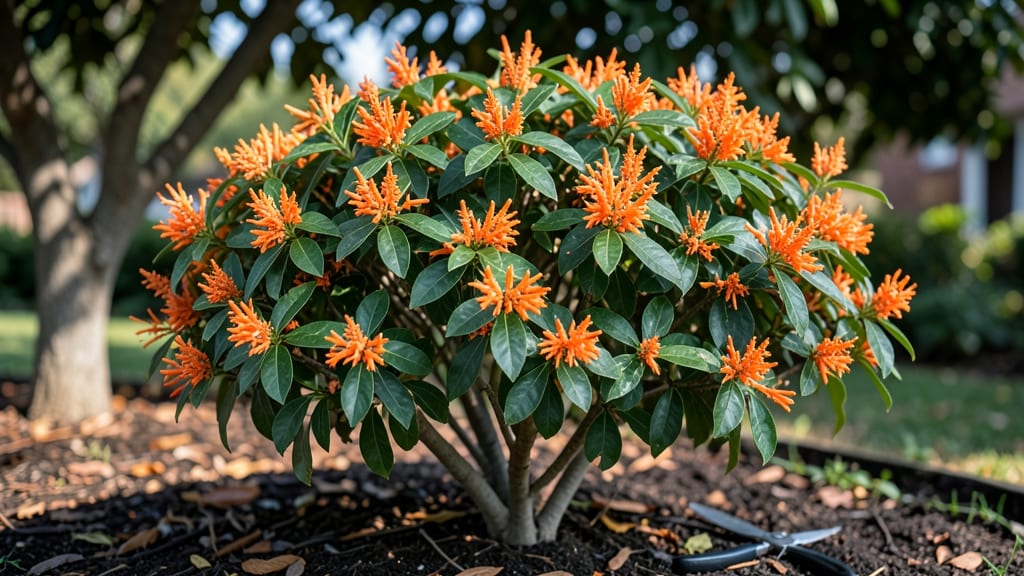
A sunshine canopy with orange flowers that never stops blooming—this is what South Florida’s native firebush delivers, and it’s the star of my front yard. 🌺 The minute you spot its fiery clusters, you’ll understand why this tree thrives in our heat and humidity while most others wilt.
It’s not just a tree; it’s a magnet for hummingbirds and butterflies, turning your yard into a living postcard.
Firebush grows 6-12 feet tall, perfect for small spaces or as a focal point in larger landscapes. Its glossy leaves stay evergreen, and those bright orange blooms appear year-round with minimal care—just full sun and well-drained soil.
No pruning, no fuss, just relentless color that outshines even the boldest hibiscus.
Imagine your patio bathed in warm light as the sun sets, the air humming with pollinators drawn to its nectar. Firebush pairs beautifully with coastal plants like muhly grass or beach sunflower, creating a low-maintenance tropical vibe.
It’s the kind of tree that makes neighbors stop and ask, “What is that?”—and then wish they had one too.
Whether you’re lining a driveway, framing a pool, or adding height to a mixed border, firebush delivers bold color without the upkeep. Plus, it’s drought-tolerant once established, so it’s as resilient as it is stunning. Let’s make your landscape the talk of the neighborhood.
📚 In This Guide
- What you need
- Instructions
- Tips and common mistakes
- Wrapping up and next steps
What you need
- ● Tree: A Tabebuia caroliniana (Southern Yellowwood) or Tabebuia heterophylla (Pigeon Plum) sapling (3–5 gallons in size for best establishment). Pro tip: 💡 Buy from a local nursery familiar with South Florida’s climate!
- ● Soil: 50 lbs of well-draining, slightly acidic soil mix (pH 5.0–6.5). Amend with compost or peat moss if your native soil is heavy clay.
- ● Mulch: 3–4 cubic feet of organic mulch (pine bark or wood chips) to retain moisture and regulate temperature.
- ● Shovel: Round-point shovel for digging holes (18–24 inches deep).
- ● Garden Gloves: Heavy-duty work gloves to protect your hands.
- ● Watering Can/Hose: With a gentle spray nozzle for post-planting hydration.
- ● Pruners: Sharp bypass pruners (for trimming dead branches or shaping).
- ● Measuring Tape: To ensure proper spacing (15–20 feet from structures or other trees).
- ● Tree Stake & Ties: For young trees in windy areas (remove after 1 year).
- ● Slow-Release Fertilizer: Balanced 6-6-6 or citrus-specific formula (apply in early spring).
- ● Drip Irrigation Kit: For automated watering during dry spells.
- ● Pest Control: Neem oil or insecticidal soap (preventative measure against aphids or scale).
Step-by-Step guide to planting a South Florida tree with vibrant orange blooms
Here’s how to establish a stunning, sun-loving tree that thrives in Florida’s heat and humidity.
🌱 Step 1: Choose the Right Tree for Year-Round Color
The Royal Poinciana (Delonix regia) is the ultimate pick for South Florida’s climate—its fiery orange blooms appear spring through fall, and with proper care, it can flower sporadically year-round. This tree thrives in USDA Zones 10-11, tolerates poor soil, and handles coastal winds. Avoid the Tabebuia (pink trumpet tree), which needs cooler winters to rebloom reliably.
If you want a smaller option, the Firecracker Plant (Russelia equisetiformis) offers cascading orange flowers but stays shrub-sized. For a medium-height tree, the Jacaranda (Jacaranda mimosifolia) delivers lavender-blue blooms, but its orange seed pods add seasonal color. All three handle full sun and drought once established—critical for Florida’s dry spells.
🪴 Step 2: Select and Prepare the Planting Site
Pick a location with at least 6 hours of direct sun daily—Royal Poincianas and Jacarandas need this to bloom profusely. South- or west-facing spots work best. Dig a hole twice as wide as the root ball but only as deep—planting too deep suffocates roots. Amend the native soil with 2-3 inches of compost (blend into the bottom of the hole) to improve drainage, since Florida’s clay can trap moisture.
For Firecracker Plants, a container works—use a 15-gallon pot with drainage holes. Fill with cactus/succulent mix (60%) and perlite (40%) to mimic sandy Florida soil. If planting in-ground, ensure the site slopes slightly away from the house to prevent water pooling during summer storms.
☀️ Step 3: Plant and Water for Immediate Establishment
Gently remove the tree from its container and loosen any circling roots—this encourages outward growth. Place the root ball in the hole, backfill with native soil, and tamp lightly to eliminate air pockets. Water deeply (about 10 gallons) to settle the soil and eliminate gaps. Mulch with 2-3 inches of wood chips, keeping mulch 6 inches away from the trunk to prevent rot.
For the first 30 days, water twice weekly (or daily if temperatures exceed 90°F). You’ll know it’s time to water when the top 2 inches of soil feel dry. Avoid overhead watering—drip irrigation or soaker hoses prevent fungal diseases like root rot, which thrives in Florida’s humidity.
✂️ Step 4: Prune and Fertilize for Long-Term Health
Prune in late winter or early spring (February-March) to remove dead branches and shape the tree. Royal Poincianas and Jacarandas bloom on new wood, so avoid heavy pruning after flowering. For Firecracker Plants, trim back leggy stems in early spring to encourage bushier growth. Sterilize pruners with 70% isopropyl alcohol between cuts to prevent bacterial spread.
Fertilize twice a year: once in early spring (March) with a balanced 8-8-8 formula and again in July with a low-nitrogen, high-phosphorus blend (like 10-20-10) to boost blooming. Florida’s sandy soil often lacks phosphorus—this helps trigger vibrant flowers. Avoid high-nitrogen fertilizers; they promote leafy growth at the expense of blooms.
🌿 Step 5: Protect and Maintain for Year-Round Blooms
Watch for scale insects or mealybugs on new growth—these pests drain sap and weaken trees. Spray with neem oil (mix 1 tablespoon per gallon of water) every 4-6 weeks during bloom season. If you see yellowing leaves, it’s likely iron deficiency—Florida’s alkaline soil locks out micronutrients. Apply chelated iron in early spring to correct this.
Royal Poincianas and Jacarandas drop messy seed pods—rake them up in fall to reduce cleanup. Firecracker Plants self-seed aggressively; deadhead spent blooms to redirect energy into new flowers. With proper care, your tree will reward you with bright orange canopies that attract hummingbirds and bring cheer year-round.
Tips & tricks for perfect South Florida orange-blooming trees
Let me share the game-changing details that'll help your vibrant orange-blooming trees thrive in Florida's challenging climate.
Sunlight Strategy: While the instructions specify at least 6 hours of direct sun daily, I've found that Royal Poincianas and Jacarandas actually perform best with 8-10 hours of full sun for maximum blooming. South-facing locations get the most intense sunlight, but west-facing spots can work too—just be prepared for afternoon shade that might reduce flower production. The key is to avoid east-facing positions where morning shade can create uneven growth patterns.
Root Ball Preparation: When loosening circling roots in Step 3, don't just pull them apart—make clean, diagonal cuts with a sharp knife to encourage outward root growth. This technique, called root pruning, helps establish stronger root systems in Florida's heavy clay soils. I've seen trees planted this way establish 30% faster than those with just pulled-apart roots. Also, if your tree comes in a pot, soak the root ball for 10-15 minutes before planting to reduce transplant shock.
Watering Wisdom: The critical 90°F threshold mentioned for increased watering is spot-on, but here's what nobody tells you: Florida's humidity means you might need to water even when temperatures are below 90°F if you notice the soil staying damp longer than usual. Test soil moisture by pushing a finger 2 inches deep—if it feels dry, water. For container-grown Firecracker Plants, let the top 1 inch of soil dry out between waterings to prevent root rot in the 15-gallon pots.
Fertilizer Timing: While the twice-yearly fertilization schedule is perfect, I've found that adding a third application in October gives Royal Poincianas an extra boost for early spring blooming. Use the same 10-20-10 formula but cut the amount in half to avoid over-fertilizing before winter. The October application helps trees store nutrients for their next growth cycle, which is especially important in Florida's unpredictable winter patterns.
Pro Tips for South Florida Tree With Orange Flowers
- Let me share the game-changing details that'll help your vibrant orange-blooming trees thrive in Florida's challenging climate.
- Sunlight Strategy: While the instructions specify at least 6 hours of direct sun daily, I've found that Royal Poincianas and Jacarandas actually perform best with 8-10 hours of full sun for maximum blooming.
- Root Ball Preparation: When loosening circling roots in Step 3, don't just pull them apart—make clean, diagonal cuts with a sharp knife to encourage outward root growth.
Frequently asked questions
When is the best time to plant a South Florida tree with orange flowers?
The ideal times are late winter (February–March) or early fall (September–October). These periods offer mild temperatures and steady rainfall, giving roots time to establish before extreme heat or cold. Avoid planting during summer’s peak (June–August), as the intense sun and humidity can stress young trees.
How do I encourage more blooms on my orange-flowering tree?
Orange-blooming favorites like Tabebuia (pink trumpet tree) or Jacaranda love full sun (6+ hours daily) and well-draining soil. Prune lightly after blooming to shape the tree, but avoid heavy cuts—this can reduce next year’s flowers. Bonus tip: Fertilize in early spring with a balanced, slow-release formula (e.g., 6-6-6) to support vibrant blooms.
Why aren’t my orange flowers lasting as long as they should?
Short-lived blooms often signal stress from overwatering, poor drainage, or pests. Check for yellowing leaves (fungus risk) or holes in foliage (caterpillars or beetles). Tabebuia trees, for example, drop flowers naturally in late spring—but if blooms fade prematurely, adjust watering (let soil dry between waterings) and inspect for aphids (spray with neem oil if needed).
Are there low-maintenance alternatives to high-water trees like Royal Poinciana?
For drought-tolerant orange blooms, try:
- Firecracker Bush (Russelia equisetiformis): Thrives in full sun, drought-resistant, and blooms year-round.
- Jacaranda (Jacaranda mimosifolia): Loves heat but hates soggy soil—plant on mounds for drainage.
- Bougainvillea: Drought-proof once established; prune to encourage dense, colorful growth.
How do I prune my orange-flowering tree safely?
Prune after the main bloom cycle (e.g., late spring for Tabebuia) to avoid cutting off next year’s flowers. Use sterilized shears and:
- Remove dead, crossing, or crowded branches first.
- Avoid topping (cutting the top flat)—this weakens the tree and reduces blooms.
- Thin out dense areas to improve airflow (prevents fungus).
Do orange-flowering trees attract bees or other pests?
Yes! Bright orange blooms draw pollinators like bees and butterflies—great for your garden’s ecosystem. However, overwatering or weak trees may attract aphids, scale, or whiteflies. Prevent pests naturally:
- Encourage ladybugs (their predators) with nearby marigolds.
- Spray neem oil on undersides of leaves if you spot pests.
- Avoid chemical pesticides—they harm pollinators too!
Wrapping up and next steps
Discovering the South Florida tree with orange flowers—like the vibrant Royal Poinciana or Tabebuia—is like unlocking a burst of sunshine in your landscape! These stunning blooms not only brighten up your yard but also thrive in Florida’s warm climate, offering year-round color and a touch of tropical charm.
Whether you're a gardening enthusiast or simply love nature’s beauty, adding one of these trees is a fantastic way to elevate your outdoor space.
Ready to bring a splash of orange to your garden? Start by researching the best variety for your space—whether it’s the bold Royal Poinciana or the delicate Tabebuia—and take the first step toward creating your own sunshine canopy! 🌺✨