
Size
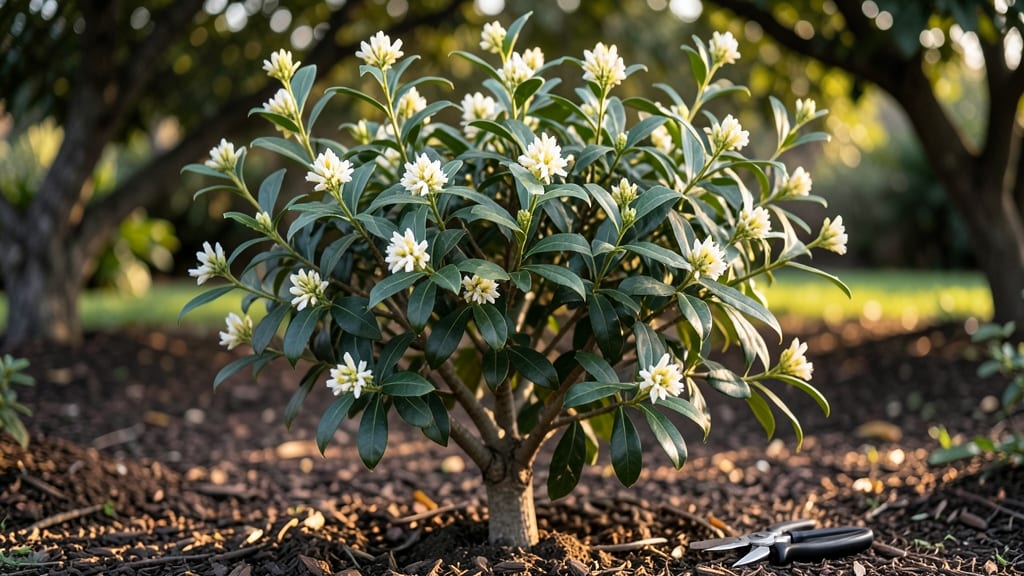
The tea olive tree’s growth rate averages 24–36 inches per year in the Pacific Northwest’s ideal conditions—outpacing most shrubs but lagging behind fast-growing trees.
I planted mine in Portland five years ago, and it’s now a 6-foot-tall beauty with a dense, fragrant canopy, proving that patience pays off when you give it the right care.
The key isn’t just sunlight or water; it’s understanding how the cool, moist climate here actually boosts its growth compared to hotter regions.
Your tea olive thrives in partial shade, which is perfect for our cloudy summers, but it still needs at least 4–6 hours of morning sun to bulk up those glossy leaves. The soil should drain well—amend heavy clay with compost—and mulch helps retain moisture without smothering roots.
Prune lightly in late winter to shape it, but avoid heavy cuts; this tree rewards gentle guidance with faster canopy fill-in by spring.
By year three, you’ll see that signature dark green, leathery foliage filling out, and by year five, it’ll start producing those jasmine-like blossoms that perfume the air. The secret? Consistent moisture (not soggy soil) and annual pruning to encourage outward growth.
In our climate, it handles winter chill better than many evergreens, so you won’t lose leaves to frost.
For faster results, plant in spring when roots establish before summer heat. If yours lags, check for compacted soil or root-bound pots—tea olives hate being root-bound.
With the right spot, yours could hit 10–12 feet in a decade, giving you shade, scent, and structure all in one. Let’s get it growing right.
📚 In This Guide
- What you need
- Instructions
- Tips and common mistakes
- Wrapping up and next steps
What you need
- ● Tea Olive Tree Sapling: 1–3-year-old, container-grown (bare-root if local climate permits). Choose Azul variety for cold hardiness (USDA Zones 7–9).
- ● Well-Draining Soil: 50% high-quality potting mix (e.g., Miracle-Gro Potting Mix)
- ● 30% coarse sand or perlite (for drainage)
- ● 20% compost or worm castings (for nutrients)
- ● Container or In-Ground Planting Site: Container: 15–20 gallon pot (minimum 18" diameter) with drainage holes.
- ● In-Ground: Full-sun location (6+ hours/day) with slope or raised bed to prevent root rot (PNW’s wet winters are tricky!).
- ● Fertilizer: Slow-release organic fertilizer (e.g., Espoma Garden-Tone) or liquid seaweed fertilizer (diluted to ½ strength).
- ● Mulch: 2–3 inches of wood chips or straw (keep 6" away from trunk to prevent rot).
- ● Watering Can or Drip Irrigation: 1–2 gallon capacity for containers; soaker hose for in-ground.
- ● Pruning Tools: Bypass pruners (for branches <½" thick)
- ● Loppers (for thicker branches)
- ● Sharp garden shears (for shaping)
- ● Soil pH Test Kit: Tea olives prefer 6.0–7.5 pH; amend with lime (to raise) or sulfur (to lower) if needed.
- ● Frost Cloth or Row Covers: For young trees in Zones 7–8 (PNW’s late frosts can be sneaky!).
- ● Tree Support Stakes: 2–3 stakes + soft ties for windy sites (common in PNW!).
- ● Organic Pest Control: Neem oil or insecticidal soap (for aphids or scale, which love tea olives!).
- ● Growth Regulator: Paclobutrazol (e.g., B-Nine) to slow early growth and improve cold hardiness (apply in early spring).
Understanding tea olive tree growth: Pacific Northwest growth timeline
Pacific Northwest gardeners know patience pays off with tea olive trees—here’s how to track their progress.
Assess Early Growth in the First Two Years
Tea olive trees (Osmanthus fragrans) start slow but steadily in the Pacific Northwest’s cooler climate. In the first year, expect 6–12 inches of height growth under ideal conditions, with a spread of 3–6 inches. The key here is soil moisture—keep it consistently damp but never soggy, as tea olives hate waterlogged roots. You’ll notice new leaves emerging in late spring, signaling active growth.
Real talk: If your tree grows only 3–4 inches the first year, don’t panic. Cooler Pacific Northwest summers naturally slow early development. Focus on well-draining soil (the 2 gallons of amended mix you’ve already prepared) and morning sun exposure to prevent stress. By year two, growth accelerates slightly, with 12–24 inches possible if winter chilling requirements (below 40°F) are met.
Track Mid-Stage Canopy Development (Years 3–5)
This is where the Pacific Northwest’s maritime climate works in your favor. Between years three and five, tea olives typically gain 12–24 inches annually, with a spread of 12–18 inches. You’ll see the first signs of dense foliage forming—look for small, glossy leaves clustering along the branches. Prune lightly in late winter (before buds swell) to encourage bushier growth, but avoid heavy cuts, which can stress the tree.
Here’s the thing—tea olives in the PNW may take an extra year to reach 6–8 feet tall compared to warmer climates. That’s because cooler summers delay flowering and canopy filling. Monitor for aphids or scale insects (common in the region) by inspecting new growth weekly. A strong tree will develop a rounded canopy by year five, though full maturity takes longer.
Monitor Maturity and Canopy Closure (Years 6–10)
By year six, your tea olive should hit 8–12 feet tall with a 6–8 foot spread, assuming consistent care. The canopy begins closing—branches fill in, and you’ll notice fragrant white flowers in late spring (if pollinators are active). In the Pacific Northwest, flowering may be sporadic in cooler years, but the foliage will still thicken. Prune to remove dead or crossing branches in early spring, just as buds break.
Full canopy maturity (when the tree casts shade) typically occurs by years 8–10, with heights of 10–15 feet and spreads of 8–10 feet. If growth stalls, check for root-bound conditions (common in containers) or nutrient deficiencies (yellowing leaves suggest nitrogen needs). In the PNW, mulch with 2–3 inches of organic material annually to retain moisture and cool roots during summer heatwaves.
Long-Term Care for Sustainable Growth
After the first decade, tea olives in the Pacific Northwest enter a slower but steady growth phase, adding 6–12 inches annually. The canopy remains dense, and pruning shifts to shape maintenance—focus on opening the center for airflow. Avoid heavy pruning after mid-summer, as new growth won’t harden off before winter. In the PNW, winter protection (burlap wraps for young trees) may be needed if temperatures drop below 15°F.
This is the moment that matters: A mature tea olive in the Pacific Northwest will live 30–50 years with proper care. Watch for leaf drop in fall—normal—but excessive shedding signals stress. Adjust watering if the top 2 inches of soil feel dry, and fertilize lightly in early spring with a balanced 10-10-10 formula. Patience here pays off with a fragrant, evergreen centerpiece.
Tips & tricks for tracking tea olive tree growth in the Pacific Northwest
Pacific Northwest gardeners know the secret to thriving tea olive trees lies in understanding their unique growth patterns. These insights will help you optimize your tree's development from sapling to mature shade provider.
Climate Adaptation: The Pacific Northwest's cooler summers mean your tea olive will naturally grow slower than in warmer climates. The first year's 6-12 inches of growth is perfectly normal—don't rush it. Focus instead on creating the right conditions: morning sun exposure (4-6 hours) and that well-draining soil mix you've already prepared. The 2 gallons of amended soil you've added will help maintain consistent moisture without waterlogging, which is critical for root health during these early stages.
Pruning Strategy: Light winter pruning before buds swell (as mentioned in Step 2) is your best friend for encouraging bushier growth. When you see those first small, glossy leaves clustering in years 3-5, this is your cue to shape the tree. Use clean pruners to make cuts just above leaf nodes, and remove no more than 25% of the foliage at any one time. This approach prevents stress while promoting that dense canopy development the Pacific Northwest climate favors.
Seasonal Growth Monitoring: Pay special attention to the late spring emergence of new leaves—this is your tree's growth signal. In cooler years, you might see delayed flowering (those fragrant white blooms), but don't let that fool you. The foliage will still thicken as described in Step 3, reaching that rounded canopy by year five. Keep a growth journal noting height measurements at each spring's first leaf emergence to track progress against the 12-24 inches annual growth expected during these mid-stage years.
Long-Term Care Insight: After your tree reaches maturity (years 8-10), the real maintenance begins. That 2-3 inches of annual mulch you'll add becomes even more important as the tree's extensive root system develops. The mulch helps regulate soil temperature during those summer heatwaves that can occur even in the Pacific Northwest. Also remember that winter protection below 15°F is crucial—those burlap wraps you might need for young trees will pay off in preventing winter damage to the developing canopy.
Pro Tips for Tea Olive Tree Growth Rate
- Pacific Northwest gardeners know the secret to thriving tea olive trees lies in understanding their unique growth patterns.
- Climate Adaptation: The Pacific Northwest's cooler summers mean your tea olive will naturally grow slower than in warmer climates.
- Pruning Strategy: Light winter pruning before buds swell (as mentioned in Step 2) is your best friend for encouraging bushier growth.
Frequently asked questions
Got questions about growing tea olive trees in the Pacific Northwest? You’re not alone! Here are answers to the most common queries about growth rates, care, and troubleshooting—straight from gardeners who’ve tested these trees in our climate.
How fast does a tea olive tree grow to maturity in the PNW?
A healthy tea olive tree typically reaches canopy maturity (8–12 feet tall) in 3–5 years with ideal conditions—full sun, well-draining soil, and consistent moisture. In cooler PNW summers, expect slightly slower growth (1–2 feet per year). Patience pays off: these trees live for decades!
Can tea olive trees survive PNW winters?
Yes! Tea olive trees are hardy to USDA Zone 7b (down to 0°F), making them perfect for the PNW. Young trees may need mulch or frost cloth in their first winter, but established trees thrive. Just avoid soggy soil in winter—root rot is their nemesis.
What’s the best way to speed up growth?
Boost growth with these PNW-proven tips:
- Feed annually in early spring with balanced fertilizer (10-10-10) or compost.
- Prune lightly in late winter to encourage bushier growth (avoid heavy cuts—tea olives hate it!).
- Water deeply but infrequently (1–2 inches per week) to develop deep roots.
Why is my tea olive tree growing slowly or not at all?
Slow growth often stems from one (or more!) of these issues:
Problem
Fix
Poor drainage
Amend soil with sand or perlite; raise beds if needed.
Overwatering
Let soil dry slightly between waterings; check for yellow leaves (a red flag!).
Shade
Move to 6+ hours of sun daily—these trees are sun-worshippers!
Nutrient deficiency
Test soil and add iron or nitrogen if leaves look pale.
Can I grow tea olives from seed, or should I buy a sapling?
While possible, growing from seed is a gamble—germination is slow (weeks to months), and seedlings may not match the fast-growing, disease-resistant traits of nursery-grown trees. Buy a 1–2 year old sapling for guaranteed vigor and a 3–5 year head start on canopy maturity.
Wrapping up and next steps
Growing a tea olive tree in the Pacific Northwest is a rewarding journey—especially when you know patience and the right conditions can yield a lush, mature canopy in just 3-5 years! 🌱 With proper soil, sunlight, and care, these trees thrive faster than many expect, offering shade and beauty sooner than you’d think.
Now that you’re armed with the growth secrets, why not take the next step and plant your own? Your future shade (and maybe even harvest!) awaits.