
Pruning
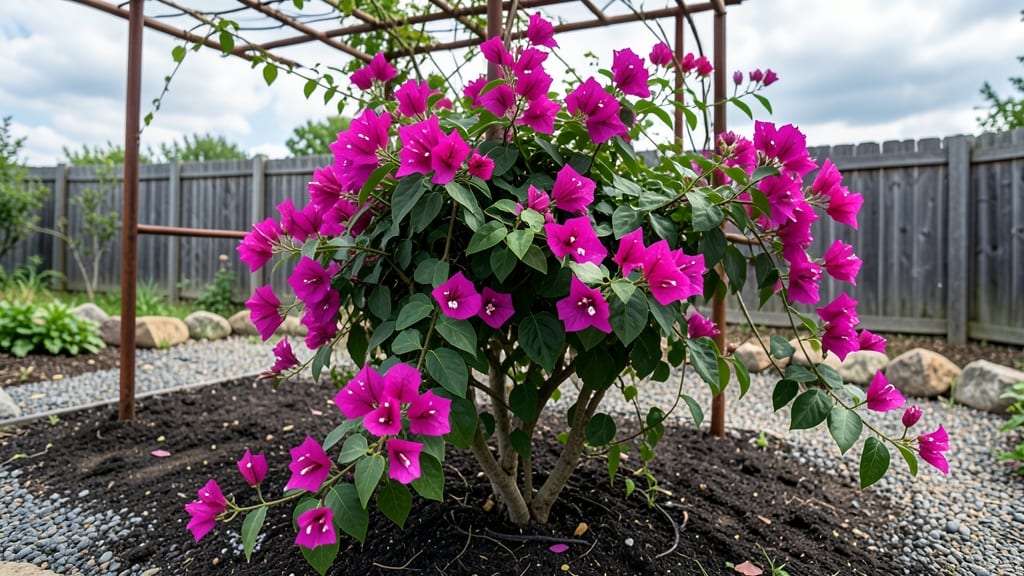
A bougainvillea patio tree turns any small space into a vibrant tropical escape with its bold, year-round color—no pruning skills required. 🌺 I’ve watched mine transform a dull corner of my patio into a sun-drenched jewel in just a few months, and the best part?
It thrives in containers, making it perfect for renters or urban gardeners.
This isn’t just a plant; it’s a statement piece that pairs beautifully with drought-tolerant companions like lavender or succulents. Place it where it gets at least 6 hours of sun daily, and you’ll reward it with bursts of pink, purple, or orange that last well beyond summer.
The key is minimal shaping—just trim back leggy growth in early spring to keep it compact and bushy.
Imagine sipping morning coffee beneath a cascade of blooms that never quit, even in mild winters. With the right placement and a little seasonal care, your bougainvillea will become the star of your outdoor living space, drawing admiring glances from neighbors and pollinators alike. Let’s make your patio pop!
Whether you’re working with a balcony, courtyard, or rooftop garden, this tropical beauty adapts effortlessly. We’ll cover the best companion plants, container sizes, and even how to overwinter it in cooler climates—so you can enjoy its drama all year. Ready to bring the tropics home?
📚 In This Guide
- What you need
- Instructions
- Tips and common mistakes
- Wrapping up and next steps
What you need
- ● Bougainvillea plant: Choose a healthy, well-established patio-friendly variety (e.g., Bougainvillea ‘San Diego Red’ or ‘California Gold’). 1 plant per container (15–20 gallons for mature trees).
- ● Container: A large, well-draining pot with drainage holes (15–20" diameter for mature trees). Terracotta or fiberglass pots work best.
- ● Potting mix: Cactus/succulent mix (5–10 gallons) or a blend of 50% potting soil + 50% perlite/pumice for optimal drainage.
- ● Slow-release fertilizer: Balanced 10-10-10 or 20-20-20 (1–2 tbsp per application).
- ● Pruning tools: Bypass pruners (for clean cuts)
- ● Loppers (for thicker stems)
- ● Gloves (thick leather or pruning gloves)
- ○ Optional but helpful: Mulch (gravel or bark chips) to retain moisture
- ● Support stake (for young or top-heavy trees)
- ● Watering can or hose with a gentle spray nozzle
- ● Plant food (liquid fertilizer for mid-season boosts)
- ● Prerequisites: Full sun location (6+ hours daily)
- ● Access to water (drip irrigation or manual watering)
- ● Basic knowledge of bougainvillea growth habits (they bloom on old wood!)
Step-by-Step guide for cultivating a thriving bougainvillea patio tree
Here’s how to grow a vibrant, low-maintenance bougainvillea that blooms nonstop with just a few simple tricks.
🌱 Step 1: Choose the Perfect Spot for Sun and Shelter
Bougainvillea craves full sun—at least 6-8 hours daily—but it also needs protection from harsh winds and freezing temperatures. Place your patio tree in a south- or west-facing location where it gets morning sun and afternoon warmth. If you’re in a cooler climate, move it indoors during winter or wrap the pot in burlap to shield roots from cold drafts.
I always check the spot by observing how long sunlight lingers—if shadows creep over by mid-afternoon, supplement with a grow light for 4-6 hours in the evening. The goal is to mimic its natural tropical habitat without overstressing the plant. A sheltered patio, balcony, or even a large container near a sunny wall works perfectly.
☀️ Step 2: Plant in Well-Draining Soil and a Sturdy Container
Use a large, sturdy pot (at least 18-24 inches wide and deep) with drainage holes—bougainvillea hates soggy roots. Fill the bottom with 2-3 inches of gravel or perlite to improve drainage, then add a cactus or succulent mix (or regular potting soil amended with 20% perlite or sand). This prevents root rot, which is the #1 killer of patio bougainvilleas.
When planting, bury the root ball just slightly deeper than it was in the nursery pot. Gently firm the soil around the roots and water deeply until it drains freely from the bottom. The first few weeks are critical—keep the soil evenly moist but never waterlogged. You’ll know it’s right when the top inch feels dry to the touch before the next watering.
💧 Step 3: Water and Feed for Continuous Blooms
Water your bougainvillea deeply once a week during warm months, letting the soil dry out completely between waterings. Overwatering causes yellow leaves and stunted growth, while underwatering leads to droopy, wilted branches. The key is to water thoroughly—until it runs out the drainage holes—then wait until the top 2 inches of soil feel dry before repeating.
Feed with a balanced, water-soluble fertilizer (like 10-10-10) every 4-6 weeks during the growing season (spring through fall). I swear by a high-phosphorus fertilizer (like 5-10-5) in early summer to encourage more vibrant blooms. Stop fertilizing in late fall to let the plant rest—this prevents weak, leggy growth and ensures stronger blooms next season.
✂️ Step 4: Prune Strategically for Shape and Health
Bougainvillea thrives with minimal pruning, but a little shaping goes a long way. Prune right after the last frost (or in early spring) to remove dead, damaged, or crossing branches. Cut just above a leaf node or bud to encourage new growth. Avoid heavy pruning in fall—it stimulates tender new shoots that won’t survive winter.
For a fuller look, pinch back the tips of new growth in early summer. This triggers bushier growth and more blooms. I always use clean, sharp pruners and disinfect them with rubbing alcohol between cuts to prevent disease. Never prune more than one-third of the plant at once—bougainvillea recovers slowly from harsh cuts.
🪴 Step 5: Overwinter for Next Year’s Color
If your bougainvillea is in a pot, move it to a bright, cool indoor space (like a sunroom or garage) where temperatures stay between 45-55°F. Reduce watering to every 2-3 weeks and stop fertilizing entirely. Check for pests—bougainvillea often attracts spider mites in dry indoor air, so spray with neem oil if you spot webbing or tiny dots on leaves.
In late winter (around February), trim back any leggy growth by one-third to encourage fresh, vigorous shoots. This is also the time to repot if roots are circling the container. Once nighttime temperatures stay above 50°F consistently, move it back outdoors to a sheltered spot and gradually reintroduce sunlight over 1-2 weeks to avoid shock.
Tips & tricks for perfect bougainvillea patio tree growth
Here's what I've learned from years of growing these stunning patio trees—simple secrets that make all the difference for vibrant blooms and healthy growth.
Sunlight Strategy: In Step 1, when checking your spot for that crucial 6-8 hours of sun, pay attention to the time of year. Shadows change dramatically between summer and winter—what seems perfect in June might be too shady in September. I always mark the sunniest spots with a temporary flag in early spring to plan my patio layout. That extra 4-6 hours of grow light in the evening during shorter days can be a total game-changer for consistent blooming.
Root Health Secret: The 2-3 inches of gravel or perlite at the bottom of your pot in Step 2 isn't just for drainage—it's your plant's insurance policy. I've seen bougainvilleas thrive with this simple layer even when watered slightly more than the recommended once-a-week schedule. The key is that this layer prevents water from sitting directly on roots, which keeps them happy and oxygenated. For extra insurance, I add a handful of orchid bark to the soil mix—it holds moisture without compacting like regular soil.
Pruning Precision: When you're doing that early spring pruning in Step 4, look for those tiny leaf nodes or buds where new growth emerges. Cutting just above these points (about 1/4 inch above) gives your plant the best chance to regrow. I always make my cuts at a slight angle to prevent water from pooling on the cut surface. And here's a pro move: after pruning, I dip the cut ends in cinnamon powder—it acts as a natural fungicide and helps prevent infections.
Winter Transition Tip: That February repotting and trimming in Step 5 is your chance to give your bougainvillea a fresh start. I like to use this time to refresh the soil completely—just remove the top 2 inches of old soil and replace it with fresh mix. This removes any salt buildup from fertilizers and gives roots fresh nutrients for the coming season. The gradual reintroduction of sunlight over 1-2 weeks is absolutely critical—think of it like sunbathing after winter hibernation!
Pro Tips for Bougainvillea Patio Tree
- Here's what I've learned from years of growing these stunning patio trees—simple secrets that make all the difference for vibrant blooms and healthy growth.
- Sunlight Strategy: In Step 1, when checking your spot for that crucial 6-8 hours of sun, pay attention to the time of year.
- Root Health Secret: The 2-3 inches of gravel or perlite at the bottom of your pot in Step 2 isn't just for drainage—it's your plant's insurance policy.
Frequently asked questions
Got questions about keeping your bougainvillea patio tree thriving with vibrant color and minimal fuss? Here are some of the most common queries—and their straightforward answers!
How often should I prune my bougainvillea patio tree?
Prune your bougainvillea lightly 2-3 times a year: after flowering (to shape), in early spring (to encourage new growth), and after a hard frost (if in cold climates). Avoid heavy pruning—bougainvillea blooms on new wood, so trimming too much can reduce flowers. Focus on removing dead or leggy stems instead!
Can bougainvillea patio trees survive winter?
Most bougainvillea varieties thrive in USDA zones 9-11, but with care, you can grow them in cooler areas! In colder climates, prune back by ⅓ in late fall, wrap the trunk in burlap, and mulch heavily. Move potted trees to a sheltered spot or indoors (with bright light). Hardier varieties like Bougainvillea 'San Diego Red' tolerate brief cold snaps better.
Why isn’t my bougainvillea blooming?
Bougainvillea blooms need full sun (6+ hours/day) and balanced care. Over-fertilizing (especially with nitrogen) promotes lush leaves but fewer flowers. Try this: reduce water slightly, prune back leggy growth, and feed with a low-nitrogen, high-phosphorus fertilizer (like 5-10-10) in spring. Stress from heat or drought can also trigger blooms!
What’s a good alternative if bougainvillea is too high-maintenance?
If bougainvillea’s pruning needs feel overwhelming, try these low-maintenance patio trees with year-round color:
- Dwarf Meyer Lemon Tree: Thrives in pots, fragrant blooms, and edible fruit!
- Jasmine (Trachelospermum jasminoides): Fast-growing, drought-tolerant, and perfumed.
- Olive Tree (Olea europaea): Hardy, silvery foliage, and minimal pruning needs.
- Abelia (Abelia x grandiflora): Blooms spring to fall with almost no fuss.
All of these handle pruning lightly and add color without the bougainvillea’s intensity.
Are bougainvillea patio trees toxic to pets or kids?
Bougainvillea is non-toxic to both pets and humans, according to the ASPCA. However, the thorns can cause minor scratches, so keep an eye on curious paws or tiny hands. If ingested in large amounts, it may cause mild stomach upset, but it’s generally safe for curious critters to explore.
Wrapping up and next steps
Transforming your patio into a vibrant oasis with a bougainvillea patio tree is easier than you think! 🌸 With its stunning year-round blooms and low-maintenance pruning needs, this beauty is the perfect addition to any outdoor space.
Whether you're a seasoned gardener or just starting out, its resilience and adaptability make it a winner.
Ready to get started? Grab your pruning shears, pick a sunny spot, and let your bougainvillea thrive! 🌞 With just a little care, you’ll enjoy a colorful patio retreat all year long.