
Pruning
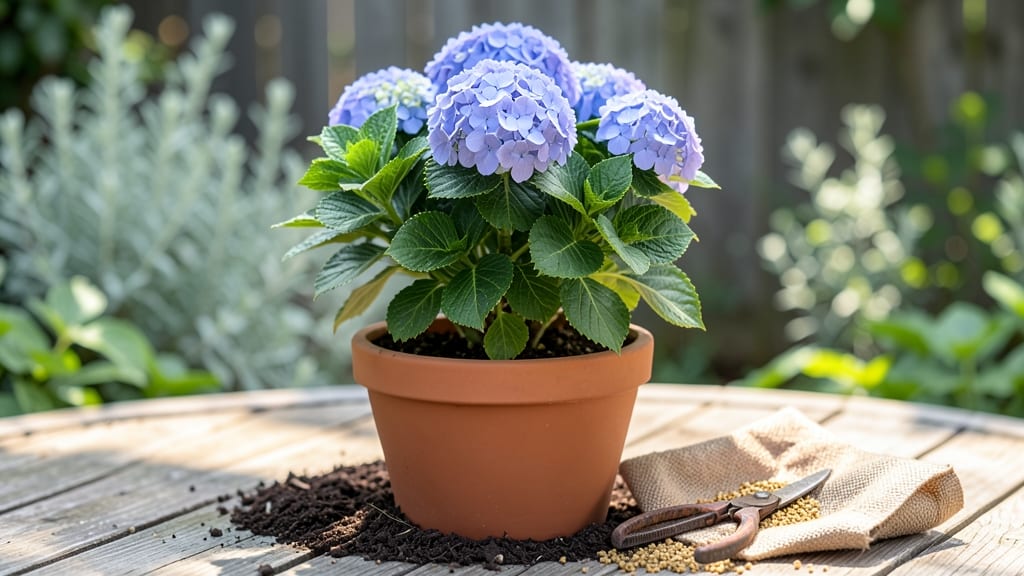
Dwarf hydrangea trees bring year-round color to Pacific Northwest gardens with their bold blooms and glossy foliage—if you prune them right. 🌿 I’ve learned the hard way that skipping this step means flopping branches and fewer flowers, but the right cuts transform these shrubs into the showstopper of any landscape.
The secret lies in timing and technique: prune in late winter or early spring before new growth appears, and always cut just above a leaf bud or lateral branch. Pacific Northwest’s mild winters mean you can extend the season by shaping lightly in fall too—just avoid heavy cuts after August.
With the right approach, your dwarf hydrangea will reward you with vibrant blooms from spring through fall and even winter interest from its sturdy stems.
You’ll end up with a compact, well-shaped shrub that fits perfectly in borders, containers, or as a focal point. The blooms stay longer and fuller than store-bought cut flowers, and the foliage turns shades of burgundy in fall.
Plus, these trees thrive in partial shade, making them ideal for spots where sun-loving plants struggle.
Whether you’re working with a Little Lime for bright yellow blooms or an Endless Summer for classic blues, the same pruning rules apply. The key is patience—these shrubs grow slowly but reward careful maintenance with decades of color. Let’s get those shears ready!
📚 In This Guide
- What you need
- Instructions
- Tips and common mistakes
- Wrapping up and next steps
What you need
- ● Pruning shears: Bypass pruners (sharp, clean, and sterilized with rubbing alcohol to prevent disease). Recommended: Felco F2 or similar (for precision cuts).
- ● Loppers: For thicker branches (1–2 inches in diameter). Look for ratcheting or bypass-style loppers for ease.
- ○ Hand pruners (optional but handy): For smaller stems or detail work (e.g., Corona Ratchet Pruner).
- ● Gloves: Heavy-duty gardening gloves (nitrile-coated for grip and protection from thorns or sap).
- ● Disposable pruning bags: 1–2 large bags (13-gallon capacity) to collect clippings and debris.
- ● Rake or leaf blower: For clearing fallen leaves/debris from the base of the tree.
- ● Hose with nozzle: To rinse tools and clean up sap/sticky residue.
- ○ Pruning sealant (optional but recommended): For larger cuts (e.g., Tanglefoot Tree Wound Pruning Seal) to prevent disease entry.
- ● Weather check: Prune on a dry, overcast day (avoid rain or extreme heat). Ideal temps: 50–70°F.
- ● Safety gear: Safety glasses (to shield from debris) and closed-toe shoes.
- ● Tree health assessment: Inspect the hydrangea for pests (aphids, spider mites) or fungal signs (powdery mildew). Treat with neem oil or fungicide before pruning if needed.
- ● Water: Keep a bucket of water nearby to dampen clippings and reduce dust.
- ● 🔥 Sterilize tools: Wipe blades with 70% isopropyl alcohol between cuts to avoid spreading disease.
- ● 🎯 Bring a clipboard: Sketch a quick pruning map of the tree’s structure to guide cuts (especially helpful for first-timers!).
- ● ✨ Mulch ready: Have organic mulch (cedar or pine) on hand to replenish after pruning for moisture retention.
Step-by-step pruning for Pacific Northwest dwarf hydrangeas
Perfect your technique to coax vibrant blooms year after year.
✂️ Step 1: Time Your First Cut for Late Winter Dormancy
Prune your dwarf hydrangeas in late winter—specifically during February or early March—when the plant is fully dormant but before new growth begins. This timing ensures you remove dead wood while preserving next year's flower buds, which form on last year's growth. Look for brown, crispy stems that snap easily; these are ready to be cut back completely.
Use clean, sharp pruners to make cuts just above a bud or lateral branch—never leave stubs. The Pacific Northwest's mild winters mean some stems may still look green, but if they're hollow or brittle, they're dead and should go. I like to make my cuts at a 45-degree angle to shed water away from the stem, reducing rot risk.
☀️ Step 2: Shape for Sun Exposure and Airflow
Step back and assess your hydrangea's structure—this is where you'll sculpt its form. Pacific Northwest gardens often have dense shade, so prune to create an open center that allows sunlight to reach inner branches. Remove any branches growing inward or crossing others; these compete for energy and block airflow, inviting fungal diseases like powdery mildew.
Focus on maintaining a natural, rounded silhouette while thinning out one-third of the oldest stems each year. These stems are past their prime and won't produce strong blooms. Cut them back to the ground, but leave the younger, more vigorous stems—these will carry next season's flowers. If your hydrangea has long, leggy branches, shorten them by one-third to encourage bushier growth.
🌱 Step 3: Encourage Summer Blooms with Strategic Trims
After the initial winter prune, hydrangeas need light maintenance throughout the growing season to prolong flowering. In early summer, after the first flush of blooms appears, remove any spent flowers (deadhead) but leave the seed heads if you want winter interest. This redirects energy to new growth rather than seed production.
Here's the thing—dwarf hydrangeas often produce two bloom cycles: one in early summer and another in fall. To maximize both, avoid heavy pruning after mid-June. Instead, focus on pinching back new growth by one-third to encourage branching. You'll know you're doing it right when you see multiple side shoots forming along the stems—these will carry your fall blooms.
⏰ Step 4: Prepare for Winter with Minimal Cuts
As fall approaches, your pruning shifts from growth encouragement to preparing for winter dormancy. In October or November, remove any weak, diseased, or damaged stems—these won't survive the season. Avoid heavy cuts now; the goal is to clean up rather than reshape. Look for stems that are yellowing, wilted, or showing signs of stress—these are candidates for removal.
Leave the current season's growth intact, even if it looks sparse. Pacific Northwest winters are mild but can still stress plants, so minimizing cuts now reduces shock. If your hydrangea has large, woody stems, consider wrapping them with burlap or frost cloth for extra protection against late-season frosts. Mulch the base with 2-3 inches of organic mulch to insulate roots and retain moisture.
Tips & tricks for pruning Pacific Northwest dwarf hydrangeas
Real talk: Pruning hydrangeas feels intimidating, but these tricks will help you sculpt your plant like a pro without stressing it out.
Timing Secret: The February-to-early-March window is critical because it catches the plant in its dormant state—think of it as winter's last chance to clean house before spring awakens. If you're in a particularly mild Pacific Northwest winter (like we've been having lately), wait until you see the first hints of green growth before pruning. That's your cue that the plant has "woken up" just enough to handle cuts without shock.
Cutting Technique: That 45-degree angle isn't just for looks—it's a water-shedding strategy. When you make clean, angled cuts just above a bud, you create a natural gutter that keeps rainwater from pooling at the stem junction, which would otherwise lead to rot. Pro tip: Always cut at the node where leaves or branches emerge—this is where new growth will sprout most vigorously. I've ruined too many pruning sessions by leaving stubs, so grab a ruler if you need to measure exactly where to cut.
Seasonal Maintenance: The mid-June cutoff for heavy pruning is non-negotiable if you want those fall blooms. After this date, any major cuts will remove next year's flower buds that are already forming. Instead, switch to gentle pinching back (removing just the top set of leaves) to encourage bushier growth. Think of it like giving your plant a haircut—you want layers, not a buzz cut.
Winter Protection: That 2-3 inches of mulch isn't just for looks—it's insulation for your hydrangea's roots. In the Pacific Northwest, where winters are damp but not freezing, mulch prevents soil temperature swings that can stress roots. For extra protection, wrap woody stems with burlap if you're expecting late-season frosts (yes, they happen even here!). The key is to keep the plant's energy focused on root health rather than fighting cold stress.
Pro Tips for Dwarf Hydrangea Tree
- Real talk: Pruning hydrangeas feels intimidating, but these tricks will help you sculpt your plant like a pro without stressing it out.
- Timing Secret: The February-to-early-March window is critical because it catches the plant in its dormant state—think of it as winter's last chance to clean house before spring awakens.
- Cutting Technique: That 45-degree angle isn't just for looks—it's a water-shedding strategy.
Frequently asked questions
When is the best time to prune a dwarf hydrangea tree in the PNW?
The ideal time is late winter or early spring (February–March), just before new growth begins. Avoid pruning in fall or winter, as cold snaps can stress the plant. For blooms on old wood (like Hydrangea macrophylla), prune after flowering in summer if needed.
How do I protect my dwarf hydrangea from PNW winters?
Most dwarf hydrangeas are hardy to USDA Zones 5–9, but young plants or tender varieties may need extra care. Mulch the base with 3–4 inches of shredded bark in late fall, and wrap the trunk in burlap if temps drop below 10°F. Water deeply before the ground freezes to prevent root damage.
Why aren’t my hydrangea blooms changing color like they should?
Color shifts (e.g., pink to blue) depend on soil pH. Test your soil—blue blooms thrive in acidic (pH 5.0–5.5), while pink prefers neutral (pH 6.0–7.0). Amend with aluminum sulfate (for blue) or lime (for pink). Over-fertilizing can also dull colors.
Can I grow a dwarf hydrangea in a container? Yes—but here’s how!
Choose a 15–20 gallon pot with drainage holes and use well-draining potting mix. Repot every 2–3 years and move containers to partial shade in summer to prevent leaf scorch. Dwarf varieties like ‘Little Lime’ or ‘Penny Mac’ are perfect for patios.
What do yellow leaves mean, and how do I fix it?
Yellow leaves usually signal overwatering, underwatering, or nutrient deficiencies. Check soil moisture—it should stay consistently moist but not soggy. Yellowing on older leaves? It’s likely nitrogen deficiency—apply a balanced fertilizer (10-10-10) in spring. Fungal issues (like powdery mildew) may need neem oil treatment.
| Quick Troubleshooting Guide |
|---|
|
Problem → Solution No blooms → Prune correctly (see Q1) + feed with high-phosphorus fertilizer (e.g., 5-10-5). Leggy growth → Trim back by 1/3 in spring to encourage bushiness. Brown tips → Reduce fluoride in water (use rainwater or filtered H₂O) or flush soil with distilled water. |
Wrapping up and next steps
The dwarf hydrangea tree is a stunning addition to your Pacific Northwest garden, offering year-round color with minimal fuss! With the right pruning techniques—like timing cuts in late winter or early spring and shaping for airflow—you’ll keep it lush, healthy, and blooming beautifully.
Remember, consistency is key, and a little patience goes a long way.
Ready to transform your space? Grab your pruners and start small—pick just one branch to practice, or sketch a rough plan before you begin. Your hydrangea will thank you with vibrant blooms and happy growth! 🌸✂️