
Pruning
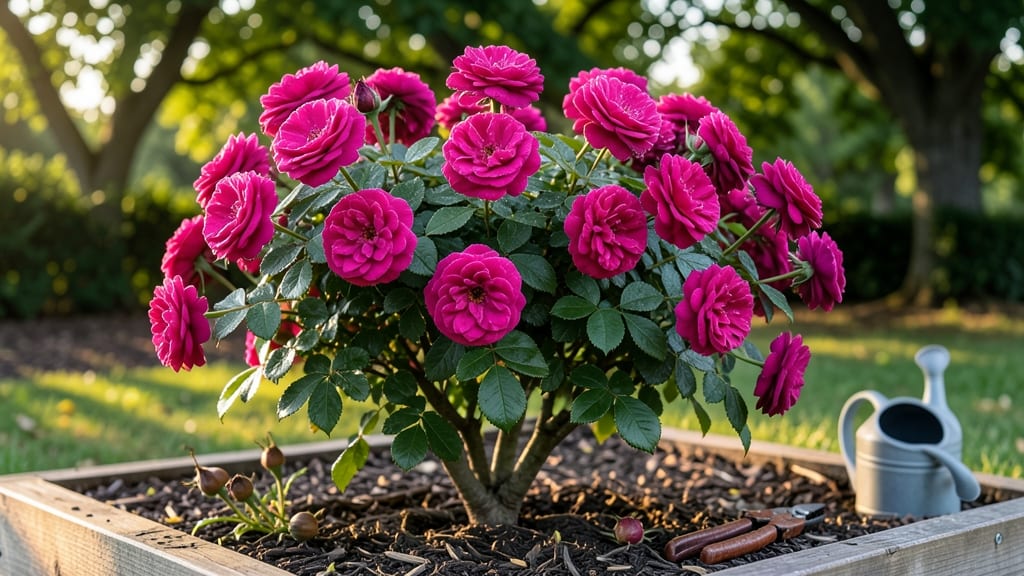
The Double Knockout rose tree changed how I think about roses—no more waiting for a single summer show. This variety delivers year-round blooms with half the fuss of traditional roses, and its disease resistance makes it the workhorse of my garden.
The secret lies in its compact growth habit and relentless flowering, but even that takes just 10 minutes of pruning every spring.
What makes this rose stand out is its ability to bloom continuously from spring through fall, with a few winter flowers if the weather cooperates. You won’t find many roses that match its vibrant red blooms and thick, glossy foliage—or its tolerance for heat, humidity, and pests.
My tree thrives in full sun with moderate watering, and the only maintenance it demands is an annual cleanup to keep it tidy and encourage new growth.
By the end of the first season, you’ll have a rose tree that’s bursting with blooms and requires less pruning than most shrubs. The flowers stay fresh longer, the plant resists black spot and powdery mildew, and you’ll spend more time admiring it than fussing over it.
Here’s how to get started—and keep it thriving for years.
Whether you’re a first-time rose grower or looking to replace high-maintenance varieties, this tree delivers professional-level results with beginner-friendly care. The key is understanding its unique growth patterns and adjusting your approach accordingly. Let’s get into the details that make all the difference.
📚 In This Guide
- What you need
- Instructions
- Tips and common mistakes
- Wrapping up and next steps
What you need
- ● Double Knockout® rose tree (bare-root or potted, disease-resistant variety)
- ● Pruning shears (sharp, sterilized with rubbing alcohol)
- ● Gloves (gardening or rose-specific to avoid thorns)
- ○ Pruning sealant (optional but recommended for larger cuts)
- ● Mulch (2–3 inches of organic material like wood chips or straw)
- ● Balanced fertilizer (10-10-10 or rose-specific, slow-release preferred)
- ● Watering can or hose with adjustable nozzle
- ● Sunny spot (6+ hours of direct sunlight daily)
- ● Well-draining soil (amend with compost if needed)
- ● Support stake or trellis (for taller varieties, 6–8 ft)
- ● Rose food (monthly feedings during growing season)
- ● Fungicide (preventative spray for powdery mildew, if needed)
- ○ Drip irrigation system (optional for consistent moisture)
How to plant and maintain a thriving Double Knockout rose tree
Here's the straightforward approach I've used to keep these resilient roses blooming nonstop with almost no fuss.
🪴 Step 1: Select the Perfect Planting Site and Prepare the Soil
Choose a location with at least 6 hours of direct sunlight daily—Double Knockouts demand full sun for their legendary blooms. I always test the spot by observing how much shade it gets throughout the day, especially in summer when shadows shift. Avoid low-lying areas where cold air settles, as these roses are tender to frost damage.
Double Knockout roses thrive in well-draining, slightly acidic soil with a pH between 6.0 and 6.5. Before planting, amend your soil with 2-3 inches of compost mixed into the top 12 inches of soil. These roses have vigorous root systems, so don't skimp on organic matter. If your soil is particularly heavy clay, add 5-10% perlite or coarse sand to improve drainage—waterlogged roots will kill your plant before it even establishes.
🌱 Step 2: Plant at the Right Depth and Stake for Support
Dig a hole twice as wide as the root ball but no deeper—Double Knockout roses should be planted at the same depth they were in their nursery container. If the roots are circling, gently tease them apart with your fingers. This prevents girdling as the roots mature. Place the rose in the center of the hole and backfill with native soil mixed with compost.
Water deeply to settle the soil, then firm it gently around the base. Install a 5-6 foot tall stake at least 3 inches away from the main stem to avoid damaging the bark. Use three soft ties (never wire) to loosely secure the rose to the stake, allowing some movement. This helps the plant develop stronger stems naturally. Mulch with 2-3 inches of organic mulch (like shredded bark) and keep it 6 inches away from the trunk to prevent rot.
☀️ Step 3: Water Deeply and Establish a Consistent Care Routine
Water deeply once a week during the first growing season, ensuring moisture reaches 12-18 inches down—this encourages deep root growth. You'll know you've watered enough when the soil feels damp 6 inches below the surface. Double Knockouts are drought-tolerant once established, but young plants need consistent moisture. Avoid overhead watering, which can spread fungal diseases like black spot.
Fertilize monthly during the growing season (spring through fall) with a balanced rose fertilizer (10-10-10 or similar). I use half the recommended dose to prevent over-fertilization, which can lead to weak stems and fewer blooms. Stop fertilizing in late summer to allow the plant to harden off for winter. Prune spent blooms by cutting back to the first five-leaflet leaf below the bloom—this encourages continuous flowering and maintains a neat shape.
✂️ Step 4: Prune Strategically for Year-Round Blooms
Double Knockouts are famous for their minimal pruning needs, but a light annual prune in late winter (just before new growth starts) keeps them healthy and flowering prolifically. Remove dead, diseased, or crossing branches first, cutting at a 45-degree angle just above an outward-facing bud. This improves air circulation and prevents future issues. Thin out overcrowded stems to allow light and air to reach the center of the plant.
For shaping, I focus on opening the center of the plant by removing branches that grow inward. Never remove more than one-third of the plant's total volume in a single pruning session—this ensures the rose has enough foliage to support continuous blooming. After pruning, apply a copper fungicide spray as a preventative measure against common rose diseases. The goal is to maintain a balanced, open structure that encourages strong new growth from the base.
Tips & tricks for perfect Double Knockout rose tree maintenance
Here's what I've learned after years of growing these hardy roses without the fuss most gardeners expect.
Sunlight Strategy: That 6 hours of direct sunlight requirement is non-negotiable for Double Knockouts. I've seen them struggle in spots that get only 5 hours, even when the label says "full sun." Test your location by observing shadows throughout the day—summer shadows are longer than you think. If your yard has afternoon shade, consider planting near a south-facing wall or fence that reflects light back onto the plant.
Soil Preparation Secret: The 2-3 inches of compost mixed into the top 12 inches of soil is where most gardeners go wrong. Many just top-dress, but these roses need deep organic matter to support their vigorous root systems. I like to create a "compost sandwich"—a layer of compost, then native soil, then more compost before backfilling. This creates a nutrient-rich zone right where the roots will establish most strongly.
Watering Wisdom: When I first started growing Double Knockouts, I made the mistake of watering lightly every few days. The key is those deep waterings once a week—you want moisture reaching 12-18 inches down. I use a long screwdriver to check moisture levels: if it comes out dry 6 inches down, it's time to water. This deep approach prevents shallow root systems that make plants more susceptible to drought stress.
Pruning Precision: That first five-leaflet leaf rule for deadheading is actually more important than most gardeners realize. When you cut back to this point, you're encouraging new growth from strong, established wood rather than weak new shoots. I always carry a small notebook while pruning to track which branches I've cut back to—this helps me maintain that one-third volume limit in subsequent pruning sessions.
Pro Tips for Double Knockout Rose Tree
- Here's what I've learned after years of growing these hardy roses without the fuss most gardeners expect.
- Sunlight Strategy: That 6 hours of direct sunlight requirement is non-negotiable for Double Knockouts.
- Soil Preparation Secret: The 2-3 inches of compost mixed into the top 12 inches of soil is where most gardeners go wrong.
Frequently asked questions
Got questions about keeping your Double Knockout rose tree thriving with minimal fuss? Here are some of the most common ones—and their answers!
1. How often should I prune a Double Knockout rose tree?
Aim for two pruning sessions per year: a light trim in early spring (after the last frost) to shape the tree and remove dead wood, and a second prune in late summer (after blooming) to encourage next year’s flowers. Skip heavy pruning—these roses bloom on new wood, so less is more!
2. Can I prune my Double Knockout rose tree in winter?
Not ideal! Pruning in winter can stimulate new growth that may get damaged by cold snaps. Instead, wait until late winter or early spring (when buds start swelling) for the best results. If you must trim in winter, do it after a hard freeze to avoid stressing the plant.
3. What if my Double Knockout rose tree stops blooming?
Fewer blooms often mean over-pruning, poor nutrition, or disease. Check for black spots or powdery mildew, and fertilize with a balanced rose food (like 10-10-10) in spring. Deadhead spent blooms regularly to redirect energy to new flowers. If the issue persists, test your soil’s pH—roses thrive in 6.0–6.5.
4. Are there disease-resistant alternatives to Double Knockout roses?
Yes! If you love the low-maintenance blooms but want extra disease resistance, try Knock Out® roses (like ‘Double Red’ or ‘Pink Drift’) or Oso Easy® roses. Both are bred for black spot resistance and thrive with minimal pruning. Just ensure they get 6+ hours of sun and well-draining soil.
5. How do I protect my Double Knockout rose tree in winter?
Mulch the base with 3–4 inches of organic mulch (like shredded bark) to insulate roots. In extreme cold zones (below Zone 6), wrap the canopy with burlap or frost cloth and secure it loosely. Avoid heavy pruning before winter—last year’s wood helps insulate the tree naturally!
Wrapping up and next steps
The Double Knockout rose tree is a game-changer for gardeners who crave low-maintenance, high-reward beauty! With its year-round blooms and minimal pruning needs, it’s the perfect choice for both beginners and seasoned enthusiasts.
Whether you’re drawn to its vibrant flowers or its resilience, this rose is a standout addition to any landscape.
Ready to transform your garden? Start by selecting your rose—whether from a nursery or a trusted online retailer—and follow the simple pruning tips shared here. With just a little care, you’ll enjoy months of stunning blooms with ease! 🌸✨