
Pruning
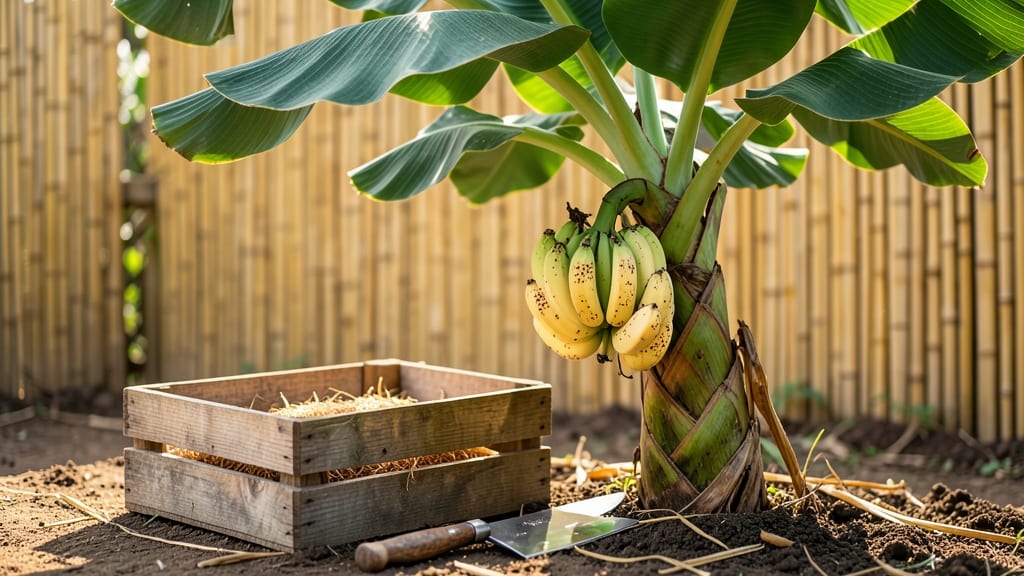
Transform your banana tree into a fruit bowl centerpiece that doubles as a tropical statement piece. 🌿 The Pacific Northwest’s milder winters make it possible to showcase these dramatic plants year-round—just with the right pruning to shape that lush canopy into a natural serving dish.
I’ve styled mine as a harvest-time focal point, arranging ripe bananas in the broad leaves for a living fruit bowl that guests can’t resist touching.
The key is pruning for balance: trim back any leggy branches to encourage a fuller, wider canopy that holds fruit and decorates beautifully. You’ll want to work in late winter or early spring, before new growth starts, to shape the tree without sacrificing its frost resistance.
A sharp pair of pruners and a clean towel are all you need—no fancy tools required. The result? A plant that’s as functional as it is stunning, perfect for summer parties or holiday tablescapes.
Imagine hosting a dinner where the main dish is served on a platter surrounded by your banana tree’s broad leaves, ripe bananas nestled among the fronds like nature’s own bowl. The texture of the leaves contrasts beautifully with smooth fruit, while the tree’s height adds drama to any space.
Plus, you’ll harvest fresh bananas right from your living room centerpiece—no grocery store needed.
This technique works for both indoor and outdoor banana trees in the PNW, whether you’re styling a patio, conservatory, or even a large indoor pot. The pruning method keeps the tree healthy while maximizing its decorative potential.
Ready to turn your banana tree into the star of your garden—or your table?
📚 In This Guide
- What you need
- Instructions
- Tips and common mistakes
- Wrapping up and next steps
What you need
- ● Pruning shears: Bypass pruners (sharp, 6-8" blades) for clean cuts—1 pair (sterilize with rubbing alcohol between cuts).
- ● Loppers: Long-handled (24-36") for thicker branches—1 pair (rated for 2" diameter cuts).
- ● Hand saw: Pruning saw with curved blade for stubborn growth—1 (avoid cheap serrated saws).
- ● Disposable gloves: Nitrile or leather (thorn-resistant)—2-3 pairs.
- ● Rubbing alcohol (70%+) or bleach solution: For sterilizing tools—small bottle.
- ○ Sealing wax or pruning paint: Optional but recommended for large cuts (>1" diameter)—small container.
- ● Heavy-duty trash bags: For debris—2-3 bags.
- ● Ladder or sturdy step stool: Non-slip (if tree exceeds 6' tall)—1.
- ● Spray bottle with water: To clean tools mid-pruning.
- ● Frost cloth or row covers: Lightweight (for post-pruning protection if frost is forecasted)—1 roll.
- ● Mulch (straw or wood chips): 2-3 inches thick around base to insulate roots—5-10 gallons.
- ○ Thermometer (optional): To monitor microclimate temps near the tree.
- ● Bring a clipboard to sketch your pruning plan before cutting—visualize the "fruit bowl" shape!
- ● Pack a snack and water—pruning can take hours, especially in larger trees.
- ● Wear long sleeves/pants to protect against banana tree thorns and UV rays.
Step-by-Step guide for shaping your banana tree canopy
Here’s how to create a lush, frost-hardy fruit bowl shape—perfect for PNW winters.
🌿 Step 1: Assess Your Tree’s Current Structure
Start by examining your banana tree’s growth pattern. Look for the main trunk and lateral branches—these will form the base of your pruning plan. In the Pacific Northwest, frost resistance depends on a dense, rounded canopy that traps heat near the fruit clusters. I like to work on dry, sunny days when the tree is actively growing but not stressed.
Identify any dead or diseased branches—they’ll need immediate removal. These appear brown, brittle, or devoid of leaves. Healthy branches should feel firm and have vibrant green foliage. If you’re unsure, gently scratch the bark: green underneath means it’s still alive; brown means it’s dead and should be pruned away.
✂️ Step 2: Prune to Encourage a Dense Canopy
Use sterilized pruning shears to make clean cuts at a 45-degree angle, about ¼ inch above a leaf node or outward-facing bud. This encourages new growth in the right direction. For frost resistance, focus on thinning out overcrowded branches—this improves airflow and reduces frost damage risk.
Remove any suckers (small shoots at the base of the trunk) unless you’re propagating new plants. These compete with your main tree for energy. If you’re shaping for fruit production, prioritize keeping 3-4 strong lateral branches per section of the trunk. Cut back any branches that grow inward or cross over others—this prevents future rubbing and weakens the structure.
☀️ Step 3: Shape for Frost Protection and Fruit Access
Step back and visualize your tree as a fruit bowl—wide at the top, narrower at the base. In the PNW, this shape helps trap heat around the fruit clusters during light frosts. Prune the outer edges of the canopy to create a rounded, dome-like silhouette, leaving the center slightly open for airflow.
Pay special attention to the topmost branches. These should be slightly shorter than the lower ones to prevent the canopy from becoming too top-heavy. If your tree has long, leggy branches, cut them back by ⅓ to ½ their length to encourage bushier growth. This also makes harvesting fruit easier—you won’t need a ladder to reach the clusters!
💧 Step 4: Post-Pruning Care for Healthy Growth
After pruning, water deeply to help the tree recover. The roots will need extra moisture to support new growth, especially if you’ve removed a significant amount of foliage. Apply a balanced fertilizer (like 10-10-10) to encourage strong regrowth. Avoid heavy nitrogen fertilizers—they promote leafy growth at the expense of fruit production.
Monitor the tree closely for the next 2-3 weeks. New shoots will emerge from the leaf nodes where you made cuts. If any branches look weak or diseased, prune them off immediately. In the PNW, where winters can be unpredictable, this is also a good time to mulch the base with 3-4 inches of organic mulch to insulate the roots from frost.
Tips & tricks for perfect banana tree fruit bowl pruning
Transforming your banana tree into a frost-resistant fruit bowl takes more than just cutting branches—here's what I've learned after years of pruning in PNW winters.
Timing is Everything: I can't stress this enough—prune during your tree's active growing season (late spring to early summer) when it has energy to recover. In the Pacific Northwest, this means avoiding winter pruning entirely—the tree's energy is focused on survival, not regrowth. The 2-3 week monitoring period mentioned in Step 4 is critical for catching any issues before winter sets in.
Tool Prep Matters: Sterilizing your pruning shears isn't just about clean cuts—it's about preventing disease spread. I use a 1:10 bleach-water solution between cuts on different branches, especially when dealing with diseased wood. For the 45-degree angle cuts in Step 2, I mark my shears with painter's tape at the ¼ inch above leaf node point to ensure consistency every time.
Visualize Before You Cut: Step back and really look at your tree's shape before making any cuts. I find it helpful to sketch a rough outline of my desired fruit bowl shape on paper first. The goal is to create that dome-like silhouette where the top branches are slightly shorter than the lower ones—this prevents snow accumulation that can break branches during PNW winters. Think of it like sculpting: you're removing excess to reveal the natural beauty underneath.
Post-Pruning Recovery Hack: After heavy pruning, I've found that applying a mycorrhizal fungal inoculant (optional but highly recommended) to the root zone helps the tree recover faster. Mix it with the 3-4 inches of organic mulch mentioned in Step 4. This creates a symbiotic relationship that boosts root health—especially important in our wet PNW climate where roots need all the help they can get.
Pro Tips for Fruit Bowl Banana Tree
- Transforming your banana tree into a frost-resistant fruit bowl takes more than just cutting branches—here's what I've learned after years of pruning in PNW winters.
- Timing is Everything: I can't stress this enough—prune during your tree's active growing season (late spring to early summer) when it has energy to recover.
- Tool Prep Matters: Sterilizing your pruning shears isn't just about clean cuts—it's about preventing disease spread.
Frequently asked questions
Got questions about pruning your frost-resistant banana tree fruit bowl in the Pacific Northwest?
You’re not alone! Here are some of the most common queries—and their practical answers—to help you keep your canopy thriving.
How do I know when the best time to prune my banana tree is?
The ideal time to prune your banana tree is late winter or early spring (February–March in the PNW), before new growth starts. Avoid pruning in fall or winter when frost is likely—banana trees are tender and need time to recover. If you’re growing a fruit bowl variety, wait until after harvest to trim spent stalks.
Can I prune my banana tree if frost is forecasted?
No, never prune during or before a frost warning.
Banana trees are tropical and highly sensitive to cold. Pruning stimulates new growth, which is even more vulnerable to frost damage. If frost is expected, cover the tree with frost cloth instead. Wait until temperatures stabilize above freezing for at least a week before pruning.
What’s the difference between pruning for fruit production vs. shaping the canopy?
Pruning for fruit production focuses on removing old, non-fruiting stalks (called "hands") and dead leaves to redirect energy to new growth. For canopy shaping, trim overlapping or crowded fronds to improve airflow and sunlight penetration—critical in the damp PNW climate. Always leave at least 3–4 healthy leaves per stalk to maintain photosynthesis.
My banana tree isn’t fruiting—what should I do?
If your tree isn’t producing fruit, it might need a growth boost. Try these steps:
- Fertilize with a high-potassium fertilizer (like 10-10-20) in spring and summer.
- Prune aggressively to encourage new suckers (baby plants) from the base.
- Ensure full sun (6+ hours daily)—PNW shade can stunt flowering.
- Check for pests like aphids or mites, which stress the plant.
Are there frost-resistant banana tree alternatives for the PNW?
If you’re struggling with frost, consider these hardier varieties:
- Dwarf Cavendish (Zone 9–10, but can survive brief frosts with protection).
- Red Dacca (tolerates cooler temps better than most, though still needs winter care).
- Musa acuminata ‘Ice Cream’ (a decorative, cold-tolerant ornamental).
Wrapping up and next steps
Pruning your fruit bowl banana tree in the Pacific Northwest isn’t just about keeping it tidy—it’s about ensuring a bountiful, frost-resistant harvest for years to come. 🌱 By mastering the right techniques, timing, and tools, you’ve set yourself up for success, whether you’re trimming for airflow, shaping the canopy, or preparing for winter.
Now’s the time to roll up your sleeves and put your newfound knowledge into action!
🚀 Your Next Steps:
- Schedule a pruning session—pick a mild day (like late winter or early spring) to give your tree the care it deserves.
- Monitor growth—keep an eye on new shoots and adjust pruning as needed to maintain that perfect fruit bowl shape.
- Celebrate your green thumb!—every snip is a step toward a thriving, productive banana tree. 🍌✨