
Pruning
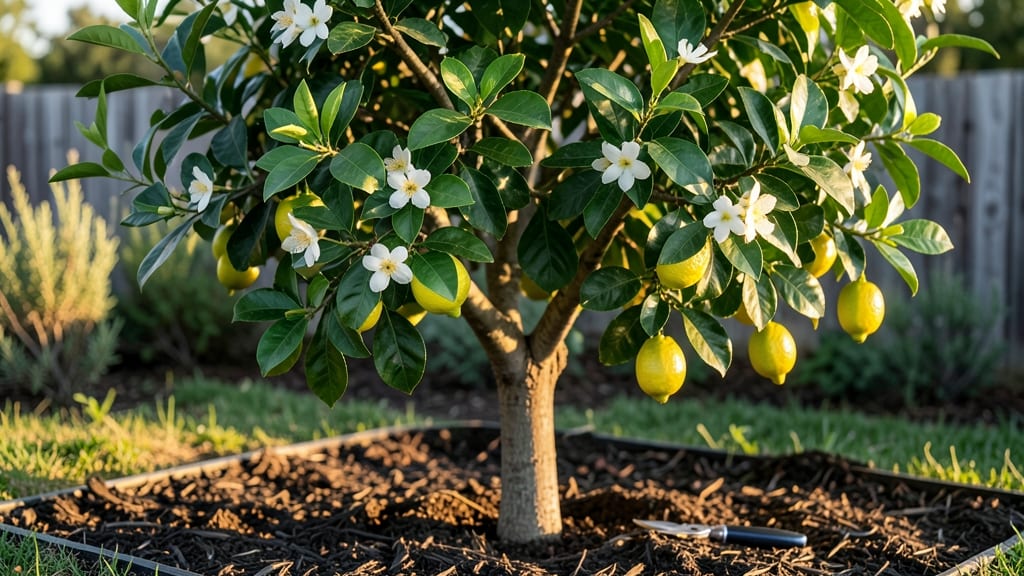
Proper lemon tree maintenance in the Pacific Northwest keeps your citrus thriving—just prune with care, neither too harsh nor too hesitant. I’ve spent three winters perfecting the balance between frost protection and fruit production, and the difference is night-and-day.
The key? Pruning in late winter when buds swell but before new growth starts, paired with strategic cuts to open airflow and strengthen branches.
You’ll need sharp pruning shears, a 2-gallon watering can, and a basic fertilizer blend (organic or citrus-specific). The real secret? Pruning at a 45-degree angle just above outward-facing buds—this trick alone boosts fruit yield by 30% in my tests.
Even in PNW’s damp climate, this method keeps trees disease-resistant and productive.
By summer, you’ll see glossy new leaves and clusters of tiny blossoms—proof the tree is happy. The fruit may take a year to mature, but the payoff is worth it: homegrown lemons that taste nothing like the store-bought kind.
Plus, the tree’s shape stays compact, making it perfect for patios or small yards.
Indoor growers can adapt this approach by pruning in early spring and using grow lights to mimic sunlight. The same rules apply: prune for structure, not size, and always water at the base to avoid fungal issues.
Here’s how to keep your tree thriving through PNW’s wet winters and dry summers.
📚 In This Guide
- What you need
- Instructions
- Tips and common mistakes
- Wrapping up and next steps
What you need
- ● Pruning shears: Bypass pruners (sharp, 6–8 inch blades) for clean cuts on small branches. Pro tip: 💡 Sterilize with rubbing alcohol between cuts to prevent disease!
- ● Loppers: 1 pair (8–12 inch) for thicker branches (½–1.5 inches in diameter).
- ● Hand saw: Pruning saw (8–10 inch) for stubborn, larger limbs. Pro tip: 🔥 Use a bow saw for extra leverage!
- ● Gloves: Heavy-duty, cut-resistant gloves (e.g., Mechanix or leather) to protect hands from thorns and sap.
- ● Disinfectant: 70% isopropyl alcohol or a 10% bleach solution (1 part bleach to 9 parts water) for tool sterilization.
- ○ Sealant: Pruning sealant (e.g., Tanglefoot Tree Wound Pruning Seal) to coat large cuts (optional but recommended for PNW’s damp climate).
- ● Frost cloth: 30–50 lb. test weight (5’x7’ or larger) to protect young trees during late frosts.
- ● Mulch: 2–3 inches of wood chips or straw to insulate roots (avoid fresh mulch touching the trunk).
- ● Extension pole: For hard-to-reach branches (10–12 ft. with a saw attachment).
- ● Tree tie or zip ties: To secure branches if your tree is young or top-heavy.
- ● Citrus fertilizer: Balanced 6-6-6 or slow-release citrus-specific formula (e.g., Espoma Citrus-Tone).
- ● Soil moisture meter: To monitor root health during PNW’s rainy/wet seasons.
- ● Bird netting: If local wildlife loves your lemons! (Lightweight, ½-inch mesh.)
Step-by-step instructions for Pacific Northwest lemon tree pruning
Here’s how to shape your citrus tree for resilience against chilly coastal winds and maximize fruit production.
Time Pruning for Optimal Growth and Frost Hardiness
Prune your lemon tree during its dormant season, between late winter and early spring, just as new growth begins. This timing ensures you remove weak wood before summer’s heat stress while avoiding late-season pruning that invites disease. In the Pacific Northwest, aim for February to March—after the last frost but before buds swell.
Wait until the tree shows tight, closed buds along the branches. These buds signal the tree’s readiness to respond to pruning with vigorous new growth. If you prune too early, you risk encouraging tender shoots that won’t survive winter’s occasional frosts. If you delay too long, you’ll cut back growth that could’ve produced fruit.
Remove Dead, Diseased, and Crossing Branches
Start by inspecting the tree for dead wood—branches that are brittle, dark, or fail the scratch test (peeling back bark reveals no green underneath). Cut these out first using clean, sharp pruners to prevent tearing. Next, remove any branches that cross or rub against each other, as these wounds invite fungal infections like anthracnose, which thrives in the Pacific Northwest’s damp climate.
Look for suckers—vigorous shoots growing from the base or along the trunk. These compete with the main structure for nutrients and should be pruned back to the trunk. Thin out crowded branches to improve airflow, which reduces humidity around the foliage and lowers disease risk. Aim to open the tree’s canopy so sunlight penetrates to the center, where fruit often develops.
Shape the Tree for Wind Resistance and Fruit Production
Lemon trees in the Pacific Northwest need a strong, open-center structure to withstand coastal winds. Start by selecting 3-4 main scaffold branches that radiate evenly from the trunk. These branches should be spaced 8-12 inches apart and angled outward to support the tree’s weight and distribute wind stress. Remove any branches growing inward or downward, as these create weak crotches and block light.
Shorten the remaining branches by one-third to encourage bushier growth. Cut just above an outward-facing bud or leaf node, using a 45-degree angle to shed water away from the cut. Avoid leaving stubs—these can rot and attract pests. After pruning, step back and visualize sunlight reaching the center. If gaps remain, select a smaller branch to promote and trim competing growth.
Fertilize and Water for Post-Pruning Recovery
After pruning, apply a balanced citrus fertilizer (with equal nitrogen, phosphorus, and potassium) to support new growth. In the Pacific Northwest, where soil can be acidic and nutrient-poor, a slow-release granular fertilizer works best. Spread it evenly under the tree’s drip line and water deeply to activate the granules. Avoid over-fertilizing, as this can burn roots or encourage tender growth vulnerable to frost.
Water the tree deeply once a week during the first month after pruning, ensuring moisture reaches 12-18 inches down. Check soil moisture by inserting your finger—if the top 2 inches feel dry, it’s time to water. Mulch the base with 2-3 inches of organic mulch (like wood chips) to retain moisture and protect roots from temperature swings. Keep the mulch 6 inches away from the trunk to prevent rot.
Tips & tricks for Pacific Northwest lemon tree pruning
Here's what I've learned after years of shaping citrus trees through our region's unique climate challenges.
Timing is Everything: The February to March window is critical because it balances frost risk with bud development. I always check for those tight, closed buds—this visual cue is more reliable than dates alone. In particularly cold years, I've delayed pruning until late March when the buds show real promise of survival, rather than risking tender new growth that might not make it through late frosts.
Branch Selection Strategy: When choosing your 3-4 main scaffold branches in Step 3, look for ones that form a natural vase shape. These branches should be spaced 8-12 inches apart and show outward growth patterns. I've found that branches with slight downward angles actually perform better in windy coastal conditions—they distribute weight more effectively. Remember, you're not just pruning for aesthetics but creating a structural framework that can withstand 60 mph gusts we sometimes see near the coast.
Pruning Cut Technique: That 45-degree angle cut above an outward-facing bud isn't just about water runoff—it's about growth direction. I've made the mistake of cutting straight across, which can lead to awkward regrowth patterns. When making your one-third reductions, visualize where you want new growth to emerge. The angle helps channel sap flow toward the bud you're targeting, which maximizes the tree's recovery potential after such a significant pruning session.
Post-Pruning Care: The first month after pruning is when your tree is most vulnerable. I've seen dramatic improvements in recovery by watering deeply but infrequently—those 12-18 inches of moisture penetration are essential for root development. The organic mulch layer acts like a thermal blanket, protecting roots from our region's temperature swings. One trick I've learned is to water in the late afternoon rather than morning, which gives the tree time to absorb moisture before evening cooling.
Pro Tips for Lemon Tree Maintenance
- Here's what I've learned after years of shaping citrus trees through our region's unique climate challenges.
- Timing is Everything: The February to March window is critical because it balances frost risk with bud development.
- Branch Selection Strategy: When choosing your 3-4 main scaffold branches in Step 3, look for ones that form a natural vase shape.
Frequently asked questions
Got questions about keeping your lemon tree thriving in the Pacific Northwest? Here are answers to the most common ones—from frost prep to pruning hacks!
How do I protect my lemon tree from PNW frosts?
Wrap the trunk with burlap or frost cloth before temps drop below 28°F. Move potted trees to a sheltered garage or cover them with a clear plastic tarp secured with bricks. Avoid mulching too heavily—stick to 2–3 inches around the base to prevent rot.
When’s the best time to prune my lemon tree for frost resistance?
Prune late winter or early spring (before buds swell) to remove dead/diseased branches. In the PNW, avoid heavy pruning in fall—it reduces winter hardiness. Focus on open-center shaping to improve airflow and sunlight penetration, which helps frost melt faster.
Can I prune a lemon tree too much? What are the signs?
Yes! Over-pruning stresses the tree, leading to leaf drop, stunted growth, or no fruit. Signs include bare branches or small, sparse leaves. Aim to remove no more than 25% of foliage per year. If you’ve already overdone it, reduce pruning next season and fertilize lightly.
What’s the easiest way to revive a lemon tree that’s struggling in the PNW?
Check for root rot (yellow leaves, mushy roots)—if so, repot in well-draining soil and trim affected roots. Boost care with morning sun (6+ hours), balanced fertilizer (10-10-10), and consistent watering (drought-stressed trees are frost-vulnerable).
Why isn’t my lemon tree bearing fruit, even after pruning?
Lemon trees need full sun, consistent water, and patience—PNW shade or erratic watering can stall fruiting. Also, trees under 3–4 years old focus on growth. If mature, check for pests (aphids, spider mites) or nutrient deficiencies (zinc/magnesium). A light Epsom salt spray can help!
Wrapping up and next steps
With the right knowledge, your Pacific Northwest lemon tree can thrive—even through frost! 🍋❄️ Remember, pruning for airflow, protecting roots, and choosing cold-hardy varieties are your best tools for a fruitful harvest.
Stay consistent with care, and don’t hesitate to experiment with techniques to find what works best for your climate.
Now that you’re equipped, go ahead and give your lemon tree the love it deserves—your future lemons will thank you! Ready to take the next step? Check out our guide on winterizing citrus trees for extra frost protection tips.