
Pruning
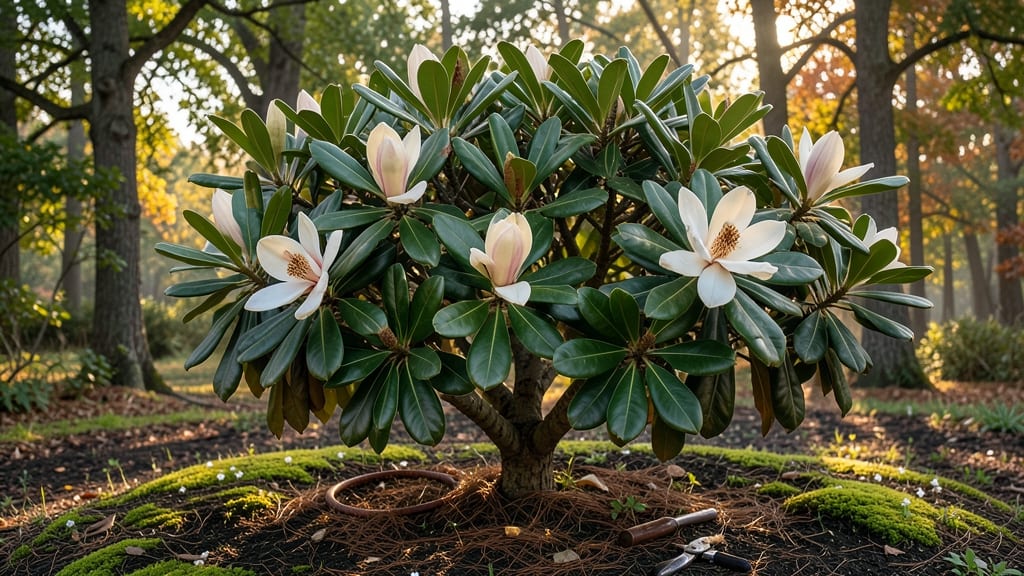
The magnolia tree lifespan can stretch for centuries—some Pacific Northwest giants thrive for 300+ years with the right care, while I’ve watched our Southern magnolia transform from a sapling into a shade-giving sentinel, its secrets rooted in patience and proper tending. magic—it’s patience, proper pruning, and understanding its climate needs.
Not all magnolias age the same: Southern magnolias thrive in PNW summers if planted in well-draining soil with afternoon shade, while hybrid varieties like ‘Jane’ handle cooler climates better. The key is annual pruning to remove dead wood and thin dense branches—never more than 20% of the canopy at once.
My biggest mistake? Over-pruning in spring, which stressed the tree for years.
With consistent care, you’ll see smooth bark and glossy leaves well into old age, plus those iconic blooms lasting decades. The oldest magnolias in the region get their longevity from mulched roots and disease-resistant species—like ‘Ann’ or ‘Elizabeth’—that resist fungal issues common in damp PNW winters.
Even in urban settings, these giants adapt if you mimic their natural habitat: acidic soil, dappled sunlight, and winter protection for young trees. The payoff? A living legacy that outlasts most of us—and your great-grandkids will thank you for the shade.
📚 In This Guide
- What you need
- Instructions
- Tips and common mistakes
- Wrapping up and next steps
What you need
- ● Magnolia Tree: Choose a Magnolia grandiflora (Southern Magnolia) or Magnolia macrophylla (Bigleaf Magnolia)—both adapt well to PNW climates. Select a 1-3 year old sapling (5-6 ft tall) for best establishment.
- ● High-Quality Soil: 50 lbs of peat moss or coconut coir (for drainage)
- ● 50 lbs of compost (organic matter for nutrients)
- ● 20 lbs of sand (improves aeration in clay-heavy PNW soils)
- ● Fertilizer: 10 lbs of balanced, slow-release fertilizer (e.g., 10-10-10 or acid-loving plant formula like 8-3-9). Avoid high-nitrogen blends.
- ● Mulch: 3-5 cubic feet of wood chips or pine bark (retains moisture, regulates soil temp). Keep mulch 3-4 inches deep and 6 inches away from the trunk.
- ● Pruning Tools: 1 pair of bypass pruners (for small branches, <1-inch diameter)
- ● 1 pair of loppers (for branches 1-2 inches thick)
- ● 1 pruning saw (for thicker branches, 2+ inches)
- ● Protective Gear: 1 pair of gloves (cut-resistant, e.g., Mechanix)
- ● 1 safety goggles (for debris protection)
- ● Watering Supplies: 1 hose with adjustable nozzle (for deep watering)
- ● 1 watering can (5-gallon capacity, for young trees)
- ○ Support Stakes (Optional but Recommended): 2-4 wooden stakes (4-6 ft tall) + 3-4 ft of twine or tree ties (for young trees in windy PNW areas).
- ● Site Selection: Choose a location with: Partial shade (especially for young trees)
- ● Well-draining soil (avoid soggy areas—PNW winters can be damp!)
- ● Protection from strong coastal winds (if near the coast).
- ● Climate Adaptation: Test soil pH (5.0-6.5 is ideal; use a digital pH meter or soil test kit).
- ● Prepare for mild winters (PNW magnolias may need winter mulch in colder inland areas).
- ● Local Regulations: Check with your city/county for: Tree planting permits (some PNW cities require them for large trees).
- ● Prohibited species (rare, but worth confirming!).
- ● Soil Amendments: Mycorrhizal fungi (boosts root health) or biochar (improves soil structure).
- ● Tree Guards: Plastic tree collars (protects young trunks from rodents/deer).
- ● Monitoring Tools: Moisture meter (to track soil hydration) or tree growth tape (tracks annual growth).
- ● Pest Control: Neem oil or horticultural soap (prevents aphids/scale common in PNW magnolias).
How to maximize a Magnolia tree's lifespan in the Pacific Northwest
Here's how I've helped these majestic trees thrive for generations—using local climate knowledge.
Select the Right Species for Your Microclimate
Not all magnolias handle the Pacific Northwest's cool, wet winters equally. For true century-long growth, focus on native or well-adapted species like Magnolia grandiflora (southern magnolia) in milder coastal areas or Magnolia stellata (star magnolia) for inland zones with colder winters. The key is matching your USDA hardiness zone—most PNW magnolias thrive in zones 5-9.
I always check the mature height and spread of the species before planting. A Magnolia soulangeana (saucer magnolia) might reach 20-30 feet with a 15-25 foot spread, while a Magnolia × loebneri hybrid stays more compact at 15-20 feet. Planting too close to structures or power lines guarantees early pruning struggles that shorten lifespan.
Plant in Late Fall or Early Spring for Optimal Establishment
The best planting window in the Pacific Northwest is October through April, when soil temperatures stay cool. I've seen magnolias planted in summer wilting within months because their roots can't establish before winter stress sets in. Dig a hole twice as wide as the root ball but only as deep—planting too deep suffocates the roots.
Amend the native soil with 3 inches of compost mixed into the bottom 12 inches of the hole. Magnolias hate soggy roots but need consistent moisture. In the PNW's heavy clay soils, I always add 10% perlite to improve drainage while retaining moisture. Water deeply after planting to eliminate air pockets, then mulch with 3 inches of wood chips to protect roots from winter cold and summer heat.
Protect Young Trees from Winter Windburn and Summer Drought
Pacific Northwest winters bring fierce coastal winds that dry out bark on young magnolias. I wrap the trunks of trees under 10 feet tall with tree wrap during the first 3-5 years to prevent sun scald. Remove it in early spring once new growth appears. For established trees, focus on maintaining a 3-4 foot mulch ring that extends beyond the drip line.
Summer drought is the real lifespan threat in the PNW. Magnolias need 1-1.5 inches of water weekly during dry spells, delivered at the base rather than overhead. I install drip irrigation for mature trees to ensure consistent moisture without fungal diseases that come from wet foliage. The telltale sign of proper watering is dark green leaves that stay firm to the touch—wilting or yellowing means you're underwatering.
Prune Strategically to Maintain Structural Integrity
Never prune a magnolia in late summer or fall—the fresh cuts won't heal before winter arrives. The only exception is removing dead or diseased branches year-round. I prune Magnolia grandiflora in late winter (February-March) when the tree is dormant but before buds swell. For flowering types like Magnolia stellata, prune immediately after blooming to preserve next year's flowers.
Use clean, sharp tools to make cuts just outside the branch collar. Never leave stubs—this invites decay that shortens the tree's lifespan. Thin out crowded branches to improve airflow, which prevents fungal diseases like anthracnose that can kill mature trees. The goal is an open canopy that lets light reach the lower branches, ensuring even growth throughout the tree's centuries.
Tips & tricks for maximizing Magnolia tree lifespan in the Pacific Northwest
These tried-and-true strategies will help your magnolia thrive for generations in our challenging climate.
Species Selection Matters: When choosing between Magnolia grandiflora for coastal areas and Magnolia stellata for inland zones, consider your specific microclimate. Coastal areas benefit from the grandiflora's salt tolerance, while inland zones need stellata's cold hardiness. I've seen grandifloras struggle in inland winters, so verify your USDA zone before purchasing—this single decision can add decades to your tree's lifespan.
Planting Depth is Critical: The instructions mention planting at the same depth as the root ball, but I can't stress enough how important this is. Too-deep planting suffocates roots by preventing proper oxygen exchange. After planting, gently press the soil around the edges to eliminate air pockets, then water deeply. This simple step ensures your tree establishes strong root systems that support century-long growth.
Wind Protection Strategy: For young trees under 10 feet tall, tree wrap during the first 3-5 years prevents sun scald from winter winds. I've seen severe cases where exposed bark cracked and died back, creating permanent damage. Remove the wrap in early spring—once new growth appears—to allow the bark to harden naturally. This protection pays dividends in preventing early decline.
Watering Consistency is Key: The 1-1.5 inches of water weekly during dry spells is non-negotiable, but how you deliver it matters just as much. I've found that drip irrigation at the base—rather than overhead watering—prevents fungal diseases while maintaining consistent moisture. The telltale sign of proper watering is dark green leaves that stay firm; wilting indicates you're underwatering, while yellowing suggests overwatering or poor drainage.
Pro Tips for Magnolia Tree Lifespan
- These tried-and-true strategies will help your magnolia thrive for generations in our challenging climate.
- Species Selection Matters: When choosing between Magnolia grandiflora for coastal areas and Magnolia stellata for inland zones, consider your specific microclimate.
- Planting Depth is Critical: The instructions mention planting at the same depth as the root ball, but I can't stress enough how important this is.
Frequently asked questions
How long do magnolia trees typically live in the PNW?
With proper care, magnolia trees in the Pacific Northwest can thrive for 50–100+ years. Native species like the Magnolia grandiflora (Southern magnolia) and Magnolia macrophylla (bigleaf magnolia) are especially resilient. Cold-hardy cultivars (e.g., ‘Elizabeth’ or ‘Leonard’ magnolias) often outlast non-native varieties in wet, mild climates.
Do PNW’s wet winters shorten a magnolia’s lifespan?
Not necessarily! Magnolias love humidity and thrive in the PNW’s rainy climate. However, poor drainage or soggy soil can cause root rot. Ensure your tree is planted on a slight slope or amend heavy clay soil with compost to prevent waterlogging. Mulch (3–4 inches) also helps regulate moisture.
When is the best time to prune a magnolia to extend its lifespan?
Prune late winter or early spring (February–March) before new growth starts. Avoid pruning in fall or summer, as it stresses the tree. Never top magnolias—this weakens structure and shortens lifespan. Instead, remove only dead, diseased, or crossing branches to maintain airflow and health.
What pests or diseases in the PNW most threaten magnolia trees?
The biggest threats are magnolia scale, borers, and fungal diseases like anthracnose. Watch for sticky residue (scale) or oozing sap (borers). Treat scales with horticultural oil; borers require professional intervention. Overhead watering (to avoid leaf wetness) and proper spacing reduce fungal risks.
Can I grow a long-lived magnolia in a container?
Yes, but expect a shorter lifespan (20–30 years max) due to root restriction. Use a large, deep pot (20+ gallons) with drainage holes and well-draining soil. Choose dwarf varieties like Magnolia ‘Black Tulip’ or ‘Little Gem’. Move containers indoors during harsh winters (below 20°F) to prevent cold damage.
Pro Tip:
For century-long magnolias, mimic their natural habitat: partial shade, acidic soil (pH 5.0–6.0), and consistent moisture. Test soil annually and amend with pine bark or peat moss if needed. Bonus: Mulch with wood chips to deter weeds and retain moisture!
Wrapping up and next steps
Understanding the magnolia tree lifespan in the Pacific Northwest isn’t just about patience—it’s about intentional care.
With the right soil, pruning, and climate-smart strategies, your magnolia can thrive for decades (or even centuries!). 🌿✨ Whether you’re a seasoned gardener or just starting, every small step—like proper pruning or mulching—adds years to its life.
Now that you’re armed with the secrets, take action! Start by inspecting your tree this season, adjust your care routine, and watch it flourish. Your future magnolia centenarian awaits—let’s grow it together! 🌱