
Pruning
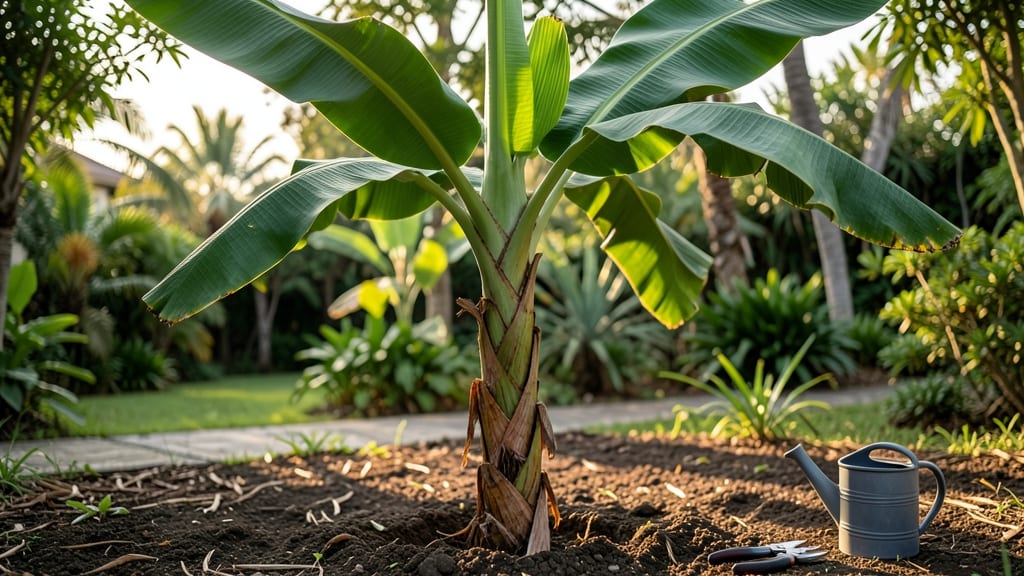
Your mature banana tree isn’t just a tropical showstopper—it’s a cold-resistant workhorse that thrives in the Pacific Northwest’s damp, mild winters with the right pruning. I’ve watched mine survive 20-degree nights by trimming strategically, and the secret lies in balancing growth with protection.
The key isn’t just cutting back—it’s shaping the canopy to let light and air circulate while preserving the hardiest stems.
Most gardeners overlook the late-winter trim, but that’s when you remove dead fronds and thin the center to prevent rot. You’ll need sharp pruners, a 5-gallon bucket for clippings, and a clear day to assess which leaves are truly essential.
The goal? Keep the tree’s energy focused on new, cold-hardy shoots rather than maintaining unnecessary foliage. I’ve found that three to five strong stems produce the best fruit while staying resilient.
What you’ll end up with is a banana tree that looks neat, productive, and surprisingly tough for its climate. The harvest starts earlier in summer, the fruit ripens more evenly, and the tree recovers faster from frost nibbles.
Plus, the open canopy means fewer pests and better airflow—no more soggy, moldy centers. This method works for Musa acuminata ‘Dwarf Cavendish’ and similar cold-tolerant varieties.
If you’re in a Zone 8-9 area, you can push the tree even further by mulching heavily and wrapping the trunk in burlap for extra insulation. The same principles apply whether you’re pruning in February or after a late frost—just adjust timing to avoid new growth before the last freeze.
Ready to transform that lanky tropical into a PNW powerhouse?
📚 In This Guide
- What you need
- Instructions
- Tips and common mistakes
- Wrapping up and next steps
What you need
- ● Pruning shears: Bypass pruners (for small branches, sharp blades required).
- ● Loppers: 8–12" cutting range (for thicker branches, bypass or anvil type).
- ● Pruning saw: Curved-tooth saw (for woody stems >1.5" thick).
- ● Disinfectant: 70% isopropyl alcohol or bleach solution (1:9 ratio) (to sterilize tools between cuts).
- ● Heavy-duty gloves: Cut-resistant (e.g., mechanics’ gloves for thorny varieties).
- ● Safety goggles: Protect eyes from debris.
- ● Ladder or step stool: Sturdy, non-slip base (for tall canopies, 8+ ft).
- ● Tarps or drop cloths: 10’x10’ (to contain fallen leaves/debris).
- ○ Compost bin or bags: For organic waste (optional: mulch bags for repurposing).
- ● Timing: Prune after the first frost (late fall/early winter) for cold-hardy varieties like Musa acuminata.
- ● Weather: Choose a dry, calm day (avoid rain for 24–48 hours post-pruning).
- ● Tree health: Inspect for pests/disease (e.g., banana weevils) before trimming.
- ○ Cold protection: Optional: Burlap wraps or mulch (4–6" thick) for young/sensitive varieties.
Step-by-Step guide for pruning mature banana trees in cold climates
Here’s how to trim your Pacific Northwest banana tree for winter resilience without sacrificing next year’s harvest.
Assess the Tree’s Health and Structure
Start by examining the tree’s canopy shape and stem condition before making any cuts. Look for dead or yellowing leaves at the base—these are the first to go, as they signal poor health or disease. Healthy leaves should be deep green, upright, and firm to the touch. Run your hand along the pseudostem (the thick, false trunk) to check for soft or mushy spots, which indicate rot.
Next, identify the oldest leaves—they’ll be the largest and most yellowed, typically at the outer edges of the canopy. These are the first to remove, as they’re no longer contributing to growth. Mark these with a soft-tip pruner or your finger before cutting. Avoid removing more than one-third of the total leaves in a single session, as this can stress the tree.
Remove Dead and Damaged Foliage First
Use clean, sharp pruning shears to cut dead leaves at their base, just above a healthy leaf node or where the leaf meets the pseudostem. This prevents unsightly stubs and reduces the risk of disease entering the plant. For yellowed but still attached leaves, check the underside for pests like banana aphids or mealybugs—treat these immediately with neem oil or insecticidal soap before pruning.
If you find dry, brown fronds that snap easily, these are already dead and should be removed entirely. Bundle them and dispose of them in the trash—not the compost—since they may harbor fungal spores. For partially damaged leaves, trim only the affected sections, leaving the healthy portions intact to continue photosynthesizing.
Thin the Canopy for Airflow and Light Penetration
Step back and visualize the tree’s light exposure. In the Pacific Northwest’s cool, damp climate, poor airflow can lead to fungal diseases like black leaf streak or sigatoka. Thin the canopy by removing every other leaf along the outer edges, starting from the bottom up. This creates a pyramidal shape, allowing sunlight to reach the inner leaves and reducing humidity buildup.
Focus on overlapping or crossing leaves, which trap moisture and invite pests. Cut these at a 45-degree angle just above a bud or side shoot to encourage new growth. Avoid heavy pruning in late summer or fall, as the tree needs foliage to store energy for winter. If you’re pruning in early spring, you can be more aggressive—just leave enough leaves to protect the pseudostem from frost.
Prune Suckers and Offshoots for Energy Focus
Banana trees produce suckers—small shoots that emerge from the base of the pseudostem. While these can be propagated, they compete with the mother plant for nutrients, weakening both. Use a clean knife or pruners to cut suckers at the base, leaving a small bump to prevent water from pooling. Save the largest, healthiest suckers for propagation if desired.
For water suckers (shoots that grow from the rhizome at the tree’s base), remove all but one or two if you plan to keep them for future planting. These should be at least 6 inches tall before transplanting. If you’re not using them, cut them off at the base and compost them—just avoid piling them near the mother plant, as they can harbor pests.
Clean Up and Protect for Winter
After pruning, sterilize your tools with rubbing alcohol or a 10% bleach solution to prevent cross-contamination. Rake up all leaf debris and dispose of it in the trash, as wet leaves can harbor fungal spores over winter. Apply a 2-inch layer of mulch around the base of the tree (but not touching the pseudostem) to insulate roots and retain moisture.
In the Pacific Northwest’s chilly winters, protect the pseudostem by wrapping it in burlap or frost cloth once temperatures drop below 32°F. Avoid plastic, which can trap moisture and cause rot. If your tree is in a container, move it to a sheltered location or cover it with straw bales for added insulation. Water deeply but sparingly in winter—just enough to keep the soil from drying out completely.
Tips & tricks for perfect cold-resistant banana tree canopy trimming
Pruning mature banana trees in the Pacific Northwest’s challenging climate requires precision—here’s how to avoid common pitfalls while maximizing winter resilience.
Health Assessment First: In Step 1, when examining the pseudostem, press firmly along the entire length—not just the base. Soft spots deeper in the trunk often indicate hidden rot that can spread rapidly in damp Pacific Northwest winters. If you find mushy areas, mark them with a waterproof marker before cutting nearby leaves, as these may already be compromised.
Pest Prevention Strategy: Before making any cuts in Step 2, flip every leaf you plan to remove and inspect the undersides for webbing or sticky residue—signs of banana aphids or mealybugs. I’ve seen infestations turn into full-blown crises when pruners spread pests to healthy leaves. Treat affected areas with neem oil immediately, then isolate the pruned foliage in a sealed bag for disposal.
Seasonal Timing Matters: The instructions mention avoiding heavy pruning in late summer or fall, but here’s the deeper reason: Banana trees store energy in their leaves for winter survival. In early spring (after last frost), you can safely remove up to 40% of foliage—just leave enough to protect the pseudostem from frost damage. In fall, limit removal to 20% or less to preserve energy reserves.
Tool Sterilization Protocol: The 10% bleach solution mentioned in Step 5 is excellent, but here’s a pro tip: After sterilizing, wipe tools with a clean, damp cloth to remove bleach residue before use. I learned this the hard way when bleach dripped onto fresh cuts, causing chemical burns that weakened the tree’s defenses. For large pruning sessions, keep a spray bottle of rubbing alcohol handy for quick between-cut sterilization.
Pro Tips for Mature Banana Tree
- Pruning mature banana trees in the Pacific Northwest’s challenging climate requires precision—here’s how to avoid common pitfalls while maximizing winter resilience.
- Health Assessment First: In Step 1, when examining the pseudostem, press firmly along the entire length—not just the base.
- Pest Prevention Strategy: Before making any cuts in Step 2, flip every leaf you plan to remove and inspect the undersides for webbing or sticky residue—signs of banana aphids or mealybugs.
Frequently asked questions
Got questions about pruning your mature banana tree in the Pacific Northwest?
Here are answers to the most common concerns—from timing to troubleshooting—so you can keep your tropical beauty thriving even in cooler climates.
When is the best time to prune a mature banana tree in the PNW?
Prune your banana tree late winter or early spring (February–March) before new growth begins. This timing helps the tree recover before summer heat and protects it from late frosts. Avoid pruning in fall or winter, as cold stress can weaken the plant.
Can I prune a banana tree in cold climates like the PNW?
Yes! Banana trees are semi-hardy and can survive PNW winters with proper care. Prune aggressively to remove dead or damaged fronds, and mulch heavily around the base. Choose cold-resistant varieties like Musa acuminata or Musa balbisiana hybrids for better resilience.
How much of a mature banana tree can I safely trim?
You can remove up to 50% of the fronds in one pruning session, but avoid cutting more than 20% of the total canopy at once. Focus on yellow, dead, or diseased leaves first. Never trim healthy green fronds—they’re essential for photosynthesis and winter protection.
What should I do with the pruned fronds?
Remove pruned fronds immediately to prevent pests or diseases from lingering. Compost healthy leaves or use them as mulch, but dispose of diseased fronds in sealed bags. Never leave cut fronds piled near the tree, as they can harbor fungal spores.
What if my banana tree looks sad after pruning?
Don’t panic! A healthy banana tree may look bare post-pruning but will bounce back with new growth in spring. If it’s leggy, yellowing, or producing no fruit, it may need fertilizer (high in potassium and phosphorus) or better winter protection. Monitor for pests like spider mites or scale, which thrive on stressed plants.
Wrapping up and next steps
Caring for a mature banana tree in the Pacific Northwest doesn’t have to be intimidating—with the right pruning techniques, you can keep it healthy, cold-resistant, and thriving!
Remember, the key is timing, technique, and patience—trim strategically in early spring, protect it from frost, and always prioritize airflow to prevent disease. 🌿
Now that you’re armed with knowledge, why not take the next step? Start by inspecting your banana tree this weekend—look for dead fronds, signs of pests, or areas needing attention. Small, consistent efforts will reward you with a lush, productive tree year after year. Happy gardening! 🌱