
Trees
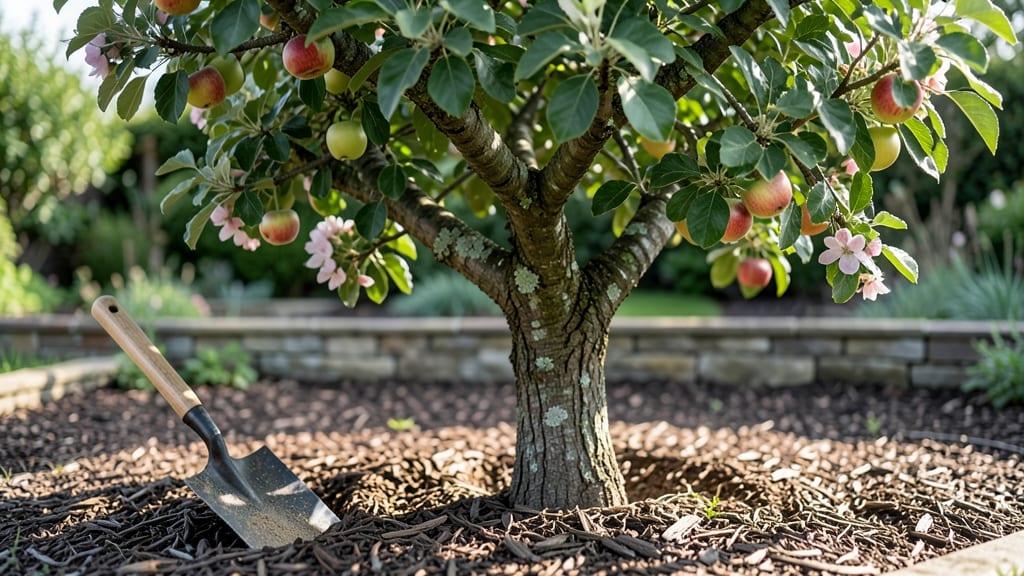
Mulching apple trees keeps roots moist through summer's worst droughts while locking in nutrients that translate to bigger, sweeter fruit. I learned this the hard way after watching my first tree's harvest shrink to half-size during a dry spell—until I spread a thick layer of wood chips around its base.
The difference was shocking: less watering, fewer weeds, and apples that actually ripened properly.
You'll need 3-4 inches of organic mulch (wood chips, straw, or shredded leaves) spread in a 3-foot-wide circle around the tree, keeping it 6 inches away from the trunk to prevent rot.
Inorganic mulch like gravel works too, but it doesn't improve soil over time. The key is consistency—replenish every spring and avoid piling mulch against the trunk where moisture traps pests.
What you'll gain is a tree that thrives without constant babying. Roots stay cool in summer, weeds stay down, and the soil stays loose and fertile—meaning fewer fertilizers and more energy for fruit production.
By next harvest season, you'll notice apples that stay firmer longer and develop richer flavors from the healthier soil.
This works for young saplings and mature trees alike, though younger trees need more frequent checks to prevent over-mulching. In colder climates, add an extra layer in winter to protect roots from freeze-thaw cycles. The best part? Once you set it up, mulching takes 10 minutes a year to maintain.
📚 In This Guide
- What you need
- Instructions
- Tips and common mistakes
- Wrapping up and next steps
What you need
- ● Mulch: Organic mulch (e.g., wood chips, straw, or shredded leaves): 2–4 inches deep (spread evenly in a 3–4 foot radius around the tree trunk).
- ● Inorganic mulch (e.g., landscape fabric or black plastic): Only if using as a weed barrier (avoid direct contact with the trunk!).
- ● Tools: A shovel or spade for digging and leveling.
- ● A rake to spread mulch evenly.
- ● Pruners or shears to trim weeds or old mulch.
- ● Gloves (heavy-duty for organic mulch like wood chips).
- ● A soaker hose or drip irrigation to maintain moisture under mulch.
- ● Compost or fertilizer (lightly mixed into the soil before adding mulch for extra nutrients).
- ● A measuring tape to ensure proper mulch depth and spacing.
- ● Mulch rings or landscape fabric (to prevent mulch from piling against the trunk).
- ● Clear the area of weeds and debris within the mulching zone.
- ● Ensure the soil is moist but not waterlogged before applying mulch.
- ● Avoid piling mulch against the tree trunk (keep it 2–3 inches away to prevent rot).
How to mulch apple trees for consistent moisture and strong growth
Here's my go-to method for keeping apple trees hydrated without overworking the soil.
Choose the Right Mulch for Apple Trees
Apple trees thrive with organic mulch that improves soil structure over time. I recommend wood chips or straw because they break down slowly while retaining moisture. Avoid fresh sawdust or grass clippings—they can compact or mat down, suffocating roots. If you have access to shredded hardwood bark, that's ideal too because it resists clumping.
Spread the mulch in a 3-4 inch thick layer around the tree's drip line—the area directly under the branches where rainwater naturally falls. Keep it 6 inches away from the trunk to prevent rot and pest problems. This spacing lets air circulate while still protecting roots from temperature swings.
Apply Mulch in a Donut Shape
The key to effective mulching is creating a donut-shaped ring around the tree. Start at the outer edge of the tree's canopy and work your way inward. Use a rake to spread the mulch evenly, avoiding piles that could trap moisture against the trunk. I like to leave a bare 6-inch circle around the trunk itself—this prevents moisture buildup that invites fungal diseases like apple collar rot.
Press down lightly with the back of a rake to settle the mulch. You'll notice it looks fluffier at first, but it'll compact naturally after watering. This layer should feel like a thick blanket—moisture-retaining but not waterlogged. If you're working with wood chips, they'll settle slightly over time, so apply a bit more initially.
Water After Mulching to Settle the Material
Give the newly mulched area a deep watering right after application. This helps the mulch settle into place and makes contact with the soil. You'll see the mulch darken slightly as it absorbs water, which signals it's working properly. Aim for 1-1.5 inches of water per week during dry spells—mulch helps conserve this moisture so you don't have to water as frequently.
Check the soil beneath the mulch after a week. If it feels dry 1 inch below the surface, it's time to water again. The mulch should stay damp but not soggy—if you see standing water, you've applied too much. Apple trees hate wet feet, so adjust your mulch thickness if needed. A properly mulched tree will show steady growth and fewer signs of stress during hot summer months.
Refresh Mulch Annually for Long-Term Benefits
Apple trees benefit from annual mulch top-ups in early spring. Spread a 1-2 inch layer of fresh mulch over the existing layer, keeping the same 6-inch clearance from the trunk. This maintains moisture retention while preventing soil compaction. I like to do this in late March or early April, just as new growth begins—this gives the tree consistent moisture as it enters its active growing phase.
Watch for signs the mulch needs attention: if it looks thin or decomposes completely, it's time to replenish. You'll notice healthier foliage and stronger branch development when the mulch is doing its job. Avoid mulching too heavily in fall—this can trap too much moisture and encourage winter rot. A 2-inch layer in late fall is plenty to protect roots from freezing temperatures.
Tips & tricks for perfect mulching of apple trees
These simple strategies will help you maintain ideal moisture levels and protect your apple trees from common pitfalls.
Mulch Selection Matters: When choosing between wood chips and straw, consider your climate. Wood chips work best in warmer regions where they break down slowly, while straw is ideal for cooler climates where it insulates roots during winter. I've found that shredded hardwood bark is my go-to because it resists clumping and lasts longer—just make sure it's free of chemical treatments that could harm your tree.
Donut Shape Precision: The 6-inch clearance from the trunk in Step 2 is critical for preventing rot and pests. Use a straightedge or string to mark the perfect circle before spreading mulch. This creates a clean boundary that's easier to maintain during annual refreshes. I like to use a garden hose laid out in a circle as a temporary guide—it's a trick I learned from an orchard manager that saves time and ensures accuracy.
Watering Wisdom: After applying mulch, that deep watering in Step 3 should penetrate at least 6 inches into the soil. Use a soil probe or long screwdriver to check moisture levels—if it comes out dry, water again. The mulch should darken noticeably after watering, which is your signal that it's working properly. This technique helps you avoid overwatering while ensuring roots get the moisture they need during dry spells.
Seasonal Adjustments: In late fall, stick to the 2-inch layer mentioned in Step 4 to prevent winter rot. For spring top-ups, I've found that adding a thin layer of compost mixed with the fresh mulch gives an extra nutrient boost. Just be careful not to disturb the roots when applying—gentle is always better when working around established trees.
Pro Tips for Mulching Apple Trees
- These simple strategies will help you maintain ideal moisture levels and protect your apple trees from common pitfalls.
- Mulch Selection Matters: When choosing between wood chips and straw, consider your climate.
- Donut Shape Precision: The 6-inch clearance from the trunk in Step 2 is critical for preventing rot and pests.
Frequently asked questions
What’s the best mulch for apple trees?
Organic mulches like wood chips, straw, or shredded bark work best—they improve soil as they break down. Avoid fresh sawdust or grass clippings, as they can rob nitrogen or compact soil. A 3–4 inch layer is ideal, keeping it 2–3 inches away from the trunk to prevent rot.
When is the best time to mulch apple trees?
Spring or fall are the sweet spots! In spring, mulch after the soil warms (around 50°F) to retain moisture as roots wake up. In fall, apply mulch before the first frost to insulate roots over winter. Avoid mulching in summer’s brutal heat—it can smother roots.
Can I mulch too much? What are the signs?
Yes! Over-mulching (more than 4 inches) can suffocate roots or attract pests like voles. Watch for yellowing leaves, stunted growth, or moldy mulch. If you see these, fluff or reduce the layer and improve airflow around the base.
Do I need to re-mulch every year?
Not always! Organic mulch breaks down over time—top up with 1–2 inches annually in spring to maintain coverage. If using long-lasting mulches (like rubber chips), you might only need to refresh every 2–3 years. Check for thinning spots and replenish as needed.
Will mulching help my apple tree produce more fruit?
Indirectly, yes! Mulching reduces stress by keeping roots cool, conserving water, and improving soil health—all of which boost flowering and fruiting. Pair it with proper pruning and fertilization for the best harvest. Think of mulch as the backstage crew for your tree’s star performance!
Wrapping up and next steps
Mulching your apple trees isn’t just a gardening hack—it’s a game-changer for healthier roots, better water retention, and juicier harvests! 🍏 With the right materials and techniques, you’ll protect your trees from extreme weather, suppress weeds, and even boost soil fertility over time.
Whether you’re a seasoned gardener or just starting out, this simple step can make a huge difference in your orchard’s success.
Ready to give it a try? Start small—pick one tree, gather your supplies, and apply mulch this season. Watch your apple trees thrive, and soon, you’ll be reaping the rewards of your hard work. Happy mulching! 🌱