
Pruning
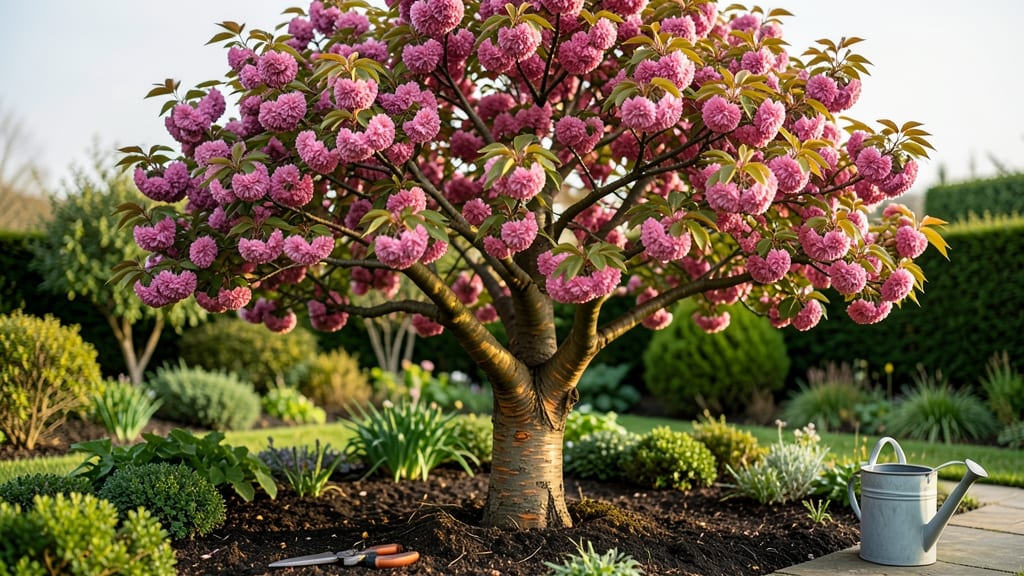
The Prunus kanzan tree turns Pacific Northwest gardens into clouds of pink perfection every spring—its cascading blossoms outshine anything else in the yard. 🌸 I planted mine against a cedar fence, and now neighbors stop to take photos during peak bloom.
This isn’t just a spring spectacle; the dark green foliage stays elegant all season, and its graceful habit makes it a standout in any landscape.
Getting one to thrive requires just three essentials: well-draining soil, 6+ hours of sunlight, and patient pruning to shape its natural weeping form. The roots hate soggy feet, so amend heavy clay with compost before planting—this tree rewards good soil with 10+ years of reliable blooms.
Water deeply once established, but don’t overdo it; the Pacific Northwest’s damp winters mean most issues come from too much love, not too little.
By summer, you’ll have a tree that’s as easy to maintain as it is stunning—just trim dead branches in late winter and shape lightly after flowering. The payoff? A 15-foot-high pink waterfall that attracts pollinators and makes your garden the envy of the block.
Even in rainy seasons, this tree stays resilient, proving it’s built for Pacific Northwest drama.
Whether you’re a beginner or a seasoned gardener, the Prunus kanzan delivers year-round interest with minimal fuss. The key? Plant it right the first time, then step back and admire the show. Let’s get yours growing strong for decades of springtime magic.
📚 In This Guide
- What you need
- Instructions
- Tips and common mistakes
- Wrapping up and next steps
What you need
- ● Pruning shears: Bypass pruners (sharp, clean, and disinfected with rubbing alcohol). Quantity: 1 pair (or 2 for larger branches).
- ○ Loppers: For branches ½”–2” thick. Quantity: 1 pair (optional but helpful for thicker growth).
- ● Pruning saw: Bow saw or folding pruning saw for branches 2”+ in diameter. Quantity: 1.
- ● Gloves: Heavy-duty, cut-resistant gloves (PNW thorns are no joke!). Quantity: 1 pair.
- ● Disinfectant: 70% isopropyl alcohol or bleach solution (1 part bleach : 9 parts water) to prevent disease spread.
- ○ Pruning sealant: Tree wound paint (optional but recommended for cuts > ½” to prevent decay).
- ● Ladder or step stool: Sturdy, non-slip (height depends on tree size—Prunus kanzan can grow 20–25 ft tall!).
- ● Extension pole pruners: For high branches (saves ladder use!).
- ● Work gloves with grip: For extra comfort during long sessions.
- ● Tarp or drop cloth: To collect fallen branches/debris.
- ● Pruning rope: For support if removing large branches.
- ● Notebook & pen: To sketch a pruning plan before you start!
- ● Weather check: Prune on a dry, calm day (avoid rain/snow—PNW’s dampness + fresh cuts = fungal risks!).
- ● Timing: Best time: Late winter/early spring (Feb–March) before new growth starts.
- ● Tree health: Inspect for diseases (e.g., bacterial leaf spot) or pests (e.g., Japanese beetles) before pruning.
- ● Local regulations: Check if your area requires permit for tree work (some PNW cities do!).
Step-by-step guide to planting and caring for your Prunus kanzan tree
Here's how to establish this iconic Pacific Northwest tree for stunning seasonal interest.
🪴 Step 1: Select and Prepare the Planting Site
The Prunus Kanzan thrives in well-draining soil with full sun exposure—at least 6 hours of direct sunlight daily. In the Pacific Northwest's cooler climate, choose a location that gets morning sun and afternoon shade if summers run hot. The tree's shallow roots spread wide, so avoid planting near sidewalks or foundations where roots could be damaged.
Test your soil's drainage by digging a 12-inch deep hole. If water pools after 30 minutes, amend with 2-3 inches of organic matter (like compost or leaf mold) to improve aeration. The ideal soil pH for Kanzan is slightly acidic to neutral (6.0-7.0). If your soil tests higher, mix in sulfur amendments according to local extension service recommendations.
☀️ Step 2: Plant at the Right Time and Depth
Fall planting (September-October) gives roots time to establish before winter, but spring (March-April) also works well. Dig a hole twice as wide as the root ball but no deeper—Prunus species hate being buried too deeply. The top of the root ball should sit 1-2 inches above ground level to prevent waterlogging.
Gently remove the tree from its container and tease apart any circling roots with your fingers. Place it in the hole so the root flare (where roots meet trunk) is visible above soil. Backfill with native soil mixed with 1-2 inches of compost, tamping lightly every 4 inches to eliminate air pockets. Water thoroughly until soil settles, then add more soil if needed to maintain the proper level.
💧 Step 3: Establish Proper Watering and Mulching
Water deeply 2-3 times per week for the first 6-8 weeks after planting, providing 1-2 gallons per watering depending on pot size. The soil should be moist 6 inches down—check with your finger. Overwatering suffocates roots, while underwatering stresses the tree. Once established, Kanzan trees tolerate moderate drought but bloom best with consistent moisture.
Apply 3-4 inches of organic mulch (like wood chips or pine needles) in a 3-foot diameter circle around the base, keeping it 6 inches away from the trunk. Replenish mulch annually in late winter to protect roots from temperature fluctuations. This mulch layer also suppresses weeds and retains soil moisture—critical during the Pacific Northwest's dry summer months.
✂️ Step 4: Prune for Health and Bloom Enhancement
Prune your Kanzan immediately after flowering (late spring) to maintain its iconic rounded shape. Remove 1/3 of the oldest stems at the base to encourage new growth and prevent overcrowding. Cut back any dead, diseased, or crossing branches to improve air circulation—this prevents fungal issues common in dense Prunus growth.
For shaping, focus on open-center pruning: select 5-7 main scaffold branches and remove any growth that competes with these. Avoid heavy pruning in fall or winter, as this stimulates vigorous spring growth that may not harden off before winter. The goal is to create an airy, balanced canopy that showcases those famous double pink blooms while maintaining structural integrity.
Tips & tricks for perfect Prunus kanzan planting and care
Between us, these small details make all the difference for your Kanzan's long-term health and those showstopping blooms.
Site Selection Secret: That 6 hours of sunlight is non-negotiable, but here's what I've learned—if your yard has afternoon shade, position the tree to catch morning sun first. The cooler Pacific Northwest afternoons actually work in your favor here, preventing heat stress while still giving those blooms the energy they need. And trust me on this: test that drainage hole in spring when soils are drier. What drains in fall might pool in summer.
Planting Depth Technique: The 1-2 inch root flare visibility is critical—this isn't just about aesthetics. When you're backfilling, use your finger to create small air pockets around the roots as you tamp every 4 inches. This mimics natural soil aeration and gives roots room to expand without resistance. I've seen too many trees planted too deep where the trunk rots from poor air circulation at the base.
Watering Wisdom: Those first 6-8 weeks are make-or-break. Here's my pro move: water in the early morning so the foliage has all day to dry, preventing fungal issues. And when you're checking that 6-inch moisture level, dig with a clean trowel—not your finger—to avoid introducing pathogens. The tree's shallow roots are particularly vulnerable to soil-borne diseases during establishment.
Pruning Precision: When you're removing that 1/3 of oldest stems in Step 4, cut back to just above a bud that faces outward. This creates that perfect open center while maintaining the tree's natural shape. I always prune on a dry day—wet tools spread fungal spores like wildfire through those fresh cuts. And never prune into wet wood, which can invite rot into the tree's structure.
Pro Tips for Prunus Kanzan Tree
- Between us, these small details make all the difference for your Kanzan's long-term health and those showstopping blooms.
- Site Selection Secret: That 6 hours of sunlight is non-negotiable, but here's what I've learned—if your yard has afternoon shade, position the tree to catch morning sun first.
- Planting Depth Technique: The 1-2 inch root flare visibility is critical—this isn't just about aesthetics.
Frequently asked questions
Got questions about the Prunus kanzan tree? You’re not alone—this stunning bloomer is packed with charm but comes with a few quirks! Here’s what gardeners ask most often, plus quick answers to keep your tree thriving in the Pacific Northwest’s unique climate.
When is the best time to prune a Prunus kanzan?
Prune your Prunus kanzan right after flowering (late spring to early summer). Avoid pruning in fall or winter, as it can stimulate new growth that may be damaged by late frosts. Never prune in late summer or fall—this can reduce next year’s blooms! Focus on removing dead, crossing, or overcrowded branches to maintain an open canopy.
Can Prunus kanzan survive PNW winters?
This tree is hardy to USDA Zones 5-8, making it perfect for the Pacific Northwest’s mild winters. However, young trees may need winter protection (like burlap wraps) if your area dips below 10°F. Mulch the base with wood chips to insulate roots, and avoid pruning in late winter—wait until after blooms fade.
Why isn’t my Prunus kanzan blooming as much as it should?
Lack of blooms often stems from over-pruning (especially in fall/winter), poor sunlight (needs 6+ hours of sun daily), or nutrient deficiencies. Feed with acid-loving plant fertilizer in early spring, and prune only after blooms to encourage next year’s flowers. Yellowing leaves? It might need more iron—try a chelated iron supplement.
How much can I prune a mature Prunus kanzan?
For mature trees, never remove more than 25% of the canopy in one season. Focus on thinning out dense areas to improve airflow (reducing disease risk) and shaping the tree. Use clean, sharp pruners to make cuts just above outward-facing buds. Pro tip: Step back often to check your shape!
What’s a good alternative if I want a low-maintenance bloomer?
If the Prunus kanzan’s pruning demands feel high, consider these PNW-friendly alternatives:
- Kwanzan Cherry (Prunus serrulata ‘Kwanzan’) – Nearly identical but slightly more disease-resistant.
- Pacific Dogwood (Cornus nuttallii) – Stunning blooms with zero pruning needed.
- Oregon Grape Holly (Mahonia aquifolium) – Evergreen, drought-tolerant, and no pruning required.
All three thrive in the PNW with far less fuss!
Wrapping up and next steps
The Prunus kanzan isn’t just a tree—it’s a showstopper that brings color, texture, and joy to your Pacific Northwest garden year-round. With the right pruning techniques, you’ll unlock its full potential, ensuring vibrant blooms and a sturdy structure for decades to come.
Whether you’re a seasoned gardener or just starting, this tree rewards your care with breathtaking beauty.
Ready to transform your outdoor space? Grab your tools, roll up your sleeves, and give your Prunus kanzan the love it deserves! 🌸✨ Start small—prune once this season, and watch your tree thrive like never before.