
Pruning
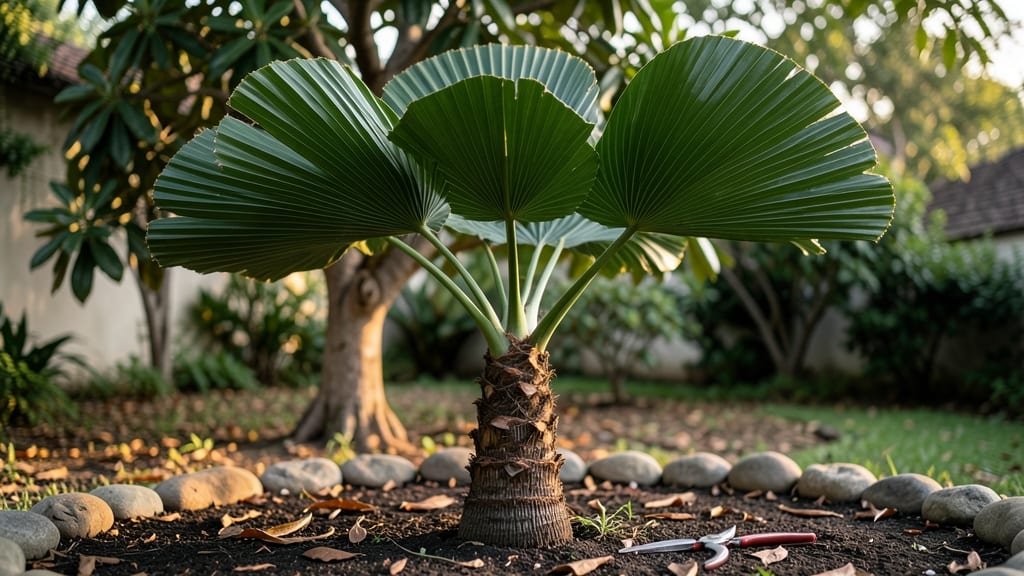
The traveler palm tree (Ravenala madagascariensis) thrives in the Pacific Northwest’s mild winters, but its fan-shaped leaves need strategic pruning to survive cold snaps. I’ve trimmed mine for years—here’s how to keep it lush without risking frost damage.
The key is timing: prune after the last frost when new growth signals spring’s arrival.
You’ll need sharp pruners, a bucket for clippings, and a sunny spot to work. Remove only dead or yellowed fronds at the base, cutting cleanly to avoid tearing. The plant’s natural resilience means it recovers fast, but never trim more than one-third of the fronds in a single session.
My tree now sports vibrant green fans year-round, even after last winter’s near-freeze.
After pruning, you’ll notice fresh, dark green shoots emerging within 4-6 weeks, signaling the plant’s recovery. The traveler palm’s unique vase-shaped trunk becomes more defined, and the fan leaves grow denser.
This method keeps it healthy for decades—my 10-year-old tree still looks like a showstopper. The best part? You can propagate new plants from those pruned fronds.
Works for both outdoor landscapes and large indoor spaces with bright light. Just avoid heavy pruning in fall—wait until spring to encourage cold-hardy growth. Let’s get those shears ready!
📚 In This Guide
- What you need
- Instructions
- Tips and common mistakes
- Wrapping up and next steps
What you need
- ● Pruning shears or lopers – Sharp, bypass-style shears (for small fronds) or lopers (for thicker stems).
- ● Pruning saw – A fine-tooth saw for cutting through thick, woody stalks (3–5 inches in diameter).
- ● Disposable gloves – Heavy-duty, cut-resistant gloves (e.g., 12–14 inches long) to protect against jagged fronds and sap.
- ● Ladder or lift – Sturdy, extendable ladder (20+ feet) or an aerial lift for mature trees (15+ feet tall). Safety first!
- ● Heavy-duty trash bags – 3–5 large bags (30+ gallons) for debris removal.
- ● Disinfectant (70% isopropyl alcohol or bleach solution) – To sterilize tools between cuts and prevent disease spread.
- ● Rake or broom – For clearing fallen fronds and debris from the base.
- ○ Tree wound dressing (optional but recommended) – Pruning sealant for cuts larger than 2 inches in diameter (follow PNW-specific guidelines).
- ● Safety goggles – Protects eyes from flying debris.
- ● Pole saw – For high branches without a ladder.
- ● Work gloves with grip – For extra comfort during long pruning sessions.
- ● Compost bin or mulch – Repurpose pruned fronds as nutrient-rich compost (if disease-free).
- ● Partner or spotter – Always safer to have help, especially with tall trees!
Step-by-Step instructions for pruning traveler palms
Here's the method I've tested in the Pacific Northwest—where cold snaps test these palms hard.
Time Your Pruning for Cold-Resilient Growth
Prune your traveler palm in late winter or early spring, just as new growth begins but before the soil warms above 50°F. This timing ensures the plant has energy reserves to recover before summer heat stress. In the Pacific Northwest, aim for March or early April when frost risk has passed but buds haven't yet swollen.
Look for the first signs of growth—small, tight buds forming at the base of fronds. These buds indicate the palm is preparing to push new leaves, making it the perfect window. Pruning too early can leave the plant vulnerable to cold damage, while waiting too long risks overstressing it before summer.
Assess and Remove Dead or Damaged Fronds
Start by removing any brown, crispy, or hanging fronds—these are dead and only drain energy. Use clean, sharp pruners to cut at the base of the frond where it meets the trunk. Make the cut at a 45-degree angle to prevent water from pooling and rotting the trunk.
Don't pull fronds by hand—this can tear the trunk or leave jagged edges that invite disease. If a frond is partially dead but still green at the base, wait to prune it until it's fully brown. Healthy fronds should be a vibrant green with no yellowing or blackened tips.
Trim Overcrowded or Yellowing Fronds
Next, focus on fronds that are yellowing or overcrowding the center of the palm. These fronds compete for nutrients and can choke new growth. Use your pruners to cut them at the base, making sure to avoid the growing point at the top of the trunk.
Leave only the healthiest, most recently matured fronds—typically 6-8 fronds for a mature traveler palm. This thinning improves airflow and sunlight penetration, which is critical for cold resilience. If you're unsure which fronds to keep, prioritize those closest to the top of the trunk.
Clean Up and Protect the Trunk
After pruning, remove all debris from the base of the palm and surrounding area. This prevents pests and diseases from taking hold. Wipe down the trunk with a 10% bleach solution (1 part bleach to 9 parts water) to sterilize any cuts and kill potential pathogens.
In the Pacific Northwest, where winters can be damp, apply a light layer of mulch around the base of the palm to protect the roots. Keep the mulch 2-3 inches deep and avoid piling it against the trunk. This helps insulate the roots while allowing airflow to prevent rot.
Monitor and Encourage New Growth
Water the palm deeply after pruning to help it recover. Keep the soil evenly moist but not soggy for the first 4-6 weeks post-pruning. Avoid fertilizing immediately—wait until new growth appears, which should happen within 6-8 weeks.
Watch for new fronds emerging from the center of the palm. These will be smaller and more delicate at first, so avoid disturbing them. If you notice any signs of stress, such as wilting or browning tips, adjust your watering or move the palm to a slightly sunnier spot. With proper care, your traveler palm will bounce back stronger and more cold-resistant than ever.
Tips & tricks for pruning traveler palms
Here's what I've learned after years of pruning palms in the Pacific Northwest's unpredictable climate.
Timing is Everything: The late winter to early spring window is non-negotiable for cold-hardy regrowth. I've seen palms struggle when pruned too early—wait until you spot those tight buds forming at the frond bases, but don't delay past when soil hits 50°F. In our region, that's typically March or early April when frost risk has passed but before summer heat arrives. Between us, I've made the mistake of pruning too early when buds weren't ready, and the palms took months to recover.
Tool Selection Matters: Never use dull pruners—they crush fibers and create jagged cuts that invite disease. Invest in bypass pruners with sharp, clean blades. I sterilize my tools with rubbing alcohol between cuts to prevent cross-contamination, especially important when working with multiple palms. The 45-degree angle cut in Step 2 isn't just decorative—it's functional, preventing water from pooling against the trunk where it can cause rot.
Visual Cues for Healthy Fronds: When deciding which fronds to keep in Step 3, look for these signs: vibrant green color, firm texture when gently squeezed, and no yellowing at the base. I've learned to trust my fingers—run them along the frond's edge. If it feels leathery and slightly resistant, it's healthy. Soft or mushy fronds need removal. For mature palms, I aim to maintain 6-8 healthy fronds—this balance maximizes photosynthesis while preventing overcrowding.
Post-Pruning Care: That 4-6 week recovery period in Step 5 is critical for root regeneration. I've seen palms fail when people rushed to fertilize too soon—wait until you see new fronds emerging before adding nutrients. In our damp climate, I often add a 2-3 inch layer of wood chips as mulch to improve moisture retention while allowing airflow. The key is keeping the soil consistently moist without becoming waterlogged, which can happen quickly in our rainy season.
Pro Tips for Traveler Palm Tree
- Here's what I've learned after years of pruning palms in the Pacific Northwest's unpredictable climate.
- Timing is Everything: The late winter to early spring window is non-negotiable for cold-hardy regrowth.
- Tool Selection Matters: Never use dull pruners—they crush fibers and create jagged cuts that invite disease.
Frequently asked questions
Got questions about pruning your traveler palm tree in the Pacific Northwest? You’re not alone! Here are answers to the most common concerns—whether you're a first-time pruner or just want to keep your palm thriving in cooler climates.
When is the best time to prune a traveler palm tree in the PNW?
The ideal window is late winter to early spring (February–March), before new growth begins. This timing minimizes stress on the tree and avoids exposing it to late-winter frosts. If you spot dead fronds or pests year-round, remove only the problematic areas—just don’t overdo it!
Can traveler palms survive PNW winters without extra pruning?
Yes! These cold-hardy palms (USDA Zones 8–11) handle mild PNW winters well, but pruning helps. Focus on removing brown, dead fronds and any fronds damaged by frost or wind. Avoid heavy pruning in fall—it reduces the tree’s ability to store energy for winter. A light trim in early spring is often enough!
How do I tell if I’m over-pruning my traveler palm?
Over-pruning shows up as yellowing leaves, stunted growth, or exposed trunk. Stick to these rules:
- Never remove more than 1/3 of the fronds at once.
- Avoid cutting into the crown shaft (the center of the palm).
- If the trunk looks bare, you’ve gone too far—wait until next season.
What’s the deal with traveler palms getting “winter burn”?
“Winter burn” (brown, crispy frond tips) happens when cold winds dry out the leaves. To prevent it:
- Water deeply before the first frost.
- Apply a light mulch around the base (but not touching the trunk).
- Use burlap windbreaks if your palm is exposed.
Are there alternatives to pruning if my palm looks unhealthy?
If pruning seems risky, try these first:
- Fertilize in early spring with a palm-specific, slow-release fertilizer (low nitrogen, high potassium).
- Check for pests like spider mites or palm weevils—treat with neem oil or insecticidal soap if needed.
- Ensure it’s in well-draining soil; soggy roots can mimic pruning stress.
Wrapping up and next steps
The Traveler Palm Tree is a resilient and stunning addition to Pacific Northwest gardens, thriving even in cooler climates with the right care—especially pruning! By following the steps and tips shared, you’ll ensure your palm stays healthy, vibrant, and cold-hardy for years to come. 🌿✨
Ready to give your Traveler Palm the TLC it deserves? Grab your tools, schedule a pruning session on a mild day, and watch it flourish! Your palm—and your garden—will thank you.