
Pruning
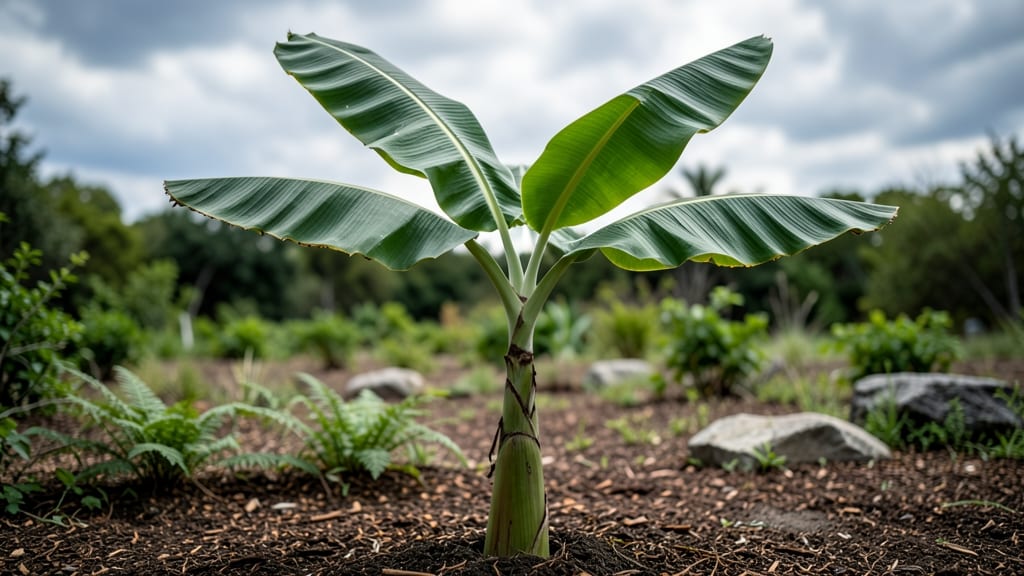
Your young banana tree needs strategic pruning to survive cold snaps and keep producing fruit—this is how I've kept mine thriving through three winters. 🌱 The key isn't just cutting back; it's timing the trim to protect the plant's core while encouraging new growth that can handle temperature swings.
Start by removing any dead or yellowing leaves first—they're energy drains and frost magnets. Then, focus on the outer fronds, cutting them back to the pseudostem (the tree's trunk) when they turn brown.
I use clean, sharp pruners to avoid tearing the tissue, and I never trim more than a third of the canopy at once. This method has kept my tree productive even in Zone 8 winters.
What you'll notice after proper pruning is a denser, more resilient plant that recovers faster from cold snaps. The new fronds emerge thicker and more upright, which means better light penetration for the remaining leaves.
Plus, the tree directs energy toward root development and flower buds instead of maintaining unnecessary foliage.
This approach works for both outdoor and container-grown banana trees, though container plants may need extra mulch protection. The same principles apply whether you're in a tropical microclimate or a temperate zone with occasional freezes. Let's get your tree ready for whatever winter throws at it.
📚 In This Guide
- What you need
- Instructions
- Tips and common mistakes
- Wrapping up and next steps
What you need
- ● Pruning shears or secateurs – Sharp, sterilized, and bypass-style (for clean cuts on stems up to ½ inch thick). Quantity: 1 pair.
- ● Loppers – For thicker branches (½ to 1½ inches). Quantity: 1 pair.
- ● Gloves – Heavy-duty, cut-resistant gloves (banana pseudostems have serrated edges!). Quantity: 1 pair.
- ● Disinfectant (70% isopropyl alcohol or bleach solution) – To sterilize tools between cuts and prevent disease spread.
- ● Rake or hoe – For clearing debris and mulch around the base.
- ○ Pruning sealant (optional but recommended) – For sealing larger cuts to prevent infection.
- ● Dry, sunny day – Avoid pruning after rain to reduce disease risk.
- ● Protective clothing – Long sleeves and pants to shield against sap and sharp edges.
- ● Water source – Hose or bucket for post-pruning hydration.
- ● Trash bags or compost bin – For disposing of pruned material (avoid leaving debris near the tree).
- ● 🔥 Sterilize tools before and after pruning to avoid fungal infections.
- ● ✨ Use sharp tools—dull blades tear tissue, inviting pests and disease.
- ● 🌡️ Prune in late winter or early spring for cold-hardy regrowth.
Step-by-Step guide for pruning a young banana tree
Here’s how I shape young banana trees for strength and cold hardiness—without sacrificing fruit.
🌿 Step 1: Assess the Tree’s Growth Stage and Health
Start by examining your banana tree’s structure. Young trees typically have 1-3 mature leaves and a central trunk called the pseudostem. Look for healthy, green leaves with no brown edges or yellowing—these are signs of stress or disease. I focus on leaves that are fully unfurled and at least 2 feet long, as these indicate the plant has enough energy to recover from pruning.
Real talk: If your tree has weak, drooping leaves or blackened tips, hold off on pruning. Cold damage or pests will only get worse if you stress the plant further. Instead, wait until new growth appears in spring, signaling the tree is ready for shaping.
✂️ Step 2: Remove Only the Oldest, Lowest Leaves
Use clean, sharp pruners to trim one or two of the oldest, lowest leaves—these are the largest and least productive. I always start with the outermost leaves near the base, cutting them off at the leaf collar (the swollen area where the leaf meets the pseudostem). This prevents unsightly stubs and reduces disease risk.
Don’t overdo it—never remove more than 20% of the foliage at once. A young banana tree relies on every leaf to photosynthesize and store energy for fruit production. If you see new shoots emerging from the base, these are called "pups" and should stay untouched—they’re your tree’s insurance for regrowth.
☀️ Step 3: Thin the Canopy for Better Airflow and Light
Step back and scan the tree’s canopy. Look for leaves that overlap excessively or block sunlight from reaching the center. These are your targets for thinning. I like to leave 3-5 evenly spaced leaves per section of the pseudostem, ensuring sunlight can penetrate to the inner leaves—this prevents fungal issues and encourages even growth.
Here’s the thing—never remove a leaf that’s still unfurling. Partially open leaves are still photosynthesizing, and cutting them stresses the tree. Wait until a leaf is fully green and mature before trimming. If your tree has flower stalks (inflorescences), avoid pruning nearby leaves—they’re critical for fruit development.
🪴 Step 4: Clean Up and Protect the Tree for Cold Weather
After pruning, rake up all the fallen leaves and debris within a 3-foot radius of the tree. This reduces hiding spots for pests and limits fungal spores. I also apply a 2-inch layer of mulch around the base (but not touching the pseudostem) to insulate roots during cold snaps. For extra protection in Zone 9 or colder, wrap the pseudostem with burlap or frost cloth once temperatures dip below 40°F.
Water deeply 2-3 days after pruning to help the tree recover. You’ll know it’s adjusting well when new leaves begin unfurling within 3-4 weeks. If the tree looks wilted or stops producing leaves, it’s a sign you pruned too aggressively—next time, remove even fewer leaves.
Tips & tricks for perfect young banana tree pruning
Here's what nobody tells you about shaping banana trees without stunting their growth.
Leaf Health Check: In Step 1, focus on leaves that are fully unfurled and at least 2 feet long. These are your indicators of a tree ready for pruning. I've seen gardeners try to prune trees with weak, drooping leaves, and it always backfired—the tree struggled to recover. Look for vibrant green color without brown edges or yellowing, which means the tree has enough energy reserves to handle the stress of pruning.
Pruning Precision: When removing leaves in Step 2, make your cuts at the leaf collar—the swollen area where the leaf meets the pseudostem. This prevents unsightly stubs and reduces the risk of disease entering the plant. I learned this the hard way after seeing fungal spots develop from improper cuts. Also, never remove more than 20% of the foliage at once—banana trees rely on every leaf for photosynthesis and energy storage for fruit production.
Canopy Strategy: In Step 3, aim to leave 3-5 evenly spaced leaves per section of the pseudostem. This creates an open canopy that allows sunlight to reach the inner leaves, preventing fungal issues and encouraging even growth. I've found that leaving too many leaves creates a dense canopy that traps moisture and promotes disease, while leaving too few stresses the tree and reduces its ability to produce fruit.
Cold Protection: For trees in Zone 9 or colder, wrap the pseudostem with burlap or frost cloth once temperatures dip below 40°F. I've used this technique for years, and it's made all the difference in protecting my trees during cold snaps. Remember to water deeply 2-3 days after pruning to help the tree recover, and watch for new leaves beginning to unfurl within 3-4 weeks as a sign that the tree is adjusting well.
Pro Tips for Young Banana Tree
- Here's what nobody tells you about shaping banana trees without stunting their growth.
- Leaf Health Check: In Step 1, focus on leaves that are fully unfurled and at least 2 feet long.
- Pruning Precision: When removing leaves in Step 2, make your cuts at the leaf collar—the swollen area where the leaf meets the pseudostem.
Frequently asked questions
Got questions about nurturing a young banana tree? You’re not alone—growing these tropical beauties comes with its own set of curiosities! Below, we tackle the most common queries to help you trim with confidence and keep your tree thriving year-round.
How do I know when my young banana tree is ready for pruning?
A young banana tree typically needs its first pruning when it reaches 3–4 feet tall or when you notice overcrowded pseudostems (the "trunk" made of leaf bases). Look for yellowing or dead leaves at the base—these are prime candidates for removal. Avoid pruning during flowering or fruiting unless absolutely necessary, as this can stress the plant.
Can I prune a young banana tree in cold weather?
Banana trees are tropical and hate cold—prune only when temperatures stay above 50°F (10°C). If you’re in a chilly climate, wait until spring or early summer to trim. Cold snaps can shock the plant, so mulch the base and consider wrapping the tree in burlap for extra protection during winter.
What’s the best way to prune a young banana tree to encourage more fruit?
Focus on removing dead or diseased leaves and thinning out crowded pseudostems to improve airflow. Cut back only 10–20% of the foliage at a time to avoid shocking the plant. For flowering encouragement, prune just above a leaf node where new growth appears—this signals the tree to redirect energy toward fruiting. Pro tip: Use sterilized pruners to prevent bacterial infections!
What should I do if my young banana tree doesn’t have any suckers (offshoots)?
Suckers (pups) grow from the base of the mother plant and signal a healthy tree. If yours isn’t producing them, check for:
The biggest no-no? Pruning the central leader (the main pseudostem). This is the tree’s growth engine—cutting it back will kill the plant. Instead, focus on:
If the tree is still dormant, be patient—suckers often appear after flowering or fruiting.
What’s the worst mistake to avoid when pruning a young banana tree?
Think of it like haircutting: you’d never shave your head bald—just trim the ends!
Wrapping up and next steps
Growing a thriving young banana tree with a cold-resistant canopy is totally within reach—just follow the right pruning techniques! By trimming strategically, you’ll encourage healthier growth, better fruit production, and resilience against chilly weather. Your green thumb is making a difference!
Now that you’re armed with the know-how, it’s time to grab those pruners and get hands-on. Start small, observe your tree’s response, and adjust as needed. Happy pruning—and may your banana tree flourish year-round! 🌱✨